
Title
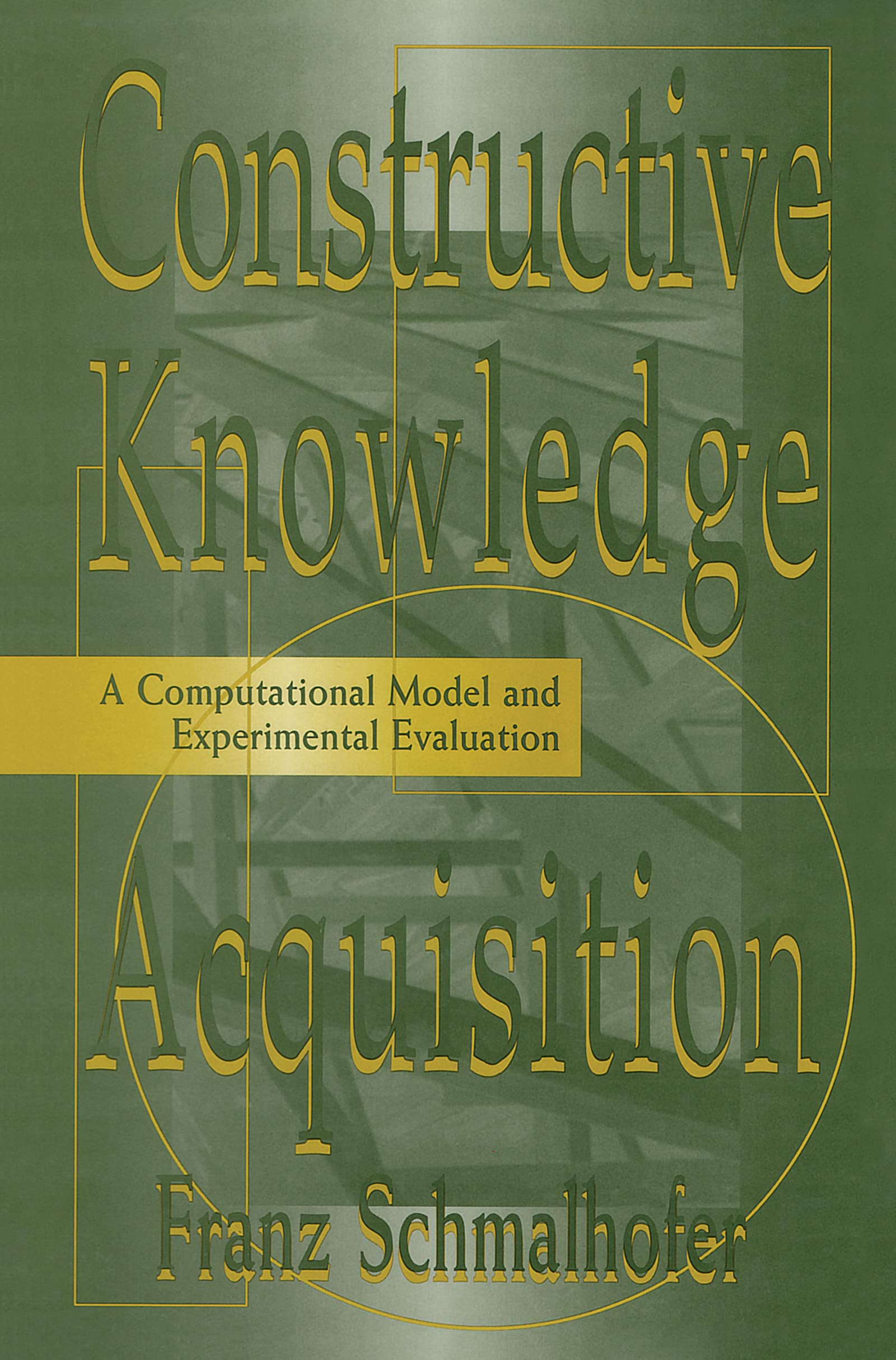
Constructive Knowledge Acquisition: A Computational Model And Experimental Evaluation,Used
Sold by Ergodebooks, an authorized reseller.
Returns accepted within 30 days | support@ergodebooks.com
Shipping Information
- Free Standard Shipping — United States only
- Processing Time: 3–5 business days
- Estimated Delivery: 6–10 business days after dispatch
- Double-boxed, fully insured & discreetly packaged
- Tracking number sent via email once dispatched
Returns & Refund
Returns accepted within 30 days of delivery.
Damaged or Defective Item
Free return shipping + replacement or full refund
Wrong Item Received
Free return shipping + replacement or full refund
Change of Mind
Return shipping at customer's expense · 25% restocking fee applies
Payment Option

A cognitive psychology which becomes increasingly specialized requires a special effort in order to avoid a fragmentation into several controversial issues that are independently discussed but also inherently related. Rather than asking additional differentiated questions which are then investigated by more specialized experimental methods and designs, this book promotes unified theories and a levels approach for their experimental evaluation. Within this cognitive science approach and on the basis of the most foundational assumptions of Kintsch's construction integration theory, a computational theory of knowledge acquisition is then developed and subsequently evaluated by psychological experiments.For forty years, computer simulation techniques and experimental psychology research have greatly matured the understanding of human knowledge and its acquisition in different learning environments. This volume critically assesses the advantages and limitations of these approaches and then develops an integrated research methodology. It goes on to provide significant progress concerning the following questions:* What are the most promising research methodologies for investigating human cognition?* How can the experimental psychology research on text comprehension, concept formation, and memory become more closely related to one another when the very specialized research paradigms and the highly specific scientific controversies promote their separation and independent discussion?* How can a general comprehensionbased theory bridge the gap between simple experimental settings and the reallife situations that occur in education and work environments?This book demonstrates how experimental psychology can proceed more successfully by investigating those aspects that are shared among different areas of research like text comprehension, categorization, and learning by exploration. It also shows how unified theories can assist in applying experimental psychology and cognitive science results to areas such as intelligent tutoring systems, instructional design, and the development of expert systems in complex real world domains.
⚠️ WARNING (California Proposition 65):
This product may contain chemicals known to the State of California to cause cancer, birth defects, or other reproductive harm.
For more information, please visit www.P65Warnings.ca.gov.