If you have any questions, you are always welcome to contact us. We'll get back to you as soon as possible, withing 24 hours on weekdays.
Customer service
All questions about your order, return and delivery must be sent to our customer service team by e-mail at yourstore@yourdomain.com
Sale & Press
If you are interested in selling our products, need more information about our brand or wish to make a collaboration, please contact us at press@yourdomain.com
Help
If you have any questions, you are always welcome to contact us. We'll get back to you as soon as possible, withing 24 hours on weekdays.
Customer service
All questions about your order, return and delivery must be sent to our customer service team by e-mail at yourstore@yourdomain.com
Sale & Press
If you are interested in selling our products, need more information about our brand or wish to make a collaboration, please contact us at press@yourdomain.com
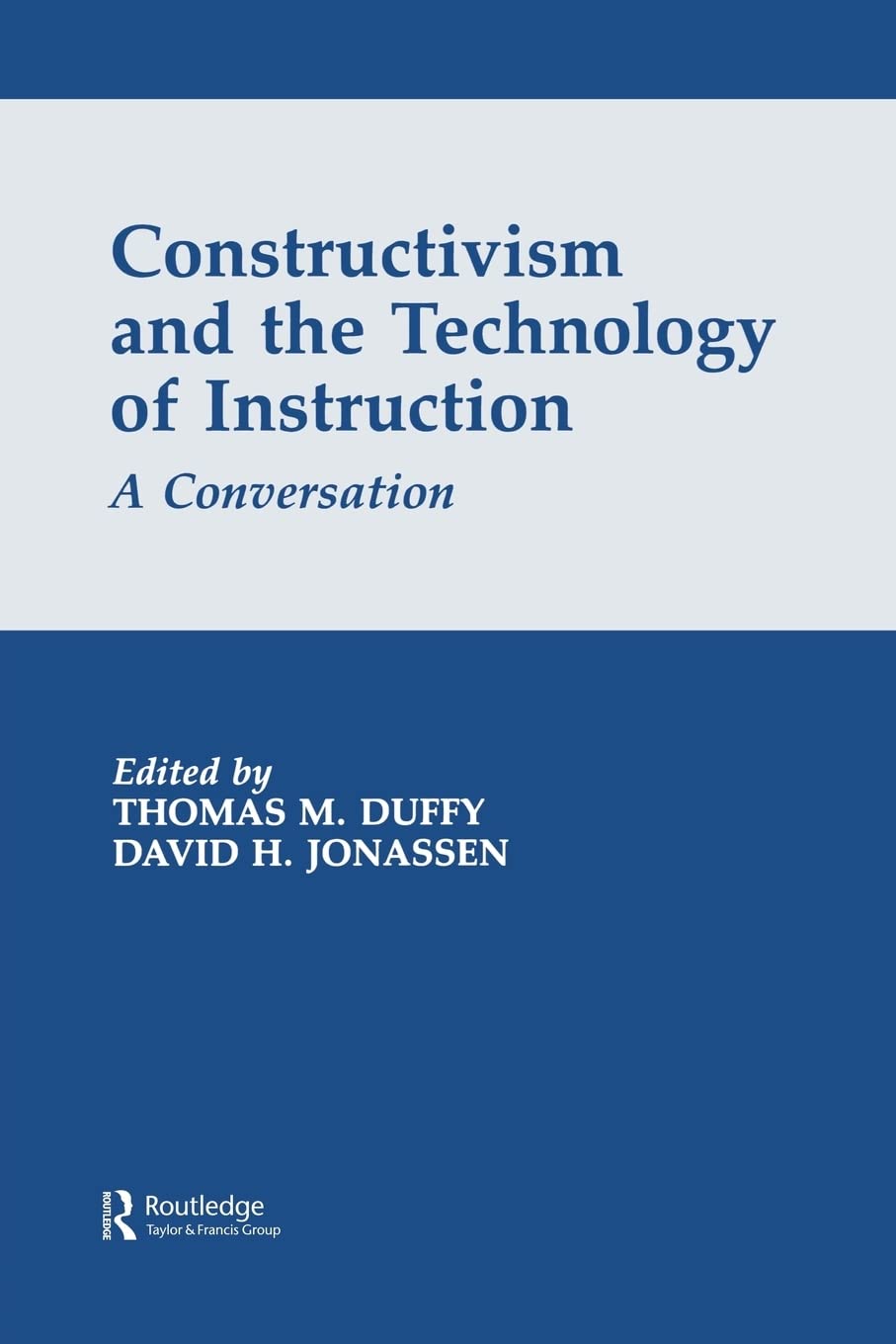
This book is about the implications of constructivism for instructional design practices, and more importantly, it is about a dialogue between instructional developers and learning theorists. Working with colleagues in each discipline, the editors were amazed to find a general lack of familiarity with each others' work. From an instructional design perspective, it seems that the practice of instructional design must be based on some conception of how people learn and what it means to learn. From a learning theory perspective, it seems obvious that the value of learning theory rests in the ability to predict the impact of alternative learning environments or instructional practices on what is learned. Thus the interchange of ideas between these disciplines is essential.As a consequence of both the information rich environment and the technological capability, business is seen moving away from a fixed curriculum and toward providing information and instruction when it is needed. These changes bring about a window of opportunity establishing a dialogue that will provide for a richer understanding of learning and the instructional environment required to achieve that learning. The editors hope that this book is the beginning of the conversation and that it will serve to spur continued conversation between those involved in learning theory and those involved in the design of instruction.
⚠️ WARNING (California Proposition 65):
This product may contain chemicals known to the State of California to cause cancer,
birth defects, or other reproductive harm.
For MAP (Minimum Advertised Price) violations and Intellectual Property (IP) or Trademark concerns, please contact:
support@ergodebooks.com
⚠️ California Proposition 65 Warning: Some products sold on this website may expose you to chemicals known to the State of California to cause cancer, birth defects, or other reproductive harm. For more information, visit www.P65Warnings.ca.gov.