
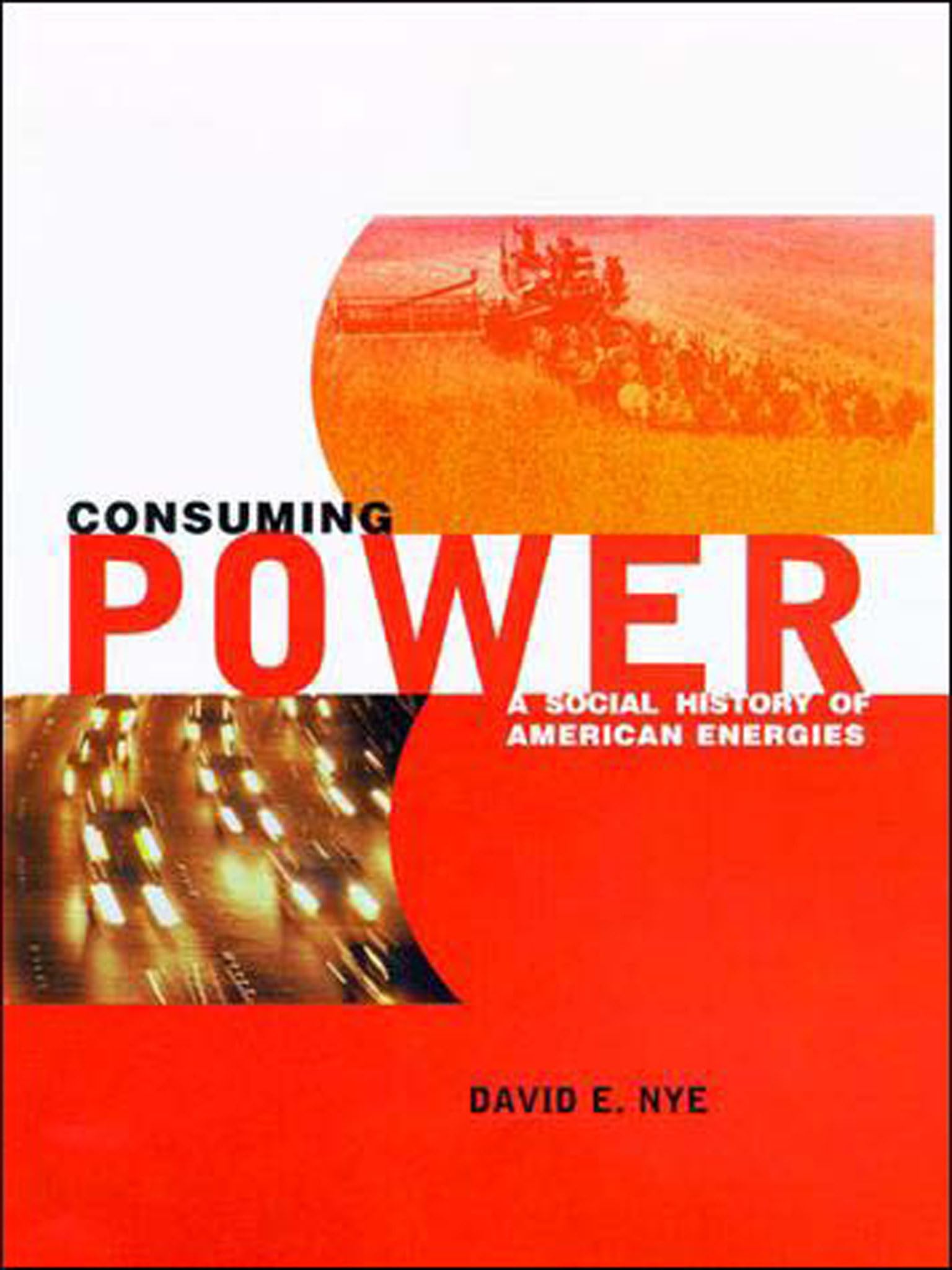
Title
Consuming Power: A Social History of American Energies,New
Sold by Ergodebooks, an authorized reseller.
Returns accepted within 30 days | support@ergodebooks.com
Shipping Information
- Free Standard Shipping — United States only
- Processing Time: 3–5 business days
- Estimated Delivery: 6–10 business days after dispatch
- Double-boxed, fully insured & discreetly packaged
- Tracking number sent via email once dispatched
Returns & Refund
Returns accepted within 30 days of delivery.
Damaged or Defective Item
Free return shipping + replacement or full refund
Wrong Item Received
Free return shipping + replacement or full refund
Change of Mind
Return shipping at customer's expense · 25% restocking fee applies
Payment Option

Nye uses energy as a touchstone to examine the lives of ordinary people engaged in normal activities.How did the United States become the world's largest consumer of energy? David Nye shows that this is less a question about the development of technology than it is a question about the development of culture. In Consuming Power, Nye uses energy as a touchstone to examine the lives of ordinary people engaged in normal activities. He looks at how these activities changed as new energy systems were constructed, from colonial times to recent years. He also shows how, as Americans incorporated new machines and processes into their lives, they became ensnared in power systems that were not easily changed: they made choices about the conduct of their lives, and those choices accumulated to produce a consuming culture. Nye examines a sequence of large systems that acquired and then lost technological momentum over the course of American history, including water power, steam power, electricity, the internalcombustion engine, atomic power, and computerization. He shows how each system became part of a larger set of social constructions through its links to the home, the factory, and the city. The result is a social history of America as seen through the lens of energy consumption.
⚠️ WARNING (California Proposition 65):
This product may contain chemicals known to the State of California to cause cancer, birth defects, or other reproductive harm.
For more information, please visit www.P65Warnings.ca.gov.
- Q: How many pages does the book contain? A: The book contains three hundred fifty-two pages. This length provides a comprehensive exploration of American energy consumption and its cultural implications.
- Q: What is the binding type of this book? A: The book is paperback bound. This makes it lightweight and easy to handle, suitable for casual reading.
- Q: What are the dimensions of the book? A: The book measures six inches in length, zero point seventy-nine inches in width, and nine point zero two inches in height. These dimensions make it easy to fit on most bookshelves.
- Q: Who is the author of 'Consuming Power'? A: The author of 'Consuming Power' is David E. Nye. He is known for his expertise in the history of technology and culture.
- Q: What category does this book belong to? A: This book belongs to the Economics category. It explores the intersection of energy consumption and cultural history in America.
- Q: Is this book appropriate for academic study? A: Yes, this book is appropriate for academic study. It provides in-depth analysis and historical context, making it suitable for students and scholars.
- Q: How does the book address energy systems? A: The book examines various energy systems like water power, steam power, and electricity. It highlights how these systems shaped American culture and daily life.
- Q: What themes are explored in 'Consuming Power'? A: The themes explored include cultural development, energy consumption, and the social history of America. It focuses on how energy influences ordinary people's lives.
- Q: Can this book be used for a high school project? A: Yes, this book can be used for a high school project. Its accessible language and thorough research make it suitable for young scholars.
- Q: How should I store the book to keep it in good condition? A: Store the book upright on a shelf to prevent bending. Keep it away from direct sunlight to avoid fading the cover.
- Q: What is the best way to clean the book? A: The best way to clean the book is to use a soft, dry cloth. Avoid using water or cleaning solutions to prevent damage.
- Q: Is there any hazardous material in the book? A: No, there is no hazardous material in the book. It is printed using standard publishing materials that are safe for all readers.
- Q: What if the book arrives damaged? A: If the book arrives damaged, you should contact the seller for a return or exchange. Most sellers offer a satisfaction guarantee.
- Q: Does this book include references or sources? A: Yes, the book includes references and sources. This enhances its credibility and allows readers to explore topics further.
- Q: Is there a warranty for the book? A: No, there is typically no warranty for books. However, many retailers provide return policies for damaged or unsatisfactory items.
- Q: How does the book compare to other works on energy consumption? A: This book offers a unique cultural perspective compared to other works. It focuses on the social implications of energy use rather than just technological advancements.