If you have any questions, you are always welcome to contact us. We'll get back to you as soon as possible, withing 24 hours on weekdays.
Customer service
All questions about your order, return and delivery must be sent to our customer service team by e-mail at yourstore@yourdomain.com
Sale & Press
If you are interested in selling our products, need more information about our brand or wish to make a collaboration, please contact us at press@yourdomain.com
Help
If you have any questions, you are always welcome to contact us. We'll get back to you as soon as possible, withing 24 hours on weekdays.
Customer service
All questions about your order, return and delivery must be sent to our customer service team by e-mail at yourstore@yourdomain.com
Sale & Press
If you are interested in selling our products, need more information about our brand or wish to make a collaboration, please contact us at press@yourdomain.com
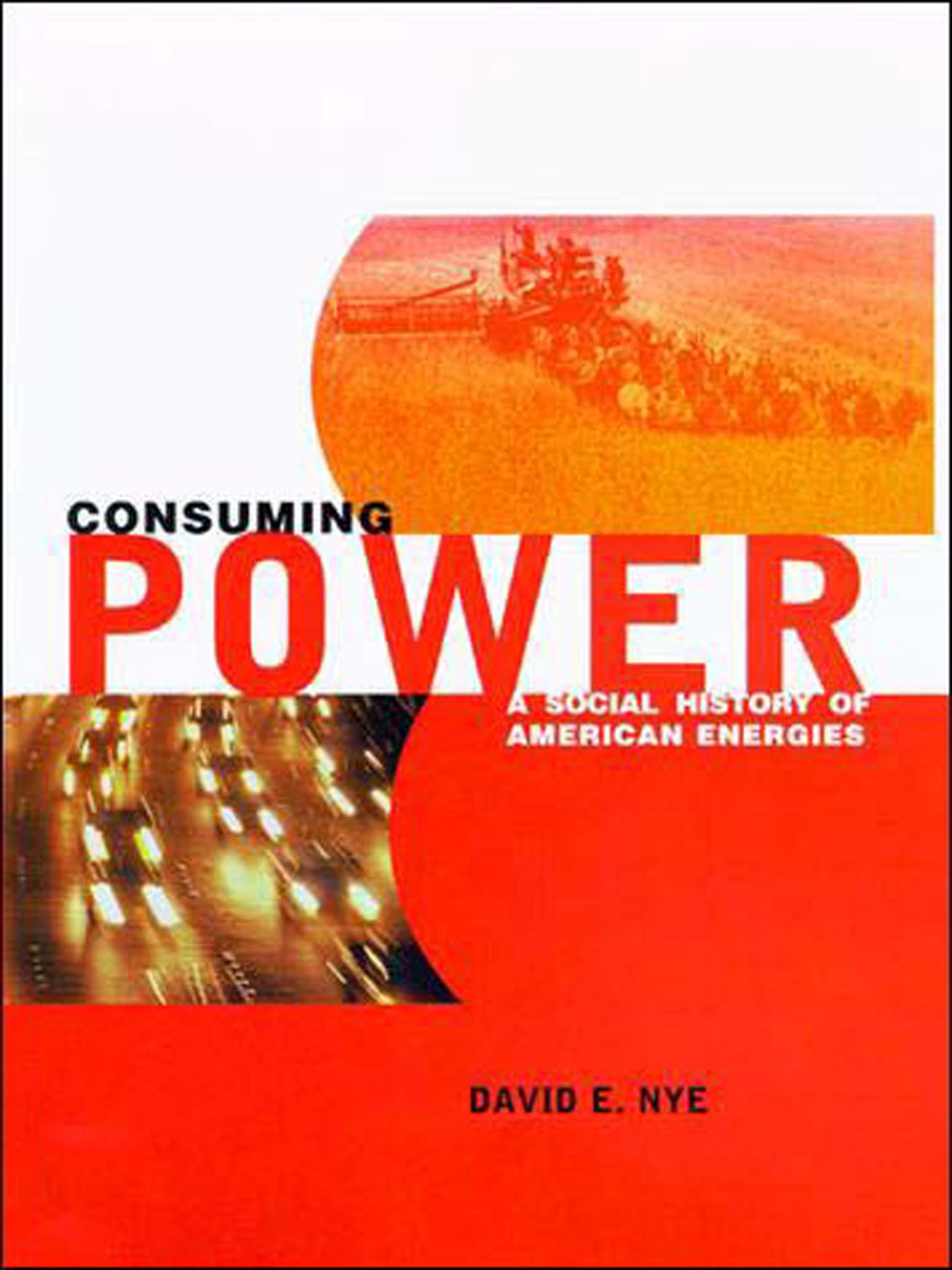
Nye uses energy as a touchstone to examine the lives of ordinary people engaged in normal activities.How did the United States become the world's largest consumer of energy? David Nye shows that this is less a question about the development of technology than it is a question about the development of culture. In Consuming Power, Nye uses energy as a touchstone to examine the lives of ordinary people engaged in normal activities. He looks at how these activities changed as new energy systems were constructed, from colonial times to recent years. He also shows how, as Americans incorporated new machines and processes into their lives, they became ensnared in power systems that were not easily changed: they made choices about the conduct of their lives, and those choices accumulated to produce a consuming culture. Nye examines a sequence of large systems that acquired and then lost technological momentum over the course of American history, including water power, steam power, electricity, the internalcombustion engine, atomic power, and computerization. He shows how each system became part of a larger set of social constructions through its links to the home, the factory, and the city. The result is a social history of America as seen through the lens of energy consumption.
⚠️ WARNING (California Proposition 65):
This product may contain chemicals known to the State of California to cause cancer,
birth defects, or other reproductive harm.
For MAP (Minimum Advertised Price) violations and Intellectual Property (IP) or Trademark concerns, please contact:
support@ergodebooks.com
⚠️ California Proposition 65 Warning: Some products sold on this website may expose you to chemicals known to the State of California to cause cancer, birth defects, or other reproductive harm. For more information, visit www.P65Warnings.ca.gov.