If you have any questions, you are always welcome to contact us. We'll get back to you as soon as possible, withing 24 hours on weekdays.
Customer service
All questions about your order, return and delivery must be sent to our customer service team by e-mail at yourstore@yourdomain.com
Sale & Press
If you are interested in selling our products, need more information about our brand or wish to make a collaboration, please contact us at press@yourdomain.com
Help
If you have any questions, you are always welcome to contact us. We'll get back to you as soon as possible, withing 24 hours on weekdays.
Customer service
All questions about your order, return and delivery must be sent to our customer service team by e-mail at yourstore@yourdomain.com
Sale & Press
If you are interested in selling our products, need more information about our brand or wish to make a collaboration, please contact us at press@yourdomain.com
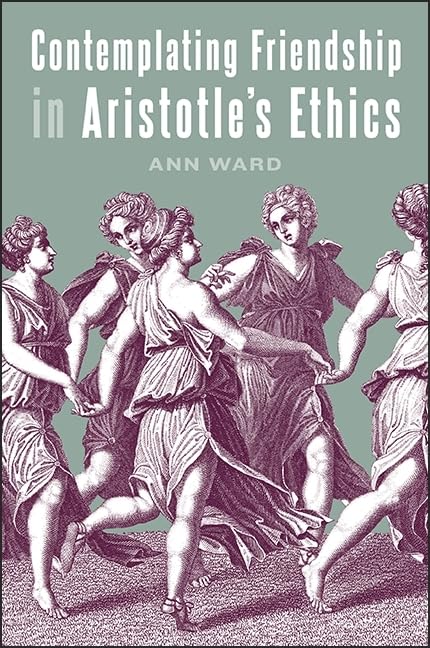
Examines how Aristotle posits political philosophy and the experience of friendship as a means to bind strictly intellectual virtue with morality.In this book, Ann Ward explores Aristotles Nicomachean Ethics, focusing on the progressive structure of the argument. Aristotle begins by giving an account of moral virtue from the perspective of the moral agent, only to find that the account itself highlights fundamental tensions within the virtues that push the moral agent into the realm of intellectual virtue. However, the existence of an intellectual realm separate from the moral realm can lead to lack of selfrestraint. Aristotle, Ward argues, locates political philosophy and the experience of friendship as possible solutions to the problem of lack of selfrestraint, since political philosophy thinks about the human things in a universal way, and friendship grounds the pursuit of the good which is happiness understood as contemplation. Ward concludes that Aristotles philosophy of friendship points to the embodied intellect of timocratic friends and mothers in their activity of mothering as engaging in the highest form of contemplation and thus living the happiest life.
⚠️ WARNING (California Proposition 65):
This product may contain chemicals known to the State of California to cause cancer,
birth defects, or other reproductive harm.
For MAP (Minimum Advertised Price) violations and Intellectual Property (IP) or Trademark concerns, please contact:
support@ergodebooks.com
⚠️ California Proposition 65 Warning: Some products sold on this website may expose you to chemicals known to the State of California to cause cancer, birth defects, or other reproductive harm. For more information, visit www.P65Warnings.ca.gov.