
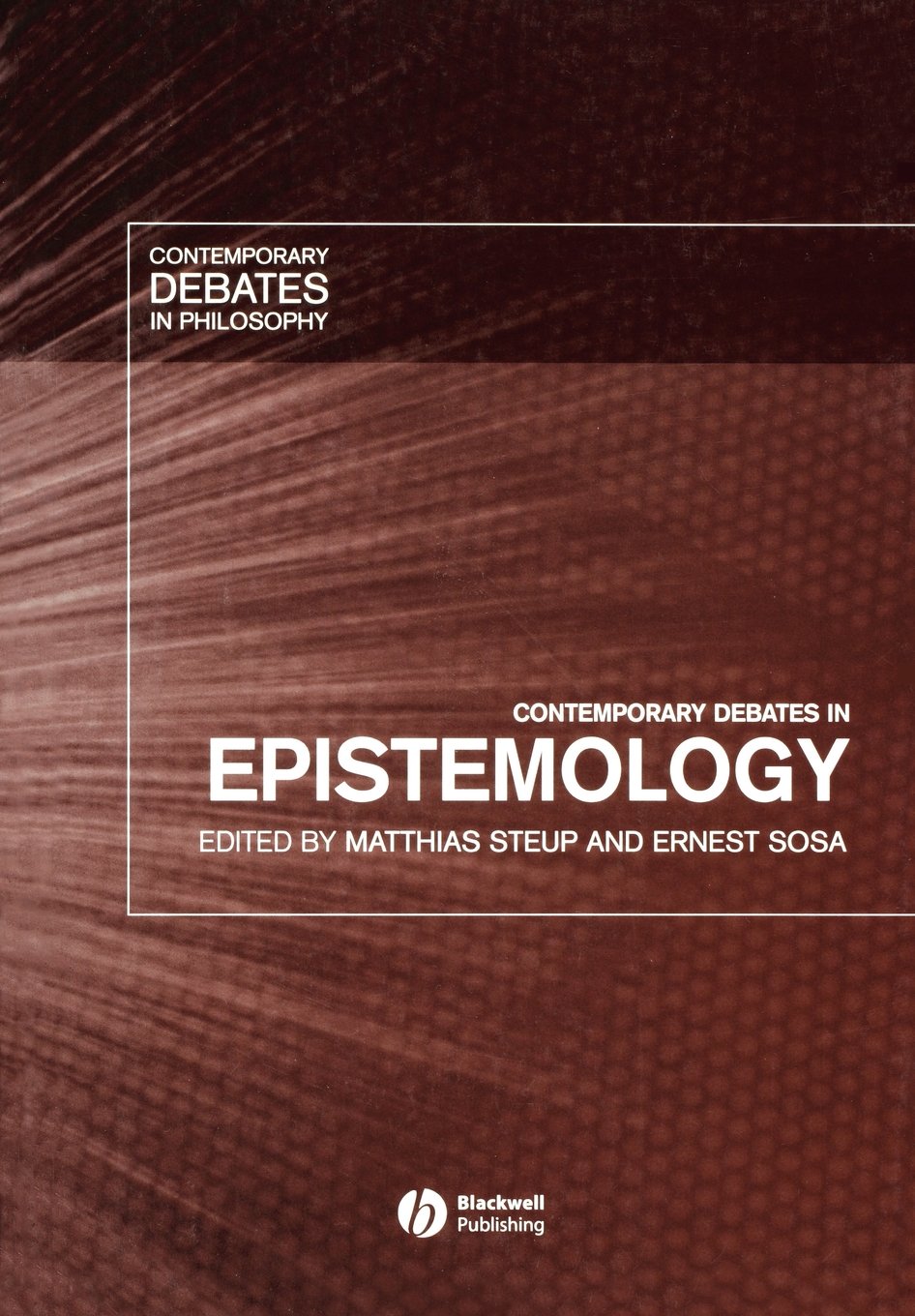
Title
Contemporary Debates in Epistemology,Used
Sold by Ergodebooks, an authorized reseller.
Returns accepted within 30 days | support@ergodebooks.com
Shipping Information
- Free Standard Shipping — United States only
- Processing Time: 3–5 business days
- Estimated Delivery: 6–10 business days after dispatch
- Double-boxed, fully insured & discreetly packaged
- Tracking number sent via email once dispatched
Returns & Refund
Returns accepted within 30 days of delivery.
Damaged or Defective Item
Free return shipping + replacement or full refund
Wrong Item Received
Free return shipping + replacement or full refund
Change of Mind
Return shipping at customer's expense · 25% restocking fee applies
Payment Option

Eleven pairs of newly commissioned essays face off on opposite sides of fundamental problems in current theories of knowledge.Brings together fresh debates on eleven of the most controversial issues in epistemology.Questions addressed include: Is knowledge contextual? Can skepticism be refuted? Can beliefs be justified through coherence alone? Is justified belief responsible belief?Lively debate format sharply defines the issues, and paves the way for further discussion.Will serve as an accessible introduction to the major topics in contemporary epistemology, whilst also capturing the imagination of professional philosophers.
⚠️ WARNING (California Proposition 65):
This product may contain chemicals known to the State of California to cause cancer, birth defects, or other reproductive harm.
For more information, please visit www.P65Warnings.ca.gov.
- Q: How many pages does this book have? A: This book has three hundred sixty-two pages. It provides comprehensive coverage of contemporary debates in epistemology.
- Q: What is the binding type of this book? A: The binding type is paperback. This makes it lightweight and easy to handle for reading or transport.
- Q: What are the dimensions of this book? A: The dimensions are six point six nine inches in length, zero point eight three inches in width, and nine point six one inches in height. These dimensions make it a convenient size for both reading and storage.
- Q: Who is the author of this book? A: The author is Matthias Steup. He is known for his contributions to the field of epistemology.
- Q: What topics are discussed in this book? A: The book discusses fundamental problems in current theories of knowledge. It addresses controversial issues like the context of knowledge and the justification of beliefs.
- Q: Is this book suitable for beginners in philosophy? A: Yes, this book serves as an accessible introduction to major topics in contemporary epistemology. It is designed to engage both new learners and professional philosophers.
- Q: How can I use this book for study? A: You can use this book as a resource for understanding contemporary debates in epistemology. It is structured with essays that present opposing views on key philosophical questions.
- Q: Is there a recommended age group for readers of this book? A: This book is suitable for adult readers and advanced students. It addresses complex philosophical issues that require a mature understanding.
- Q: How do I keep this book in good condition? A: To keep this book in good condition, store it in a cool, dry place away from direct sunlight. Avoid bending the spine to maintain its shape.
- Q: Is this book safe for children? A: No, this book is not intended for children. It deals with complex philosophical concepts that are more suitable for adults.
- Q: What should I do if the book arrives damaged? A: If the book arrives damaged, contact the seller for a return or replacement. Most sellers have a customer service policy to address such issues.
- Q: Can this book be used in academic courses? A: Yes, this book can be used in academic courses focusing on philosophy or epistemology. It provides valuable insights and discussions on key topics.
- Q: Are there any specific debates highlighted in this book? A: Yes, the book highlights debates on issues like skepticism and the justification of beliefs. Each essay presents different perspectives on these topics.
- Q: Is there an index or glossary in the book? A: No, the book does not specifically mention an index or glossary. However, the essays are organized to facilitate understanding of the discussed topics.
- Q: What publisher released this book? A: The book is published by Wiley-Blackwell. This publisher is known for its academic and professional books in various fields.
- Q: Does this book include illustrations or diagrams? A: No, the book does not include illustrations or diagrams. It focuses on text-based discussions of philosophical arguments and debates.