
Title
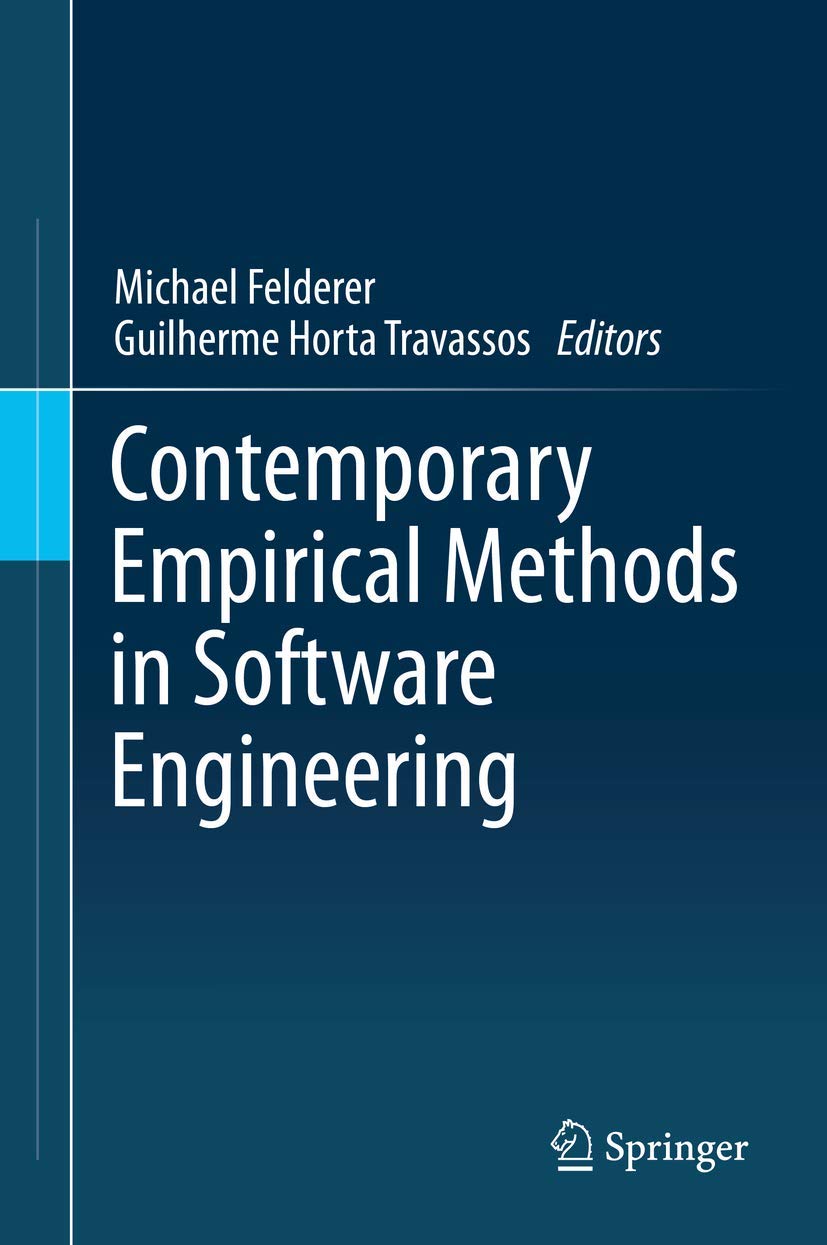
Contemporary Empirical Methods in Software Engineering,Used
Sold by Ergodebooks, an authorized reseller.
Returns accepted within 30 days | support@ergodebooks.com
Shipping Information
- Free Standard Shipping — United States only
- Processing Time: 3–5 business days
- Estimated Delivery: 6–10 business days after dispatch
- Double-boxed, fully insured & discreetly packaged
- Tracking number sent via email once dispatched
Returns & Refund
Returns accepted within 30 days of delivery.
Damaged or Defective Item
Free return shipping + replacement or full refund
Wrong Item Received
Free return shipping + replacement or full refund
Change of Mind
Return shipping at customer's expense · 25% restocking fee applies
Payment Option

This book presents contemporary empirical methods in software engineering related to the plurality of research methodologies, human factors, data collection and processing, aggregation and synthesis of evidence, and impact of software engineering research. The individual chapters discuss methods that impact the current evolution of empirical software engineering and form the backbone of future research.Following an introductory chapter that outlines the background of and developments in empirical software engineering over the last 50 years and provides an overview of the subsequent contributions, the remainder of the book is divided into four parts: Study Strategies (including e.g. guidelines for surveys or design science); Data Collection, Production, and Analysis (highlighting approaches from e.g. data science, biometric measurement, and simulationbased studies); Knowledge Acquisition and Aggregation (highlighting literature research, threats to validity, and evidence aggregation); and Knowledge Transfer (discussing open science and knowledge transfer with industry).Empirical methods like experimentation have become a powerful means of advancing the field of software engineering by providing scientific evidence on software development, operation, and maintenance, but also by supporting practitioners in their decisionmaking and learning processes. Thus the book is equally suitable for academics aiming to expand the field and for industrial researchers and practitioners looking for novel ways to check the validity of their assumptions and experiences. Chapter 17 is available open access under a Creative Commons Attribution 4.0 International License via link.springer.com.
⚠️ WARNING (California Proposition 65):
This product may contain chemicals known to the State of California to cause cancer, birth defects, or other reproductive harm.
For more information, please visit www.P65Warnings.ca.gov.