
Title
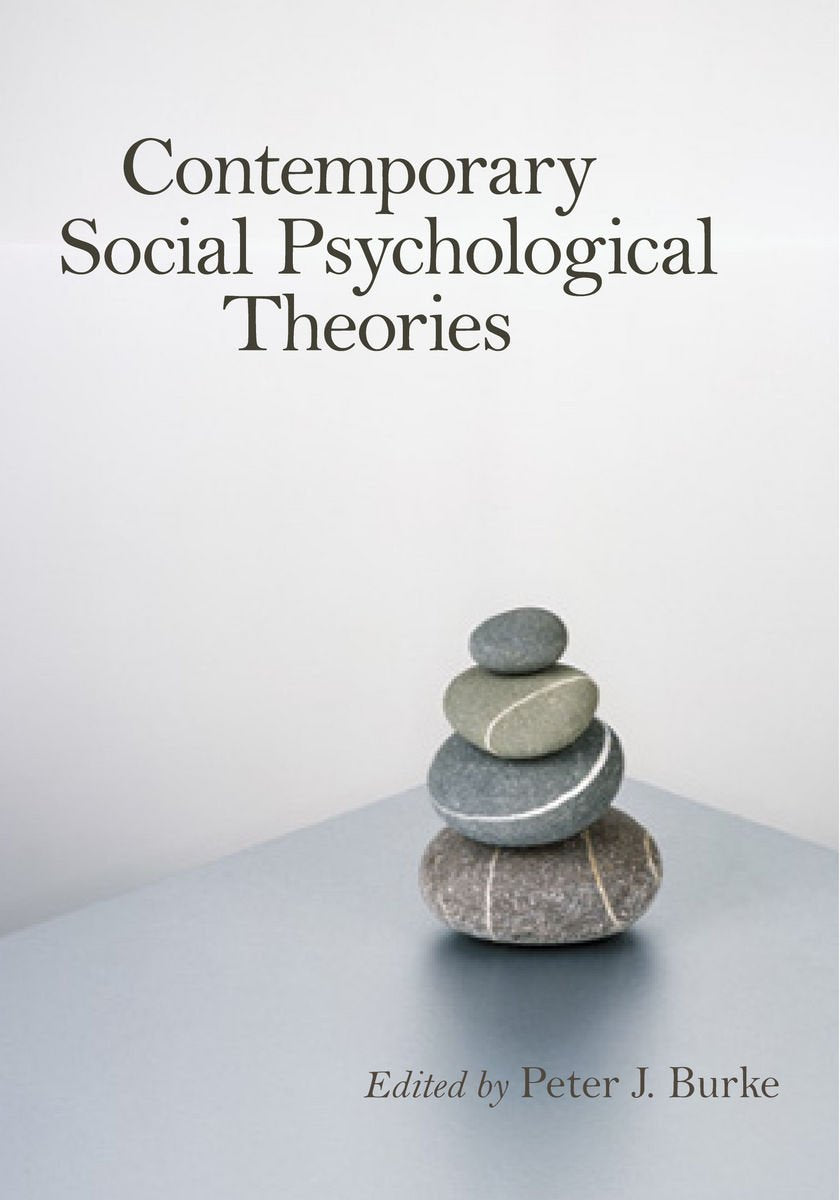
Contemporary Social Psychological Theories,Used
Sold by Ergodebooks, an authorized reseller.
Returns accepted within 30 days | support@ergodebooks.com
Shipping Information
- Free Standard Shipping — United States only
- Processing Time: 3–5 business days
- Estimated Delivery: 6–10 business days after dispatch
- Double-boxed, fully insured & discreetly packaged
- Tracking number sent via email once dispatched
Returns & Refund
Returns accepted within 30 days of delivery.
Damaged or Defective Item
Free return shipping + replacement or full refund
Wrong Item Received
Free return shipping + replacement or full refund
Change of Mind
Return shipping at customer's expense · 25% restocking fee applies
Payment Option

This text presents the most important and influential social psychological theories and research programs in contemporary sociology. Original chapters by the scholars who initiated and developed these theoretical perspectives provide full descriptions of each theory, its background, development, and future.The first four chapters cover general approaches, organized around fundamental principles and issuessymbolic interaction, social exchange, distributive justice, and rational choice. The following chapters focus on specific research programs and theories, examining identity, affect, comparison processes, power and dependence, social exchange, status construction, and legitimacy. A concluding chapter provides an analysis of and commentary on the state of the theoretical programs in sociological social psychology.Contributors: Peter J. Burke, Joseph Berger, Coye Cheshire, Karen S. Cook, Pamela Emanuelson, Alexandra Gerbasi, Karen A. Hegtvedt, Michael A. Hogg, Guillermina Jasso, Edward J. Lawler, Michael W. Macy, George J. McCall, Linda D. Molm, Cecilia L. Ridgeway, Dawn T. Robinson, Lynn SmithLovin, Jan E. Stets, Jonathan H. Turner, Murray Webster Jr., David Willer, and Morris Zelditch, Jr.
⚠️ WARNING (California Proposition 65):
This product may contain chemicals known to the State of California to cause cancer, birth defects, or other reproductive harm.
For more information, please visit www.P65Warnings.ca.gov.
- Q: How many pages does this book have? A: This book has four hundred pages. It provides a comprehensive overview of contemporary social psychological theories.
- Q: What is the binding type of this book? A: The binding type is paperback. This makes it lightweight and easy to handle.
- Q: What are the dimensions of this book? A: The dimensions are seven point zero one inches by one inch by ten inches. These measurements allow for easy storage on bookshelves.
- Q: Who is the author of this book? A: The author is Peter J. Burke. He is a notable scholar in the field of social psychology.
- Q: What topics does this book cover? A: This book covers a range of topics including identity, affect, and social exchange. It provides insights into various social psychological theories.
- Q: Is this book suitable for undergraduate students? A: Yes, this book is suitable for undergraduate students. It provides foundational knowledge in social psychology.
- Q: Can this book be used for advanced research? A: Yes, it can be used for advanced research. The contributors are established scholars in social psychology.
- Q: Are there any specific theories discussed in this book? A: Yes, theories such as symbolic interaction and rational choice are discussed. Each theory is examined in detail.
- Q: Is this book appropriate for beginners in social psychology? A: Yes, this book is appropriate for beginners. It offers clear explanations of complex theories.
- Q: How should I care for this paperback book? A: Keep it in a dry place and avoid direct sunlight. This will help preserve its condition over time.
- Q: Can I easily transport this book? A: Yes, this book is lightweight and portable. You can easily carry it in a bag or backpack.
- Q: Is this book safe to read for all ages? A: Yes, the content is suitable for a general audience. It does not contain inappropriate material.
- Q: What if my book arrives damaged? A: If your book arrives damaged, you should contact the seller for a replacement or return. Most sellers have return policies in place.
- Q: How do I store this book to keep it in good condition? A: Store it upright on a shelf or in a bookcase. Avoid stacking heavy items on top of it.
- Q: Does this book include contributions from multiple authors? A: Yes, it includes contributions from several notable scholars. Each chapter is written by an expert in the field.
- Q: What research programs are highlighted in this book? A: Highlighted programs include status construction and power dynamics. Each is explored with thorough analysis.