
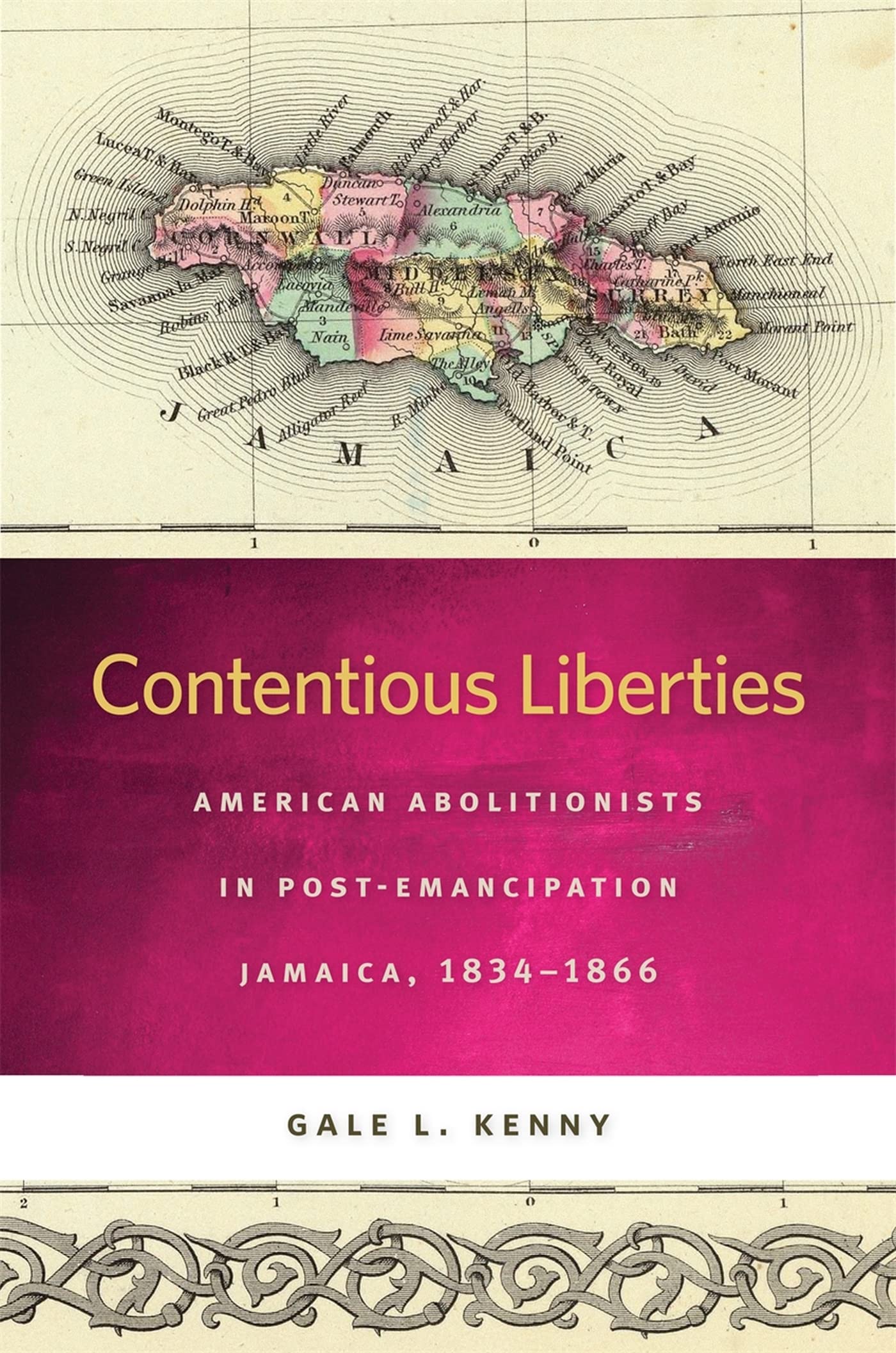
Title
Contentious Liberties: American Abolitionists In Postemancipation Jamaica, 18341866 (Race In The Atlantic World, 17001900 Ser,New
Sold by Ergodebooks, an authorized reseller.
Returns accepted within 30 days | support@ergodebooks.com
Shipping Information
- Free Standard Shipping — United States only
- Processing Time: 3–5 business days
- Estimated Delivery: 6–10 business days after dispatch
- Double-boxed, fully insured & discreetly packaged
- Tracking number sent via email once dispatched
Returns & Refund
Returns accepted within 30 days of delivery.
Damaged or Defective Item
Free return shipping + replacement or full refund
Wrong Item Received
Free return shipping + replacement or full refund
Change of Mind
Return shipping at customer's expense · 25% restocking fee applies
Payment Option

The Oberlin College mission to Jamaica, begun in the 1830s, was an ambitious, and ultimately troubled, effort to use the example of emancipation in the British West Indies to advance the domestic agenda of American abolitionists. White Americans hoped to argue that American slaves, once freed, could be absorbed productively into the society that had previously enslaved them, but their civilizing mission did not go as anticipated. Gale L. Kennys illuminating study examines the differing ideas of freedom held by white evangelical abolitionists and freed people in Jamaica and explores the consequences of their encounter for both American and Jamaican history.Kenny finds that white Americanswho went to Jamaica intending to assist with the transition from slavery to Christian practice and solid citizenshipwere frustrated by liberated blacks unwillingness to conform to Victorian norms of gender, family, and religion. In tracing the history of the thirtyyear mission, Kenny makes creative use of available sources to unpack assumptions on both sides of this AmericanJamaican interaction, showing how liberated slaves in many cases were able not just to resist the imposition of white mores but to redefine the terms of the encounter.
⚠️ WARNING (California Proposition 65):
This product may contain chemicals known to the State of California to cause cancer, birth defects, or other reproductive harm.
For more information, please visit www.P65Warnings.ca.gov.
- Q: What is the title of the book? A: The title of the book is 'Contentious Liberties: American Abolitionists in Post-Emancipation Jamaica, 1834-1866'.
- Q: Who is the author of this book? A: The author of this book is Gale L. Kenny.
- Q: How many pages does the book have? A: The book has two hundred twelve pages.
- Q: What are the dimensions of the book? A: The book measures six inches in length, zero point six one inches in width, and nine point zero two inches in height.
- Q: What type of binding does the book have? A: The book is available in paperback binding.
- Q: What is the main topic of the book? A: The main topic of the book is the interaction between American abolitionists and liberated people in Jamaica during the post-emancipation period.
- Q: How does the author explore the ideas of freedom? A: The author examines the differing ideas of freedom held by white evangelical abolitionists and freed people in Jamaica.
- Q: Is this book suitable for academic studies? A: Yes, this book is suitable for academic studies, particularly in American and Jamaican history.
- Q: What historical period does the book cover? A: The book covers the period from eighteen thirty-four to eighteen sixty-six.
- Q: What themes are explored in the book? A: The book explores themes of emancipation, civilizing missions, and cultural encounters.
- Q: How can I use this book for research? A: You can use this book for research by referencing its analysis of American abolitionist efforts in Jamaica.
- Q: Is this book appropriate for high school students? A: Yes, this book is appropriate for advanced high school students interested in history.
- Q: What should I do to care for the book? A: To care for the book, store it in a cool, dry place and handle it gently to preserve its condition.
- Q: Can I return the book if I’m not satisfied? A: Yes, you can return the book if you are not satisfied, following the retailer's return policy.
- Q: What if the book arrives damaged? A: If the book arrives damaged, contact the seller for a replacement or refund as per their policy.
- Q: How does this book compare to other historical texts? A: This book offers a unique perspective on the American and Jamaican historical relationship, differing from other texts by focusing on personal encounters.