
Title
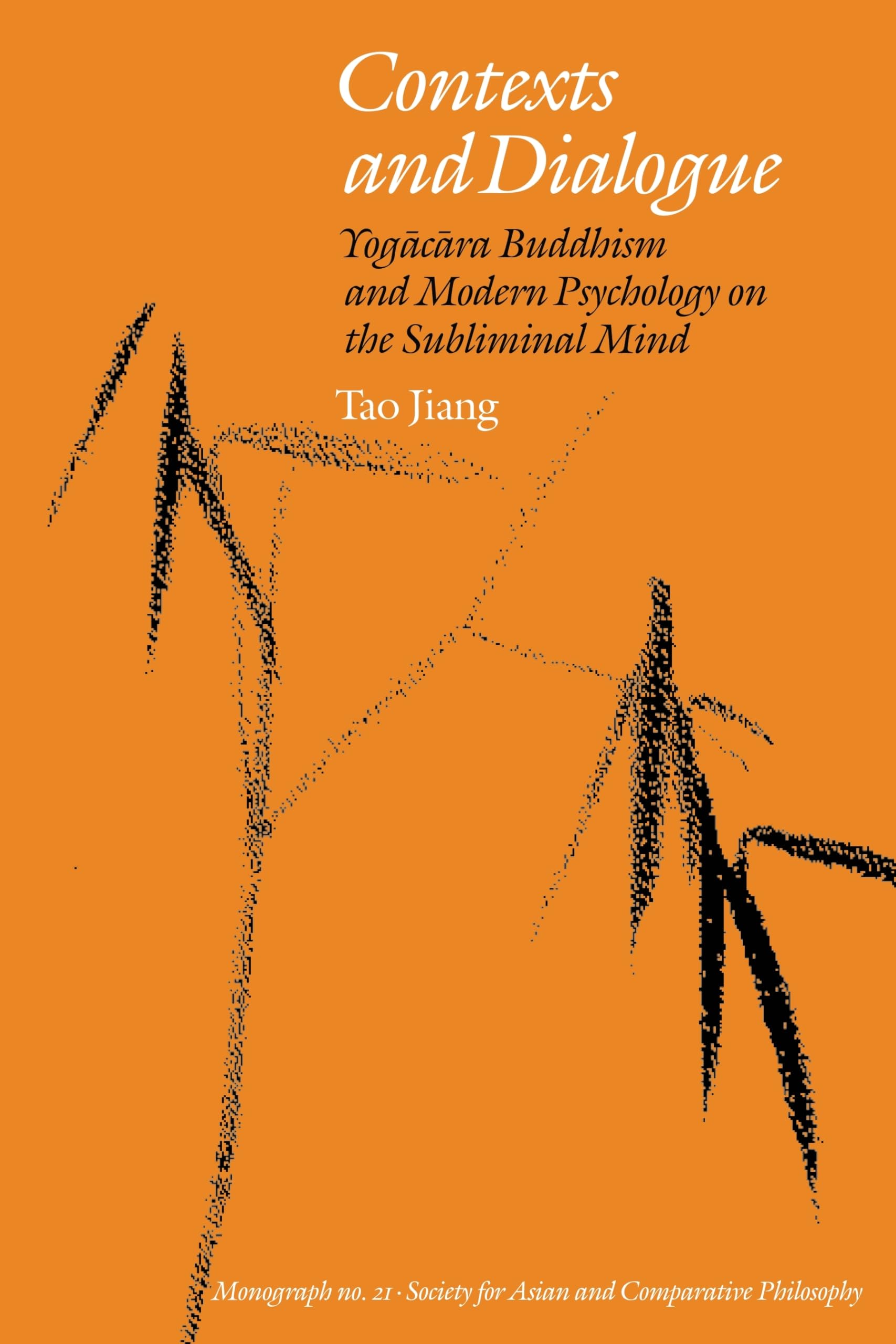
Contexts And Dialogue: Yogacara Buddhism And Modern Psychology On The Subliminal Mind (Monographs Of The Society For Asian And C,Used
Sold by Ergodebooks, an authorized reseller.
Returns accepted within 30 days | support@ergodebooks.com
Shipping Information
- Free Standard Shipping — United States only
- Processing Time: 3–5 business days
- Estimated Delivery: 6–10 business days after dispatch
- Double-boxed, fully insured & discreetly packaged
- Tracking number sent via email once dispatched
Returns & Refund
Returns accepted within 30 days of delivery.
Damaged or Defective Item
Free return shipping + replacement or full refund
Wrong Item Received
Free return shipping + replacement or full refund
Change of Mind
Return shipping at customer's expense · 25% restocking fee applies
Payment Option

Are there Buddhist conceptions of the unconscious? If so, are they more Freudian, Jungian, or something else? If not, can Buddhist conceptions be reconciled with the Freudian, Jungian, or other models? These are some of the questions that have motivated modern scholarship to approach alayavijana, the storehouse consciousness, formulated in Yogacara Buddhism as a subliminal reservoir of tendencies, habits, and future possibilities.Tao Jiang argues convincingly that such questions are inherently problematic because they frame their interpretations of the Buddhist notion largely in terms of responses to modern psychology. He proposes that, if we are to understand alayavijana properly and compare it with the unconscious responsibly, we need to change the way the questions are posed so that alayavijana and the unconscious can first be understood within their own contexts and then recontextualized within a dialogical setting. In so doing, certain paradigmatic assumptions embedded in the original frameworks of Buddhist and modern psychological theories are exposed. Jiang brings together Xuan Zangs alayavijana and Freuds and Jungs unconscious to focus on what the differences are in the thematic concerns of the three theories, why such differences exist in terms of their objectives, and how their methods of theorization contribute to these differences.Contexts and Dialogue puts forth a fascinating, erudite, and carefully argued presentation of the subliminal mind. It proposes a new paradigm in comparative philosophy that examines the what, why, and how in navigating the similarities and differences of philosophical systems through contextualization and recontextualization.
⚠️ WARNING (California Proposition 65):
This product may contain chemicals known to the State of California to cause cancer, birth defects, or other reproductive harm.
For more information, please visit www.P65Warnings.ca.gov.
- Q: How many pages does the book have? A: This book has two hundred fourteen pages. It provides an in-depth analysis of Yogacara Buddhism and modern psychology.
- Q: What is the binding type of this book? A: The book is paperback bound. This makes it lightweight and flexible for easy handling.
- Q: What are the dimensions of the book? A: The dimensions of the book are six inches in length, zero point five one inches in width, and eight point seven five inches in height.
- Q: Who is the author of 'Contexts and Dialogue'? A: The author is Tao Jiang. He is known for his work in comparative philosophy, particularly involving Buddhism and psychology.
- Q: What is the main topic of this book? A: The book explores Buddhist conceptions of the unconscious mind. It compares these ideas with Freudian and Jungian psychological theories.
- Q: Is this book suitable for beginners in Buddhism? A: Yes, it can be suitable for beginners. The book presents complex ideas in an accessible manner, focusing on fundamental concepts.
- Q: What questions does the book address regarding Buddhism and psychology? A: It addresses whether Buddhist notions of the unconscious can align with modern psychological theories. It also questions how these frameworks can be understood within their own contexts.
- Q: How should I approach reading this book? A: To get the most from the book, read it with an open mind and consider the contextual differences between Buddhist and psychological theories. Reflecting on the dialogue between the two will enhance understanding.
- Q: What is the recommended way to care for this book? A: To care for the book, keep it in a dry, cool place and avoid exposing it to direct sunlight. This will help preserve its condition over time.
- Q: Is this book safe for all ages? A: Yes, the book is suitable for all ages. It discusses philosophical concepts that can be appreciated by readers of various backgrounds.
- Q: How do I store this book to ensure its longevity? A: Store the book upright on a shelf or in a bookcase to prevent bending or damage. Avoid stacking heavy items on top of it.
- Q: What makes this book a valuable read? A: This book offers a unique perspective on the subliminal mind through the lens of comparative philosophy. It challenges traditional interpretations and encourages dialogue between different philosophical systems.
- Q: Can this book help in understanding Freudian and Jungian concepts? A: Yes, it provides insights into how Buddhist ideas compare with Freudian and Jungian concepts of the unconscious. This comparative analysis enriches the reader's understanding of all three.
- Q: What are the key features of this book? A: The key features include its thorough exploration of Buddhism and psychology, its engaging writing style, and its scholarly approach to comparative philosophy.
- Q: Will I find references and citations in this book? A: Yes, the book contains scholarly references and citations. This adds credibility and allows readers to explore the concepts further.
- Q: Is this book a part of a larger series? A: Yes, it is part of the Monographs of the Society for Asian and Comparative Philosophy. This series focuses on interdisciplinary discussions in philosophy.