
Title
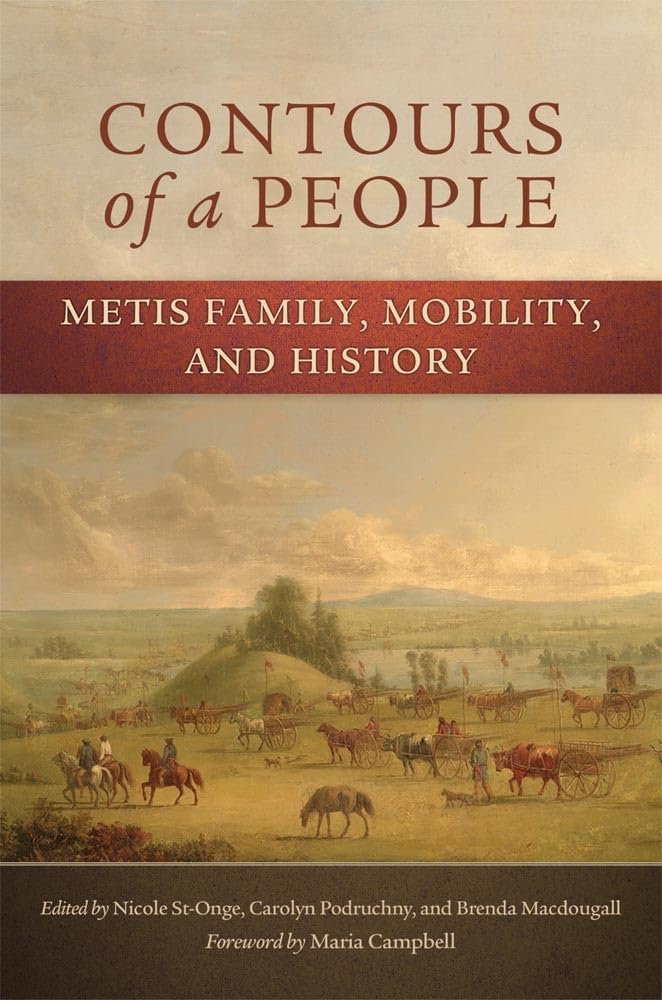
Contours Of A People: Metis Family, Mobility, And History (Volume 6) (New Directions In Native American Studies Series),Used
Sold by Ergodebooks, an authorized reseller.
Returns accepted within 30 days | support@ergodebooks.com
Shipping Information
- Free Standard Shipping — United States only
- Processing Time: 3–5 business days
- Estimated Delivery: 6–10 business days after dispatch
- Double-boxed, fully insured & discreetly packaged
- Tracking number sent via email once dispatched
Returns & Refund
Returns accepted within 30 days of delivery.
Damaged or Defective Item
Free return shipping + replacement or full refund
Wrong Item Received
Free return shipping + replacement or full refund
Change of Mind
Return shipping at customer's expense · 25% restocking fee applies
Payment Option

What does it mean to be Metis? How do the Metis understand their world, and how do family, community, and location shape their consciousness? Such questions inform this collection of essays on the northwestern North American people of mixed European and Native ancestry who emerged in the seventeenth century as a distinct culture. Volume editors Nicole StOnge, Carolyn Podruchny, and Brenda Macdougall go beyond the concern with race and ethnicity that takes center stage in most discussions of Metis culture to offer new ways of thinking about Metis identity.Geography, mobility, and family have always defined Metis culture and society. The Metis world spanned the better part of a continent, and a major theme of Contours of a People is the Metis conception of geographynot only how Metis people used their environments but how they gave meaning to place and developed connections to multiple landscapes. Their geographic familiarity, physical and social mobility, and maintenance of family ties across time and space appear to have evolved in connection with the fur trade and other commercial endeavors. These efforts, and the cultural practices that emerged from them, have contributed to a sense of community and the nationalist sentiment felt by many Metis today.Writing about a wide geographic area, the contributors consider issues ranging from Metis rights under Canadian law and how the Library of Congress categorizes Metis scholarship to the role of women in maintaining economic and social networks. The authors emphasis on geography and its power in shaping identity will influence and enlighten Canadian and American scholars across a variety of disciplines.
⚠️ WARNING (California Proposition 65):
This product may contain chemicals known to the State of California to cause cancer, birth defects, or other reproductive harm.
For more information, please visit www.P65Warnings.ca.gov.