
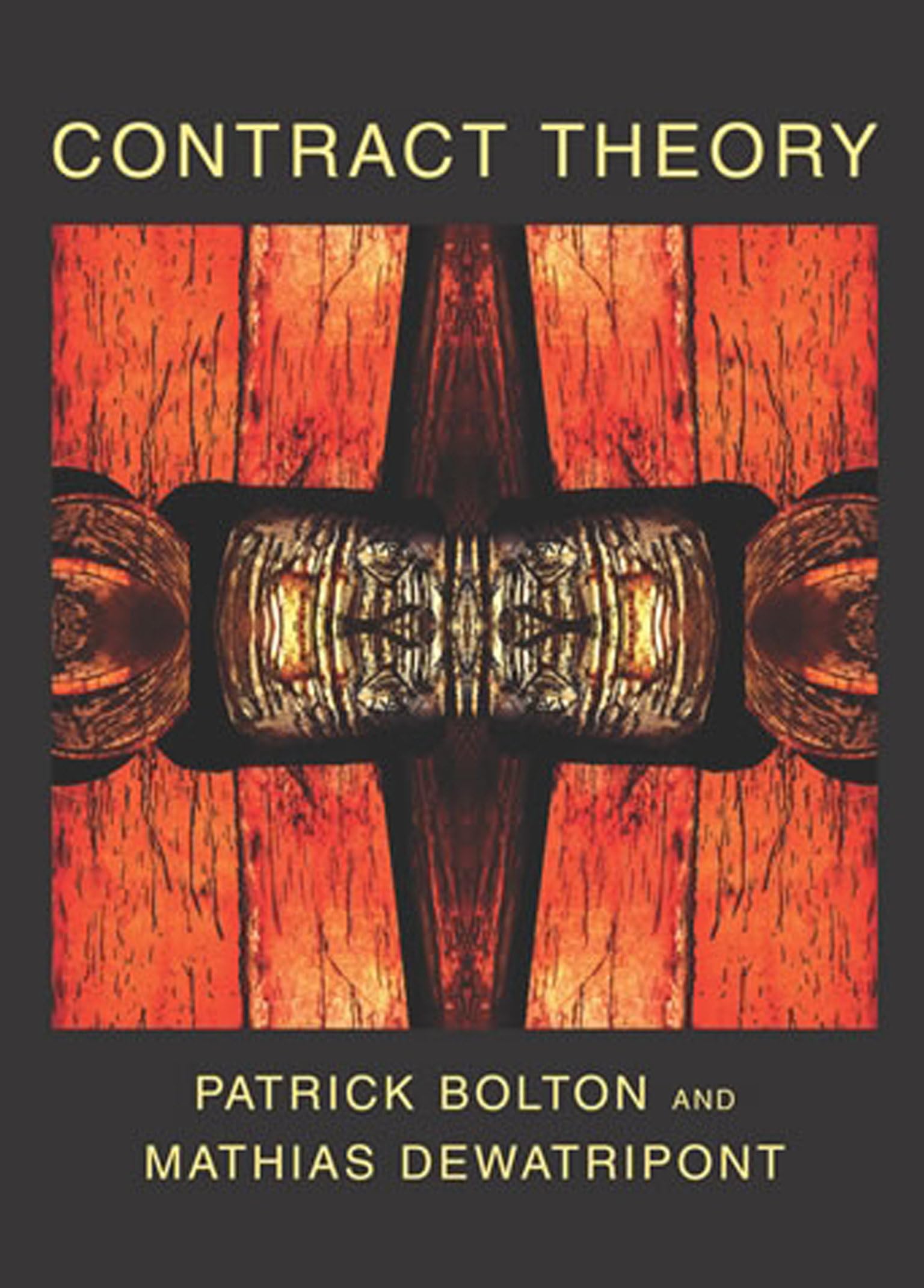
Title
Contract Theory,Used
Sold by Ergodebooks, an authorized reseller.
Returns accepted within 30 days | support@ergodebooks.com
Shipping Information
- Free Standard Shipping — United States only
- Processing Time: 3–5 business days
- Estimated Delivery: 6–10 business days after dispatch
- Double-boxed, fully insured & discreetly packaged
- Tracking number sent via email once dispatched
Returns & Refund
Returns accepted within 30 days of delivery.
Damaged or Defective Item
Free return shipping + replacement or full refund
Wrong Item Received
Free return shipping + replacement or full refund
Change of Mind
Return shipping at customer's expense · 25% restocking fee applies
Payment Option

A Comprehensive Introduction To Contract Theory, Emphasizing Common Themes And Methodologies As Well As Applications In Key Areas.Despite The Vast Research Literature On Topics Relating To Contract Theory, Only A Few Of The Field'S Core Ideas Are Covered In Microeconomics Textbooks. This Longawaited Book Fills The Need For A Comprehensive Textbook On Contract Theory Suitable For Use At The Graduate And Advanced Undergraduate Levels. It Covers The Areas Of Agency Theory, Information Economics, And Organization Theory, Highlighting Common Themes And Methodologies And Presenting The Main Ideas In An Accessible Way. It Also Presents Many Applications In All Areas Of Economics, Especially Labor Economics, Industrial Organization, And Corporate Finance. The Book Emphasizes Applications Rather Than General Theorems While Providing Selfcontained, Intuitive Treatment Of The Simple Models Analyzed. In This Way, It Can Also Serve As A Reference For Researchers Interested In Building Contracttheoretic Models In Applied Contexts.The Book Covers All The Major Topics In Contract Theory Taught In Most Graduate Courses. It Begins By Discussing Such Basic Ideas In Incentive And Information Theory As Screening, Signaling, And Moral Hazard. Subsequent Sections Treat Multilateral Contracting With Private Information Or Hidden Actions, Covering Auction Theory, Bilateral Trade Under Private Information, And The Theory Of The Internal Organization Of Firms; Longterm Contracts With Private Information Or Hidden Actions; And Incomplete Contracts, The Theory Of Ownership And Control, And Contracting With Externalities. Each Chapter Ends With A Guide To The Relevant Literature. Exercises Appear In A Separate Chapter At The End Of The Book.
⚠️ WARNING (California Proposition 65):
This product may contain chemicals known to the State of California to cause cancer, birth defects, or other reproductive harm.
For more information, please visit www.P65Warnings.ca.gov.
- Q: How many pages does 'Contract Theory' have? A: This book has seven hundred forty-four pages. It provides an extensive overview of contract theory, suitable for graduate and advanced undergraduate students.
- Q: What are the dimensions of 'Contract Theory'? A: The dimensions are seven point thirty-two inches in length, one point sixty-three inches in width, and nine point twenty-five inches in height. These measurements make it a convenient size for reading and reference.
- Q: What binding does 'Contract Theory' use? A: It uses a hardcover binding. This type of binding ensures durability and a professional appearance, making it ideal for academic use.
- Q: Who is the author of 'Contract Theory'? A: The author is Patrick Bolton. He is recognized for his contributions to the field of contract theory and economics.
- Q: What category does 'Contract Theory' fall under? A: It falls under the category of Microeconomics. This book emphasizes key themes and methodologies in contract theory.
- Q: Is 'Contract Theory' suitable for beginners? A: No, it is primarily designed for graduate and advanced undergraduate students. However, it can serve as a reference for researchers interested in contract-theoretic models.
- Q: How does 'Contract Theory' approach complex topics? A: It emphasizes applications rather than general theorems. The book presents intuitive treatments of simple models, making complex topics more accessible.
- Q: Are there exercises included in 'Contract Theory'? A: Yes, exercises appear in a separate chapter at the end of the book. This feature allows readers to practice and apply the concepts discussed.
- Q: Does 'Contract Theory' cover real-world applications? A: Yes, it presents many applications across various areas of economics, including labor economics, industrial organization, and corporate finance.
- Q: Is 'Contract Theory' recommended for researchers? A: Yes, it serves as a valuable reference for researchers. It includes discussions on building contract-theoretic models in applied contexts.
- Q: What core topics are covered in 'Contract Theory'? A: It covers topics such as agency theory, information economics, and organization theory. Each chapter enhances understanding of contract theory fundamentals.
- Q: Does 'Contract Theory' discuss incentive theory? A: Yes, it begins with basic ideas in incentive and information theory, including screening, signaling, and moral hazard.
- Q: What unique features does 'Contract Theory' offer? A: Each chapter ends with a guide to the relevant literature, providing additional resources for deeper understanding.
- Q: Is the content in 'Contract Theory' accessible? A: Yes, the book presents the main ideas in an accessible way, making complex concepts easier to understand.
- Q: Who publishes 'Contract Theory'? A: It is published by The MIT Press, known for its authoritative publications in the field of economics.