
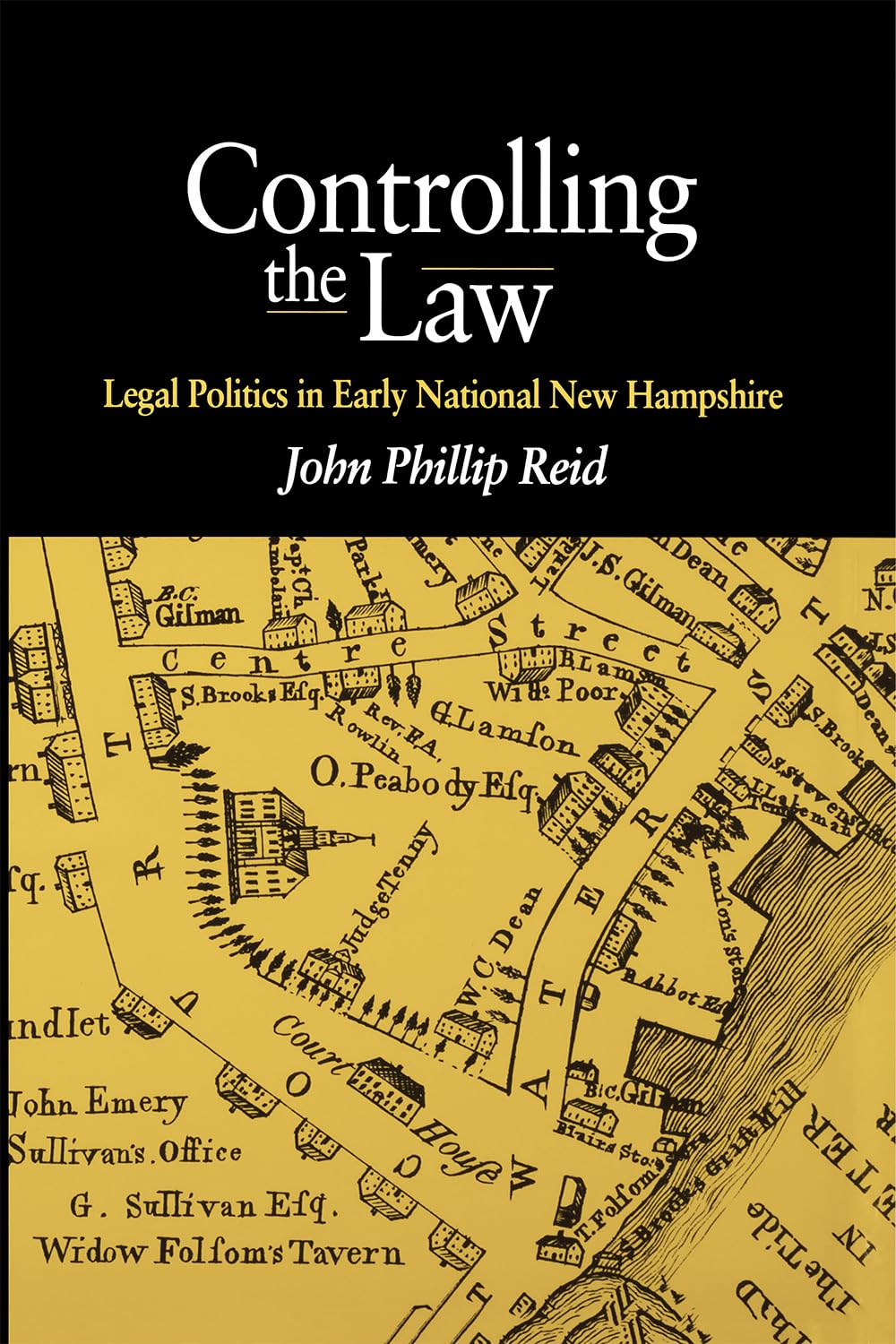
Title
Controlling The Law: Legal Politics In Early National New Hampshire,Used
Sold by Ergodebooks, an authorized reseller.
Returns accepted within 30 days | support@ergodebooks.com
Shipping Information
- Free Standard Shipping — United States only
- Processing Time: 3–5 business days
- Estimated Delivery: 6–10 business days after dispatch
- Double-boxed, fully insured & discreetly packaged
- Tracking number sent via email once dispatched
Returns & Refund
Returns accepted within 30 days of delivery.
Damaged or Defective Item
Free return shipping + replacement or full refund
Wrong Item Received
Free return shipping + replacement or full refund
Change of Mind
Return shipping at customer's expense · 25% restocking fee applies
Payment Option

In today's courtroom, the jurors evaluate the evidence and pronounce the verdict while the judge has final authority in interpreting the lawbut it was not always so. In colonial America, the jurors enjoyed a much greater say. Legal historian John Phillip Reid recounts how the judges gained their modern authority in the early nineteenth century by instituting courtroom practices modeled on the English 'common law' judicial system.Reid brings this transformation, which in the days of the Early Republic spread throughout the states and even to the federal courts, down to human scale by focusing on the legal and judicial career of one man: Jeremiah Smith. First as a U.S. District Attorney, later as the Chief Justice of the New Hampshire Supreme Court, Smith promoted a series of reforms between 1797 and 1816. Intent upon placing the law in the hands of professional lawyers, he standardized legal procedures. While Smith made the judge lord of the courtroom at the expense of the jurors, he simultaneously mandated the publication of judicial reports that, by setting a series of precedents, served both to enhance the authority of one reading of the law and to impose limits on subsequent interpretations. As judicial decisions became more uniform, Smith believed, the law itself would become more certain.Not everyone supported these reforms, however. Jeffersonians claimed that such measures threatened to take power from the layman and feared that judges would replace democratically elected legislators as the real lawmakers. Smith himself proved eager to flex judicial muscle and soon found himself wrestling the state's governor, William Plumer. Smith's questionable rulings prolonged a trial involving Plumer's brother; and in 1805, when Plumer failed to honor a summons, Smith ordered his arrest. Plumer eventually exacted his revenge and removed Smith from the chief justice's bench. This conflict between two former friends adds a human dimension to legal history.Thanks largely to the reforms introduced by Jeremiah Smith in New Hampshire, by 1830, legal theory, legal practice, and the law itself were much more uniform throughout the United States than they had been just twentyfive years before. If the reformers had not, as Reid argues, intended to favor any particular class, they did prepare the way for the development of a reliable legal system able to serve merchants and capitalists in the Industrial Age.
⚠️ WARNING (California Proposition 65):
This product may contain chemicals known to the State of California to cause cancer, birth defects, or other reproductive harm.
For more information, please visit www.P65Warnings.ca.gov.