
Title
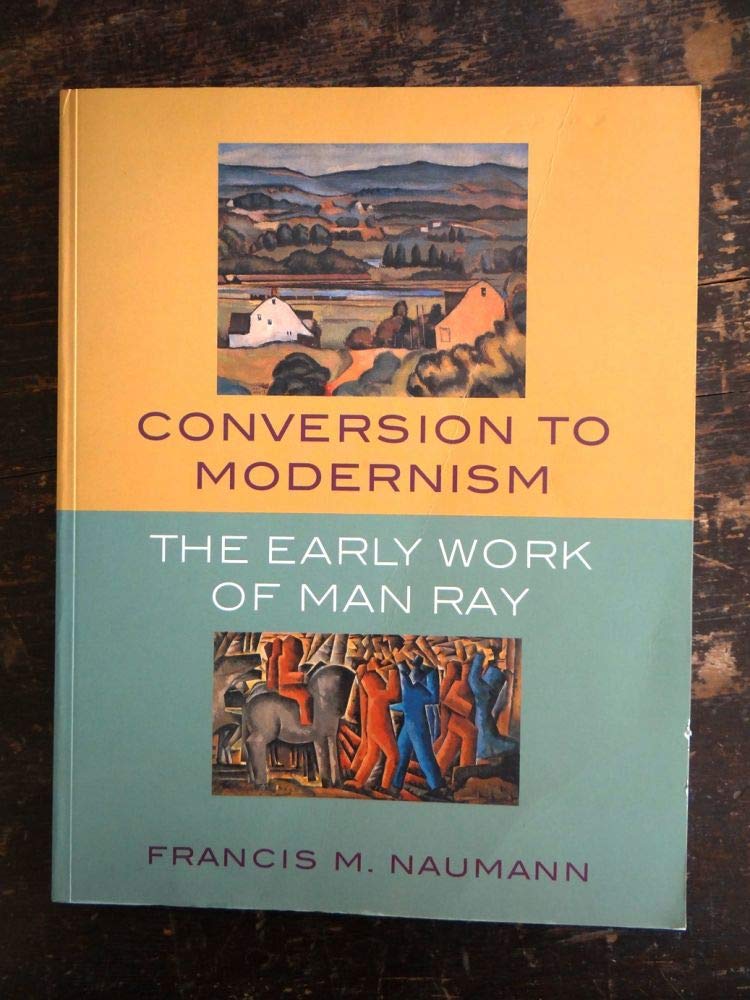
Conversion to Modernism: The Early Work of Man Ray,Used
Sold by Ergodebooks, an authorized reseller.
Returns accepted within 30 days | support@ergodebooks.com
Shipping Information
- Free Standard Shipping — United States only
- Processing Time: 3–5 business days
- Estimated Delivery: 6–10 business days after dispatch
- Double-boxed, fully insured & discreetly packaged
- Tracking number sent via email once dispatched
Returns & Refund
Returns accepted within 30 days of delivery.
Damaged or Defective Item
Free return shipping + replacement or full refund
Wrong Item Received
Free return shipping + replacement or full refund
Change of Mind
Return shipping at customer's expense · 25% restocking fee applies
Payment Option

Man Ray (18901976) has long been considered one of the most versatile and innovative artists of the twentieth century. As a painter, writer, sculptor, photographer, and filmmaker, he is best known for his intimate association with the French Surrealist group in Paris during the 1920s and 1930s, particularly for his highly inventive and unconventional photographic images. These remarkable accomplishments, however, have tended to overshadow the importance of his earlier worksignificant not only for comprehending Man Rays future artistic development, but also for fleshing out our understanding of the visual arts in America during one of the most important and crucial phases of the evolution of modernism.The book, and the exhibition for which this work will serve as the catalog, concentrate on Man Rays production from 1907 to 1917. Conversion to Modernism will be the first comprehensive, fully illustrated work to examine this artists seminal years. The show and the catalog begin with Man Rays high school years in Brooklyn, his studies at the Art Students League and the American Academy in New York, and the time he spent in life drawing classes at the more progressive Ferrer CenterFrom 1913 to 1915, Man Ray lived in a small artists colony in Grantwood, New Jersey. It was here, studying with Samuel Halpert (a former student of Matisse), that Man Ray began to become the artist we know today. The last section of the show and of the book include recently discovered photographs and other works that are influenced by a knowledge of the emergent Dada movement. Here is Man Ray in recognizable form just before he leaves the country for France in 1921.This exhibit will first be on display at the Montclair Art Museum from January 26 through March 2003. It will then travel to museums in Athens, Georgia, Philadelphia, and Chicago.
⚠️ WARNING (California Proposition 65):
This product may contain chemicals known to the State of California to cause cancer, birth defects, or other reproductive harm.
For more information, please visit www.P65Warnings.ca.gov.