
Title

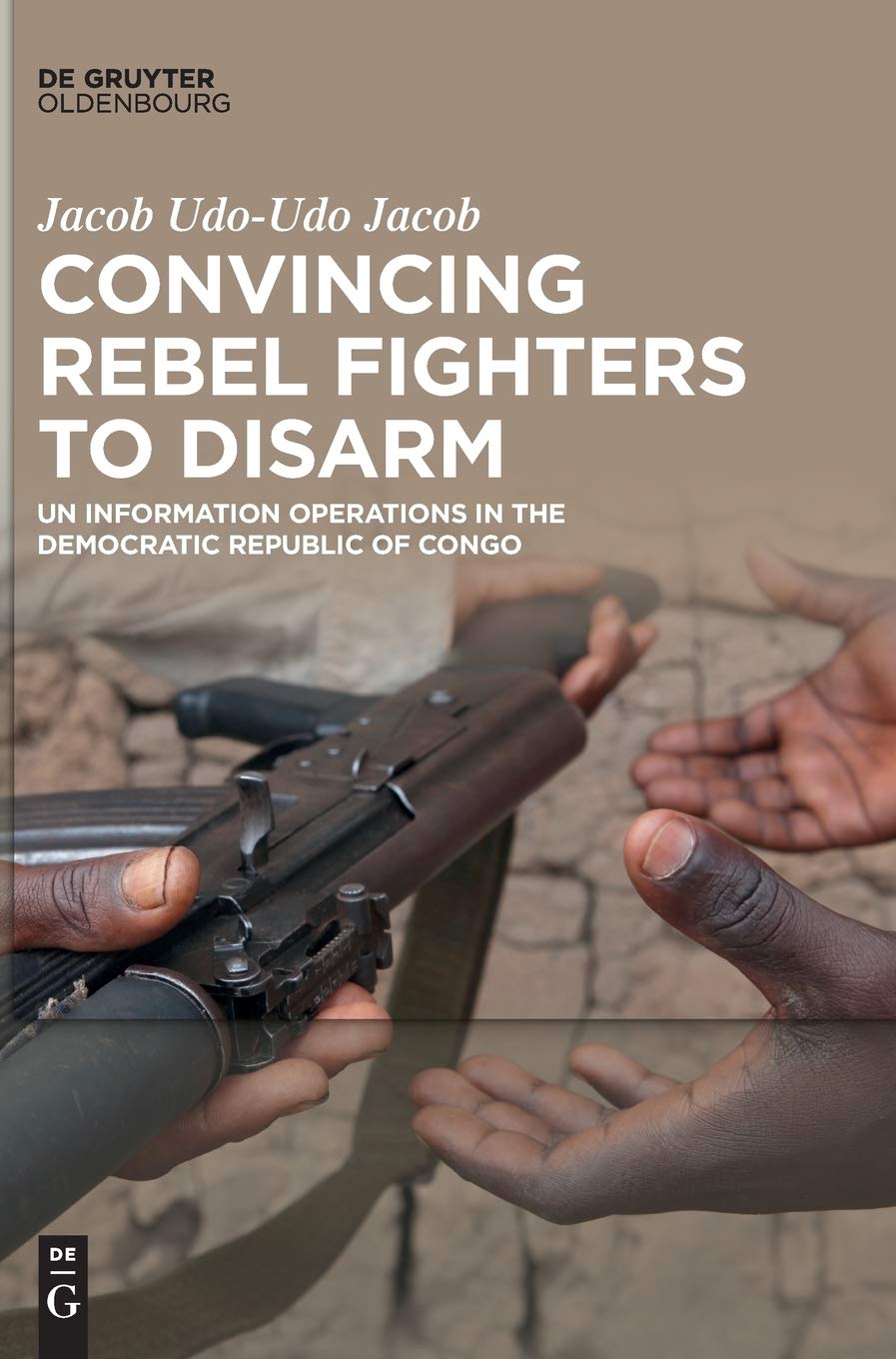
Convincing Rebel Fighters to Disarm: UN Information Operations in the Democratic Republic of Congo,Used
Sold by Ergodebooks, an authorized reseller.
Returns accepted within 30 days | support@ergodebooks.com
Shipping Information
- Free Standard Shipping — United States only
- Processing Time: 3–5 business days
- Estimated Delivery: 6–10 business days after dispatch
- Double-boxed, fully insured & discreetly packaged
- Tracking number sent via email once dispatched
Returns & Refund
Returns accepted within 30 days of delivery.
Damaged or Defective Item
Free return shipping + replacement or full refund
Wrong Item Received
Free return shipping + replacement or full refund
Change of Mind
Return shipping at customer's expense · 25% restocking fee applies
Payment Option

One of the key mission objectives of the UN Mission in the Democratic Republic of Congo (MONUC) was to disarm and repatriate foreign combatants in the eastern region of the country. To achieve this, MONUC adopted a push and pull" strategy.This involved applying military pressure while at the same time offering opportunities for voluntary disarmament and repatriation for armed combatants of the elusive but deadly Democratic Forces for the Liberation of Rwanda (FDLR) a predominantly Rwandan Hutu armed group in eastern DRC. As part of its "pull" strategy, MONUC embarked on one of the most sophisticated Information Operations (IO) campaigns in UN history with the core objective of convincing thousands of individual combatants and commanders of the FDLR to voluntarily disarm and join the UNs Demobilization, Disarmament, Repatriation, Resettlement and Reintegration programme (DDRRR).This book is derived from studies of the narratives, coordination and effectiveness of the UNs IO in support of DDRRR and how the UN has integrated IO as part of its Mission peace support operations.This book advances contemporary understanding of the relative importance of communication models and their interactions within conflict settings. It provides instruments with which conflict and communication analysts can compare predictions and rationalize Information impacts for future conflicts.About the authorDr. Jacob UdoUdo Jacob teaches Communications & Media Studies at the American University of Nigeria. He earned his PhD in Communication Studies from the University of Leeds, United Kingdom
⚠️ WARNING (California Proposition 65):
This product may contain chemicals known to the State of California to cause cancer, birth defects, or other reproductive harm.
For more information, please visit www.P65Warnings.ca.gov.