If you have any questions, you are always welcome to contact us. We'll get back to you as soon as possible, withing 24 hours on weekdays.
Customer service
All questions about your order, return and delivery must be sent to our customer service team by e-mail at yourstore@yourdomain.com
Sale & Press
If you are interested in selling our products, need more information about our brand or wish to make a collaboration, please contact us at press@yourdomain.com
Help
If you have any questions, you are always welcome to contact us. We'll get back to you as soon as possible, withing 24 hours on weekdays.
Customer service
All questions about your order, return and delivery must be sent to our customer service team by e-mail at yourstore@yourdomain.com
Sale & Press
If you are interested in selling our products, need more information about our brand or wish to make a collaboration, please contact us at press@yourdomain.com
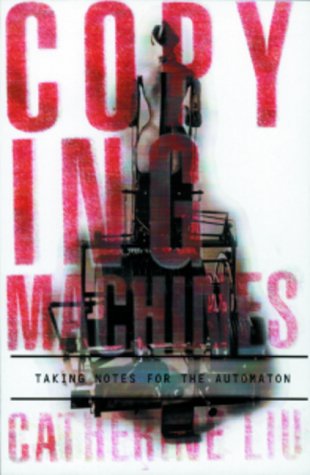
Literary Theory/Cultural StudiesExplores literary theory's fear of and fascination with the mechanical.Anxieties about fixing the absolute difference between the human being and the mechanical replica of the human being, the automaton, are as old as the first appearance of the machine itself. Exploring these anxieties and the efforts they prompted, this book opens a window on one of the most significant, if subtle, ideological battles waged on behalf of the human against the machine since the Enlightenmentone that continues in the wake of technological and conceptual progress today.A sustained examination of the automaton as early modern machine and as a curious ancestor of the twentiethcentury robot, Copying Machines offers extended readings of mechanistic images in the eighteenth century through the prism of twentiethcentury commentary. In readings of texts by Lafayette, Molire, Laclos, and La Bruyreand in a chapter on the eighteenthcentury inventor of automatons, Jacques VaucansonCatherine Liu provides a fascinating account of ways in which figures of the automaton and of the preindustrial machine haunt the imagination of ancien rgime France and structure key moments of the canonical literature and criticism of the period.Catherine Liu is assistant professor in the Department of Cultural Studies and Comparative Literature and in the Department of French and Italian at the University of Minnesota.Translation Inquiries: University of Minnesota Press
⚠️ WARNING (California Proposition 65):
This product may contain chemicals known to the State of California to cause cancer,
birth defects, or other reproductive harm.
For MAP (Minimum Advertised Price) violations and Intellectual Property (IP) or Trademark concerns, please contact:
support@ergodebooks.com
⚠️ California Proposition 65 Warning: Some products sold on this website may expose you to chemicals known to the State of California to cause cancer, birth defects, or other reproductive harm. For more information, visit www.P65Warnings.ca.gov.