If you have any questions, you are always welcome to contact us. We'll get back to you as soon as possible, withing 24 hours on weekdays.
Customer service
All questions about your order, return and delivery must be sent to our customer service team by e-mail at yourstore@yourdomain.com
Sale & Press
If you are interested in selling our products, need more information about our brand or wish to make a collaboration, please contact us at press@yourdomain.com
Help
If you have any questions, you are always welcome to contact us. We'll get back to you as soon as possible, withing 24 hours on weekdays.
Customer service
All questions about your order, return and delivery must be sent to our customer service team by e-mail at yourstore@yourdomain.com
Sale & Press
If you are interested in selling our products, need more information about our brand or wish to make a collaboration, please contact us at press@yourdomain.com
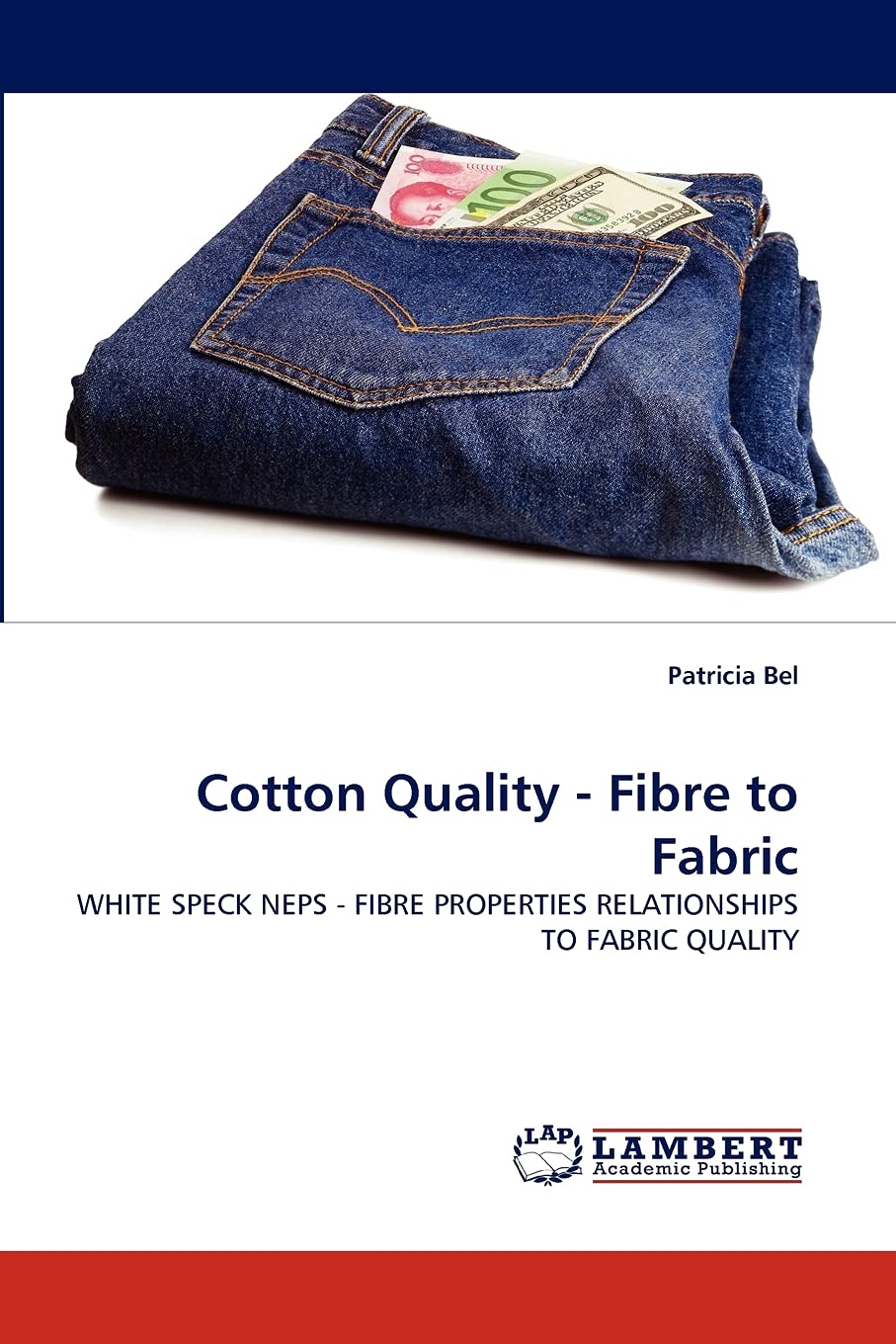
The textile industry has a recurrent white speck nep problem in cotton. "White specks" are immature clusters of fibres that are not visible as defects until dyeing, and then they appear white on darkly dyed fabric. The white speck potential of cotton is difficult to predict except in extremely immature cottons. Industry requires a method to predict fabric quality from cotton bale fibre properties to minimize this risk and reduce financial losses. This research addresses the problem of predicting white specks in dyed cotton fabrics given controlled gin and mill processing. Gin and mill processing must be controlled so that field and varietal effects can be seen without the interaction of mechanical processing differences. This results in achieving other objectives, including the provision of baseline data for Australian varieties, ginning effects and comparison of ring and openend spinning. This final analysis of these studies results in white speck prediction equations from highspeed fibre measurement systems. Cotton breeders will be able to use the equations in the development of new varieties with low white speck potential.
⚠️ WARNING (California Proposition 65):
This product may contain chemicals known to the State of California to cause cancer,
birth defects, or other reproductive harm.
For MAP (Minimum Advertised Price) violations and Intellectual Property (IP) or Trademark concerns, please contact:
support@ergodebooks.com
⚠️ California Proposition 65 Warning: Some products sold on this website may expose you to chemicals known to the State of California to cause cancer, birth defects, or other reproductive harm. For more information, visit www.P65Warnings.ca.gov.