If you have any questions, you are always welcome to contact us. We'll get back to you as soon as possible, withing 24 hours on weekdays.
Customer service
All questions about your order, return and delivery must be sent to our customer service team by e-mail at yourstore@yourdomain.com
Sale & Press
If you are interested in selling our products, need more information about our brand or wish to make a collaboration, please contact us at press@yourdomain.com
Help
If you have any questions, you are always welcome to contact us. We'll get back to you as soon as possible, withing 24 hours on weekdays.
Customer service
All questions about your order, return and delivery must be sent to our customer service team by e-mail at yourstore@yourdomain.com
Sale & Press
If you are interested in selling our products, need more information about our brand or wish to make a collaboration, please contact us at press@yourdomain.com
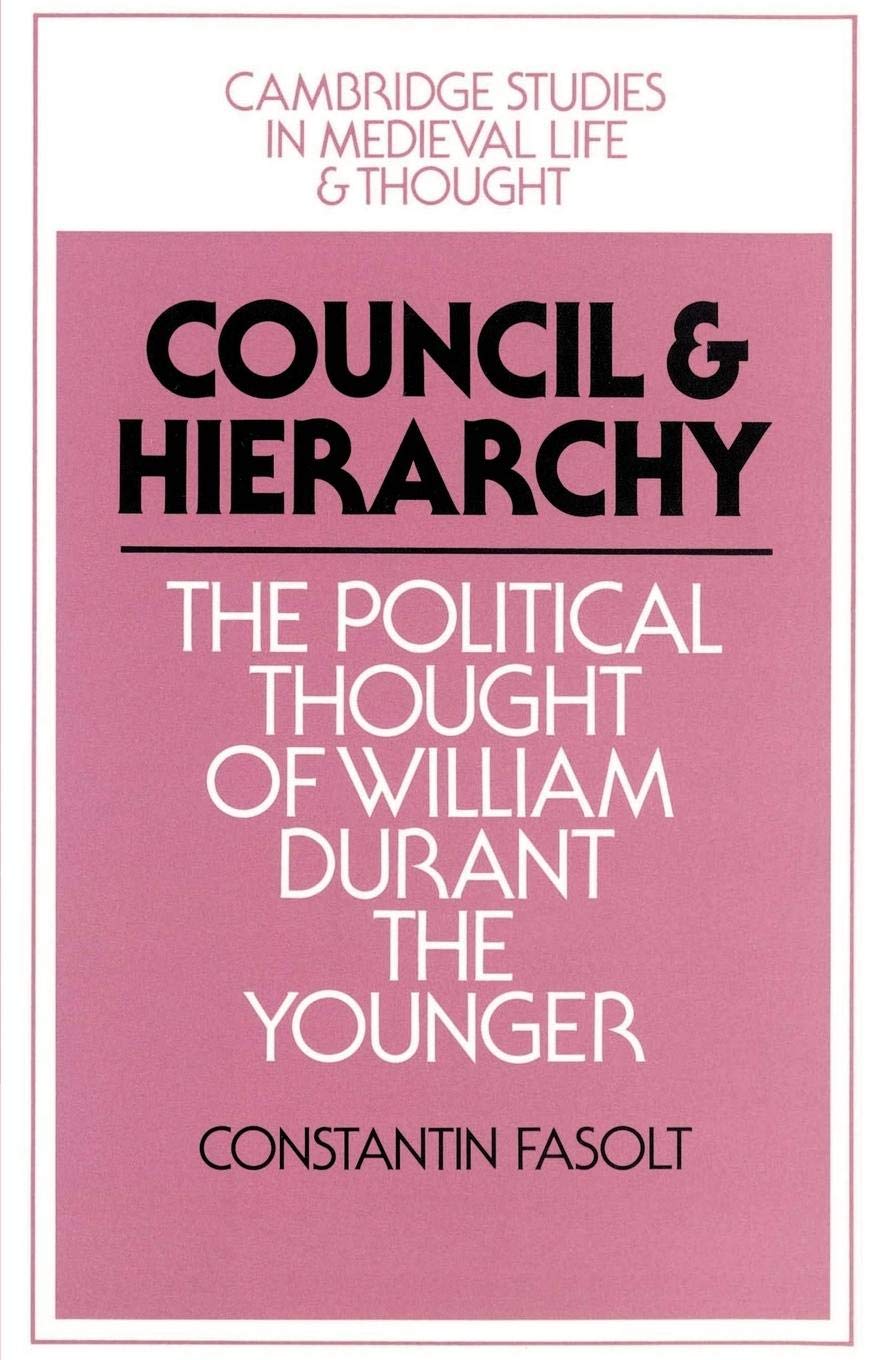
In 1311, at the council of Vienne, William Durant the Younger (c. 12661330), the French bishop and count, demanded that general councils ought to meet every ten years in order to place effective limits on the papal plenitude of power because 'what touches all must be approved by all'. This is the first systematic interpretation of William Durant's remarkable project to transfer supreme legislative authority from the papacy to general councils. It suggests that the conciliar theory has a more ambivalent complexion than is sometimes recognized. It confirms, on the one hand, that constitutional ideas were deeply embedded in the tradition of the church, which enabled Durant to anticipate the council of Constance by more than a hundred years. On the other hand, Durant attributed an authority to ancient law that overrode his republican ideas, sapped their vitality, and launched him on a pursuit of the true meaning of the law that could end only in his transformation into an historian and a reluctant champion of monarchy. William Durant the Younger's ideas thus help us to understand both the origins of the conciliar theory and the transition from late medieval reform movements to early modern humanism and princely sovereignty.
⚠️ WARNING (California Proposition 65):
This product may contain chemicals known to the State of California to cause cancer,
birth defects, or other reproductive harm.
For MAP (Minimum Advertised Price) violations and Intellectual Property (IP) or Trademark concerns, please contact:
support@ergodebooks.com
⚠️ California Proposition 65 Warning: Some products sold on this website may expose you to chemicals known to the State of California to cause cancer, birth defects, or other reproductive harm. For more information, visit www.P65Warnings.ca.gov.