
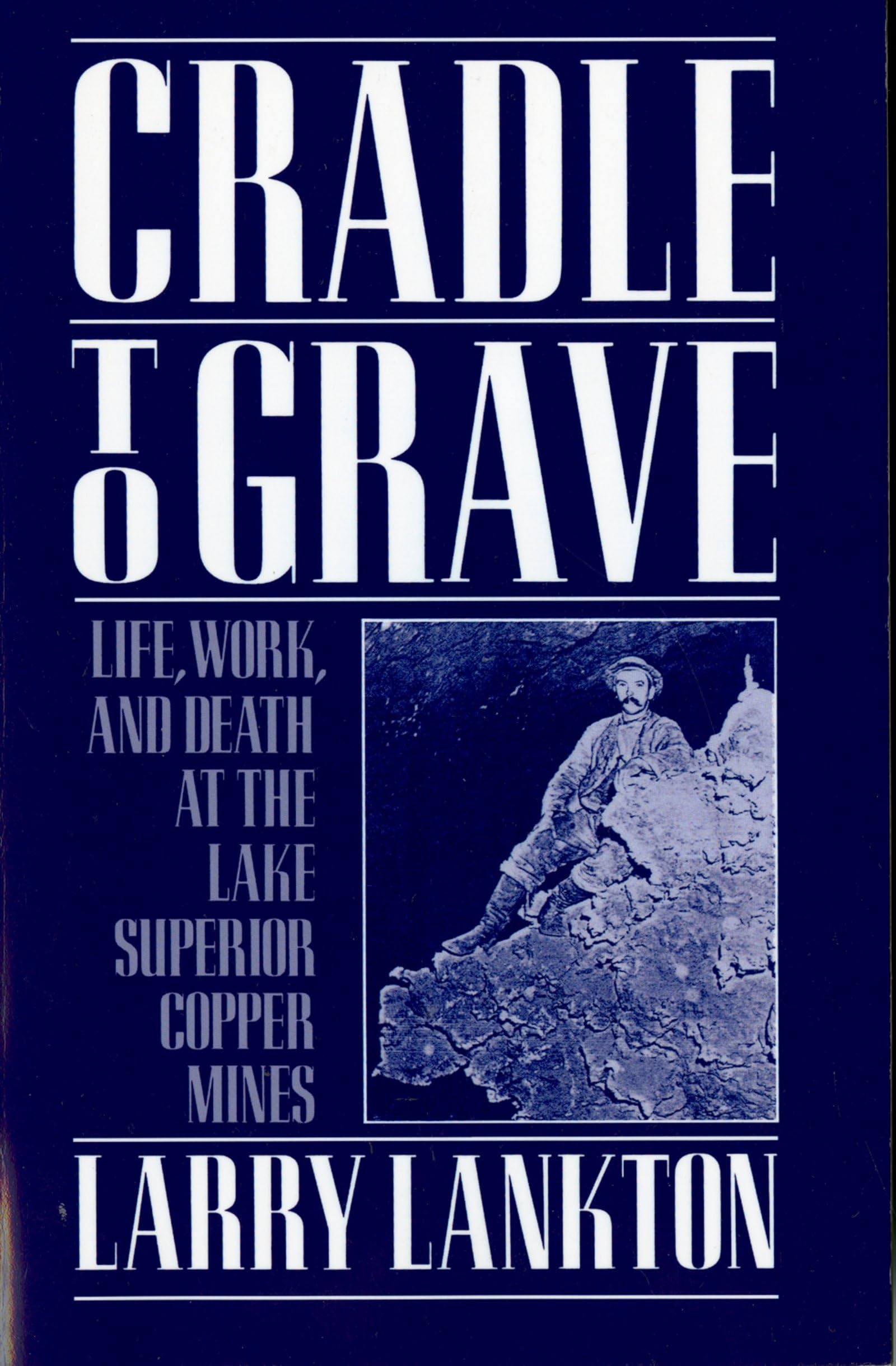
Title
Cradle to Grave: Life, Work, and Death at the Lake Superior Copper Mines,Used
Sold by Ergodebooks, an authorized reseller.
Returns accepted within 30 days | support@ergodebooks.com
Shipping Information
- Free Standard Shipping — United States only
- Processing Time: 3–5 business days
- Estimated Delivery: 6–10 business days after dispatch
- Double-boxed, fully insured & discreetly packaged
- Tracking number sent via email once dispatched
Returns & Refund
Returns accepted within 30 days of delivery.
Damaged or Defective Item
Free return shipping + replacement or full refund
Wrong Item Received
Free return shipping + replacement or full refund
Change of Mind
Return shipping at customer's expense · 25% restocking fee applies
Payment Option

Concentrating on technology, economics, labor, and social history, Cradle to Grave documents the full life cycle of one of America's great mineral ranges from the 1840s to the 1960s. Lankton examines the workers' world underground, but is equally concerned with the mining communities on the surface. For the first fifty years of development, these mining communities remained remarkably harmonious, even while new, large companies obliterated traditional forms of organization and work within the industry. By 1890, however, the Lake Superior copper industry of upper Michigan started facing many challenges, including strong economic competition and a declining profit margin; growing worker dissatisfaction with both living and working conditions; and erosion of the companies' hegemony in a district they once controlled. Lankton traces technological changes within the mines and provides a thorough investigation of mine accidents and safety. He then focuses on social and labor history, dealing especially with the issue of how company paternalism exerted social control over the work force. A social history of technology, Cradle to Grave will appeal to labor, social and business historians.
⚠️ WARNING (California Proposition 65):
This product may contain chemicals known to the State of California to cause cancer, birth defects, or other reproductive harm.
For more information, please visit www.P65Warnings.ca.gov.
- Q: What is the page count of 'Cradle to Grave'? A: The book has three hundred forty-eight pages. This length allows for an in-depth exploration of its themes regarding the Lake Superior copper mines.
- Q: What is the binding type of this book? A: The binding type is paperback. This makes the book lightweight and flexible for easy reading.
- Q: Who is the author of 'Cradle to Grave'? A: The author is Larry D. Lankton. He focuses on the intersection of labor and social history in this work.
- Q: What genre does 'Cradle to Grave' belong to? A: The book falls under the architecture and social history genres. It explores historical and technological aspects of mining.
- Q: What are the dimensions of 'Cradle to Grave'? A: The dimensions are nine point three inches in length, six point two four inches in width, and zero point seven one inches in height. These measurements make it a portable read.
- Q: Is this book suitable for young readers? A: The book is not specifically designed for young readers. It covers complex themes in labor and economic history that may be better suited for adults.
- Q: How does 'Cradle to Grave' address worker conditions? A: The book examines both living and working conditions of miners. It highlights the challenges and dissatisfaction faced by workers during the industry's evolution.
- Q: What themes are explored in 'Cradle to Grave'? A: Key themes include technology, labor relations, and social history. The narrative explores the dynamics of mining communities and the impact of corporate practices.
- Q: Can 'Cradle to Grave' be used for academic purposes? A: Yes, it is an excellent resource for academic studies. Its detailed documentation of the mining industry makes it valuable for historians and students.
- Q: What kind of historical context does this book provide? A: The book provides a comprehensive historical context from the 1840s to the 1960s. It covers technological advancements and social changes in mining communities.
- Q: Are there any illustrations or photographs in the book? A: The book does not specifically mention illustrations or photographs. It primarily focuses on textual historical analysis.
- Q: What is the focus of the author's research in the book? A: The author's research focuses on the life cycle of the copper mining industry. It examines labor, technology, and community dynamics in detail.
- Q: Is 'Cradle to Grave' easy to read? A: The book is written for an adult audience and may require some background knowledge in history. Its academic tone may be challenging for casual readers.
- Q: What is the main thesis of 'Cradle to Grave'? A: The main thesis explores how economic and labor challenges transformed the Lake Superior copper industry. It also discusses the effects on workers and communities.
- Q: Does the book cover safety issues in mining? A: Yes, it provides a thorough investigation of mine accidents and safety. The author examines the implications of these issues on the workforce.