If you have any questions, you are always welcome to contact us. We'll get back to you as soon as possible, withing 24 hours on weekdays.
Customer service
All questions about your order, return and delivery must be sent to our customer service team by e-mail at yourstore@yourdomain.com
Sale & Press
If you are interested in selling our products, need more information about our brand or wish to make a collaboration, please contact us at press@yourdomain.com
Help
If you have any questions, you are always welcome to contact us. We'll get back to you as soon as possible, withing 24 hours on weekdays.
Customer service
All questions about your order, return and delivery must be sent to our customer service team by e-mail at yourstore@yourdomain.com
Sale & Press
If you are interested in selling our products, need more information about our brand or wish to make a collaboration, please contact us at press@yourdomain.com
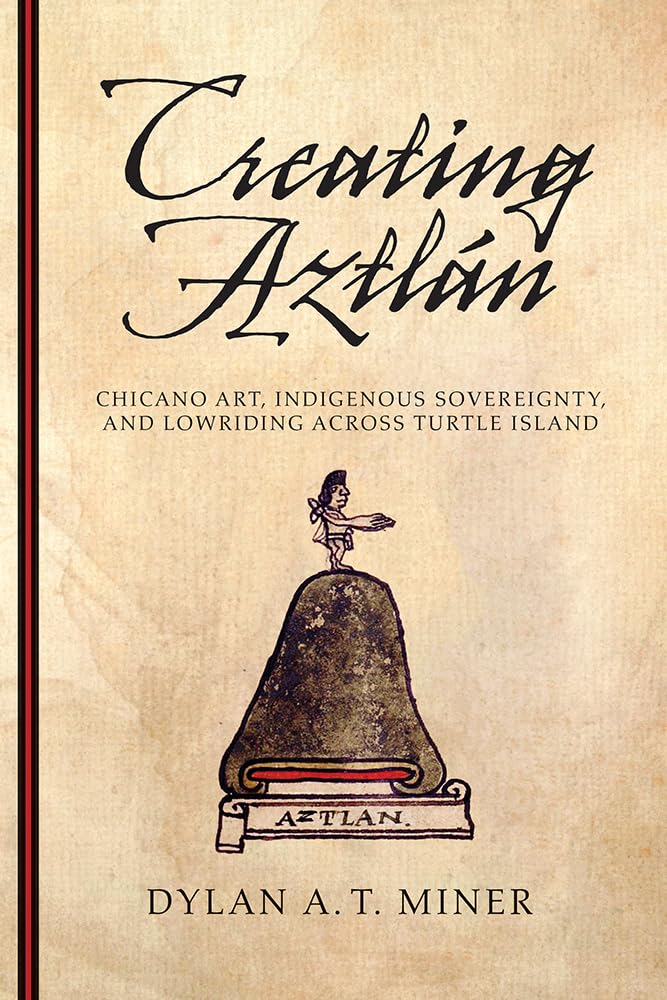
In lowriding culture, the ride is many thingsboth physical and intellectual. Embraced by both Xicano and other Indigenous youth, lowriding takes something very ordinarya car or bikeand transforms it and claims it.Using the idea that lowriding is an Indigenous way of being in the world, artist and historian Dylan A. T. Miner discusses the multiple roles that Aztln has played at various moments in time, from the preCuauhtemoc codices through both Spanish and American colonial regimes, past the Chicano Movement and into the present day. Across this migration story, Miner challenges notions of mestizaje and asserts Aztln, as visualized by Xicano artists, as a form of Indigenous sovereignty.Throughout this book, Miner employs Indigenous and Native American methodologies to show that Chicano art needs to be understood in the context of Indigenous history, anticolonial struggle, and Native American studies. Miner pays particular attention to art outside the U.S. Southwest and includes discussions of work by Nora Chapa Mendoza, Gilbert 'Mag' Lujn, Santa Barraza, Malaquas Montoya, Carlos Cortz Koyokuikatl, Favianna Rodrguez, and Dignidad Rebelde, which includes Melanie Cervantes and Jess Barraza.With sixteen pages of color images, this book will be crucial to those interested in art history, anthropology, philosophy, and Chicano and Native American studies. Creating Aztln interrogates the historic and important role that Aztln plays in Chicano and Indigenous art and culture.
⚠️ WARNING (California Proposition 65):
This product may contain chemicals known to the State of California to cause cancer,
birth defects, or other reproductive harm.
For MAP (Minimum Advertised Price) violations and Intellectual Property (IP) or Trademark concerns, please contact:
support@ergodebooks.com
⚠️ California Proposition 65 Warning: Some products sold on this website may expose you to chemicals known to the State of California to cause cancer, birth defects, or other reproductive harm. For more information, visit www.P65Warnings.ca.gov.