
Title
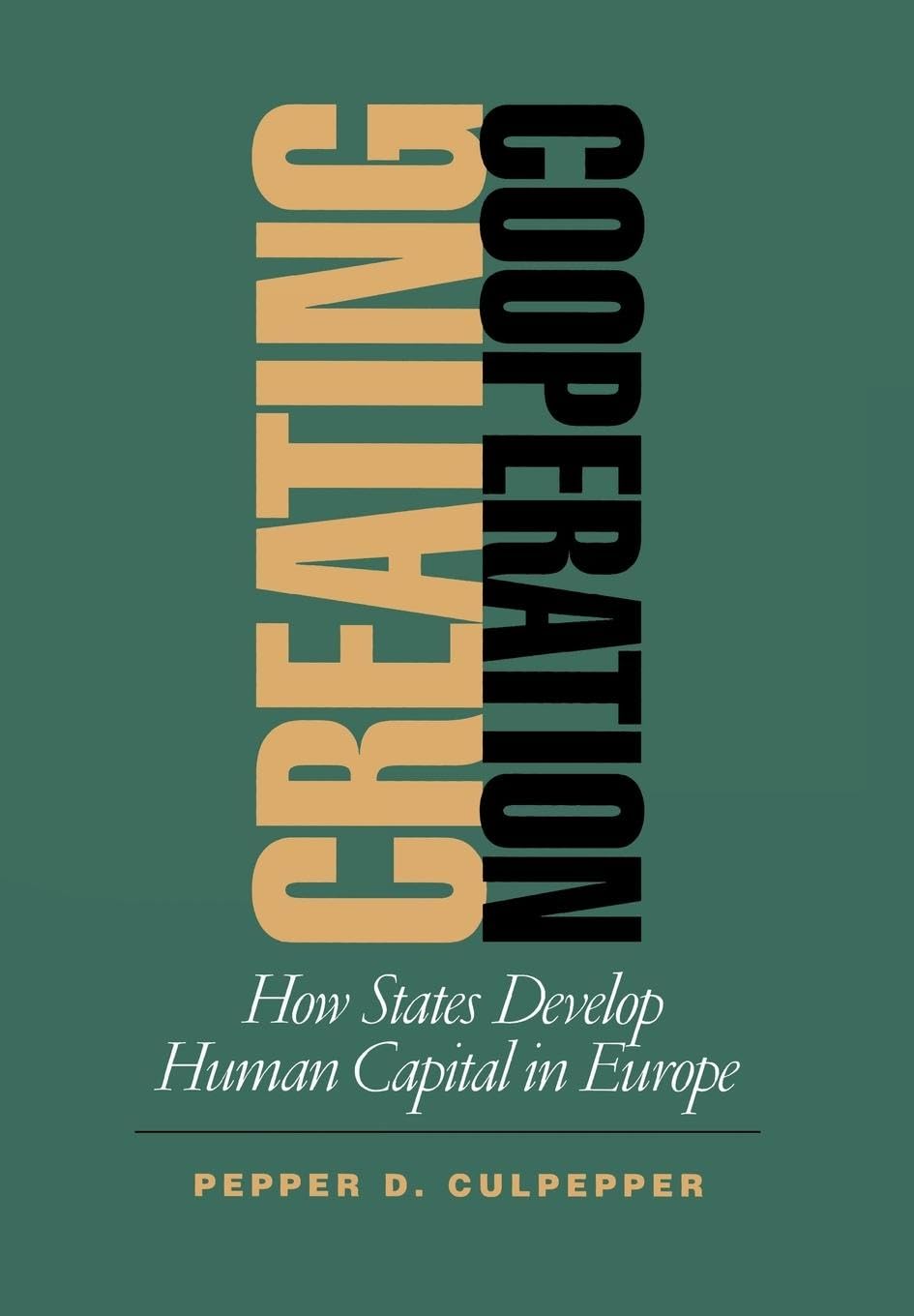
Creating Cooperation: How States Develop Human Capital in Europe (Cornell Studies in Political Economy),Used
Sold by Ergodebooks, an authorized reseller.
Returns accepted within 30 days | support@ergodebooks.com
Shipping Information
- Free Standard Shipping — United States only
- Processing Time: 3–5 business days
- Estimated Delivery: 6–10 business days after dispatch
- Double-boxed, fully insured & discreetly packaged
- Tracking number sent via email once dispatched
Returns & Refund
Returns accepted within 30 days of delivery.
Damaged or Defective Item
Free return shipping + replacement or full refund
Wrong Item Received
Free return shipping + replacement or full refund
Change of Mind
Return shipping at customer's expense · 25% restocking fee applies
Payment Option

In Creating Cooperation, Pepper D. Culpepper explains the successes and failures of human capital reforms adopted by the French and German governments in the 1990s. Employers and employees both stand to gain from corporate investment in worker skills, but uncertainty and mutual distrust among companies doom many policy initiatives to failure. Higher skills benefit society as a whole, so national governments want to foster them. However, business firms often will not invest in training that makes their workers more attractive to other employers, even though they would prefer having betterskilled workers.Culpepper sees in European training programs a challenge typical of contemporary problems of public policy: success increasingly depends on the ability of governments to convince private actors to cooperate with each other. In the United States as in Europe, he argues, policymakers can achieve this goal only by incorporating the insights of private information into public policy. Culpepper demonstrates that the lessons of decentralized cooperation extend to industrial and environmental policies. In the final chapter, he examines regional innovation programs in the United Kingdom and the cleanup of the Chesapeake Bay in the United Statesa domestic problem that required the coordination of disparate agencies and stakeholders.
⚠️ WARNING (California Proposition 65):
This product may contain chemicals known to the State of California to cause cancer, birth defects, or other reproductive harm.
For more information, please visit www.P65Warnings.ca.gov.