If you have any questions, you are always welcome to contact us. We'll get back to you as soon as possible, withing 24 hours on weekdays.
Customer service
All questions about your order, return and delivery must be sent to our customer service team by e-mail at yourstore@yourdomain.com
Sale & Press
If you are interested in selling our products, need more information about our brand or wish to make a collaboration, please contact us at press@yourdomain.com
Help
If you have any questions, you are always welcome to contact us. We'll get back to you as soon as possible, withing 24 hours on weekdays.
Customer service
All questions about your order, return and delivery must be sent to our customer service team by e-mail at yourstore@yourdomain.com
Sale & Press
If you are interested in selling our products, need more information about our brand or wish to make a collaboration, please contact us at press@yourdomain.com
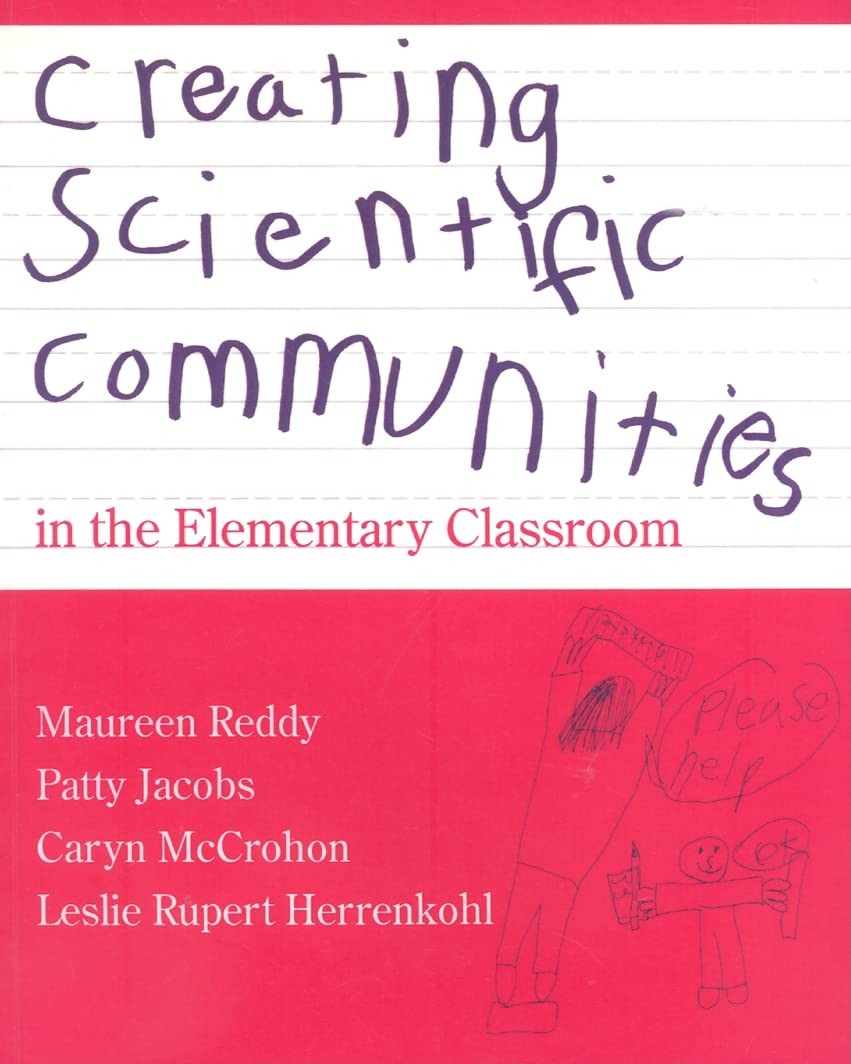
It is commonplace today to read about the importance of collaborative, handson science. But can we assume that children build knowledge simply through their interactions with materials and each other? How can we be sure that students are engaged in meaningful and productive scientific inquiry? In Creating Scientific Communities, two classroom teachers and two university researchers reveal what a better understanding of early scientific literacy can tell us.Based on transcripts of classroom conversations and samples of children's writing, Creating Scientific Communities looks at the social context of the elementary classroom and its impact on science teaching and learning. In lessons structured much like those in a writers workshop, group work in science is bracketed by whole class meetings, providing numerous opportunities for students to construct meaning through dialogue with each other and their teacher. Throughout the lessons, the teachers use a variety of discourse strategiesincluding questioning, modeling, and dialogue journalsto support, extend, and ultimately assess their students' understanding.An approach to scientific inquiry that centers on group work and dialogue is necessarily unpredictable. Teachers must be purposeful, yet flexible, and collaboration must be guided by shared rules and norms. In Creating Scientific Communities, you will witness how these teachers and researchers collaborated to develop classroom environments in which students learn more than scientific concepts and procedural skills, they acquire the values and attitudes associated with successful scientific collaboration.
⚠️ WARNING (California Proposition 65):
This product may contain chemicals known to the State of California to cause cancer,
birth defects, or other reproductive harm.
For MAP (Minimum Advertised Price) violations and Intellectual Property (IP) or Trademark concerns, please contact:
support@ergodebooks.com
⚠️ California Proposition 65 Warning: Some products sold on this website may expose you to chemicals known to the State of California to cause cancer, birth defects, or other reproductive harm. For more information, visit www.P65Warnings.ca.gov.