
Title
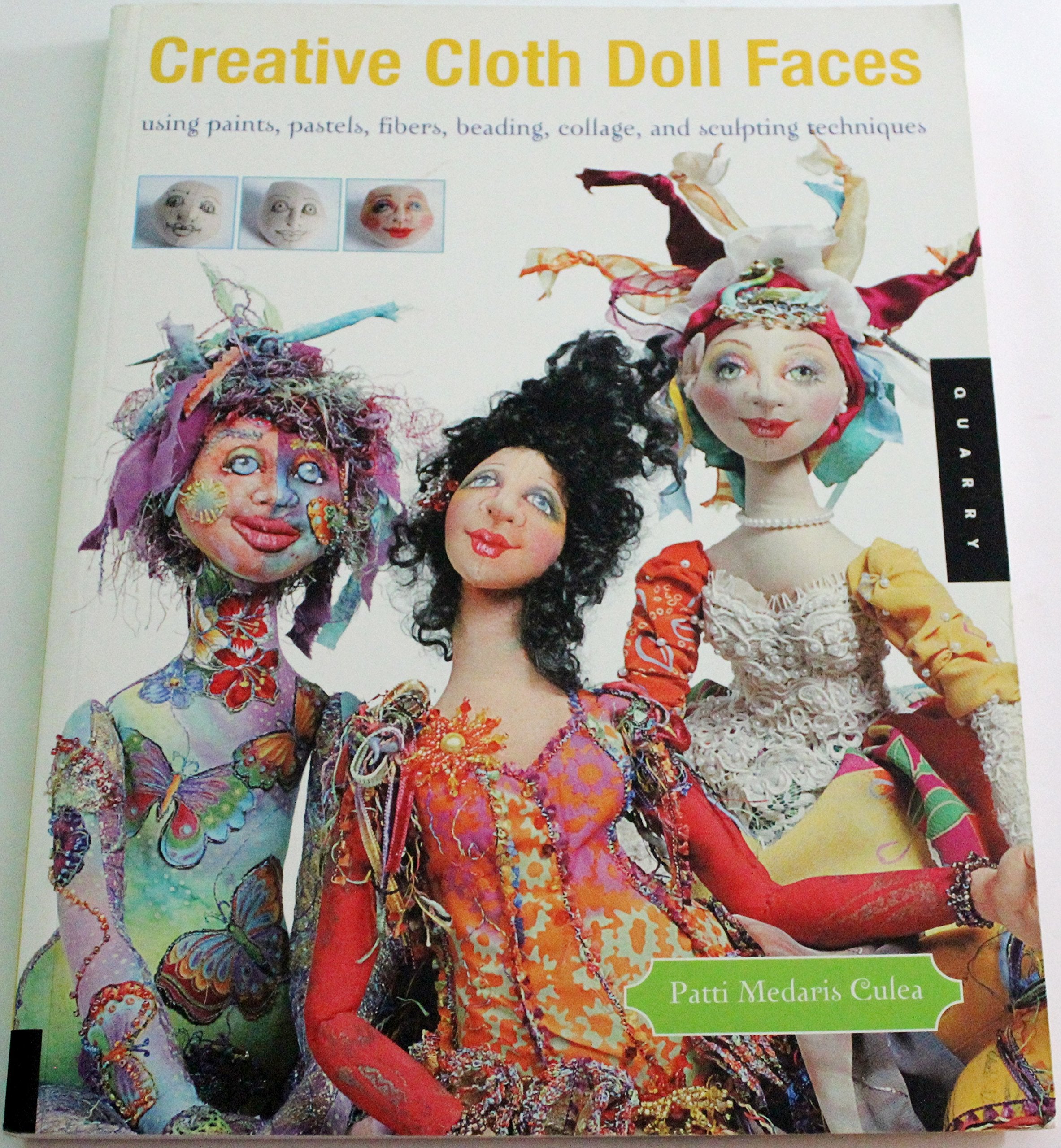
Creative Cloth Doll Faces: Using Paints, Pastels, Fibers, Beading, Collage, and Sculpting Techniques,New
Sold by Ergodebooks, an authorized reseller.
Returns accepted within 30 days | support@ergodebooks.com
Shipping Information
- Free Standard Shipping — United States only
- Processing Time: 3–5 business days
- Estimated Delivery: 6–10 business days after dispatch
- Double-boxed, fully insured & discreetly packaged
- Tracking number sent via email once dispatched
Returns & Refund
Returns accepted within 30 days of delivery.
Damaged or Defective Item
Free return shipping + replacement or full refund
Wrong Item Received
Free return shipping + replacement or full refund
Change of Mind
Return shipping at customer's expense · 25% restocking fee applies
Payment Option

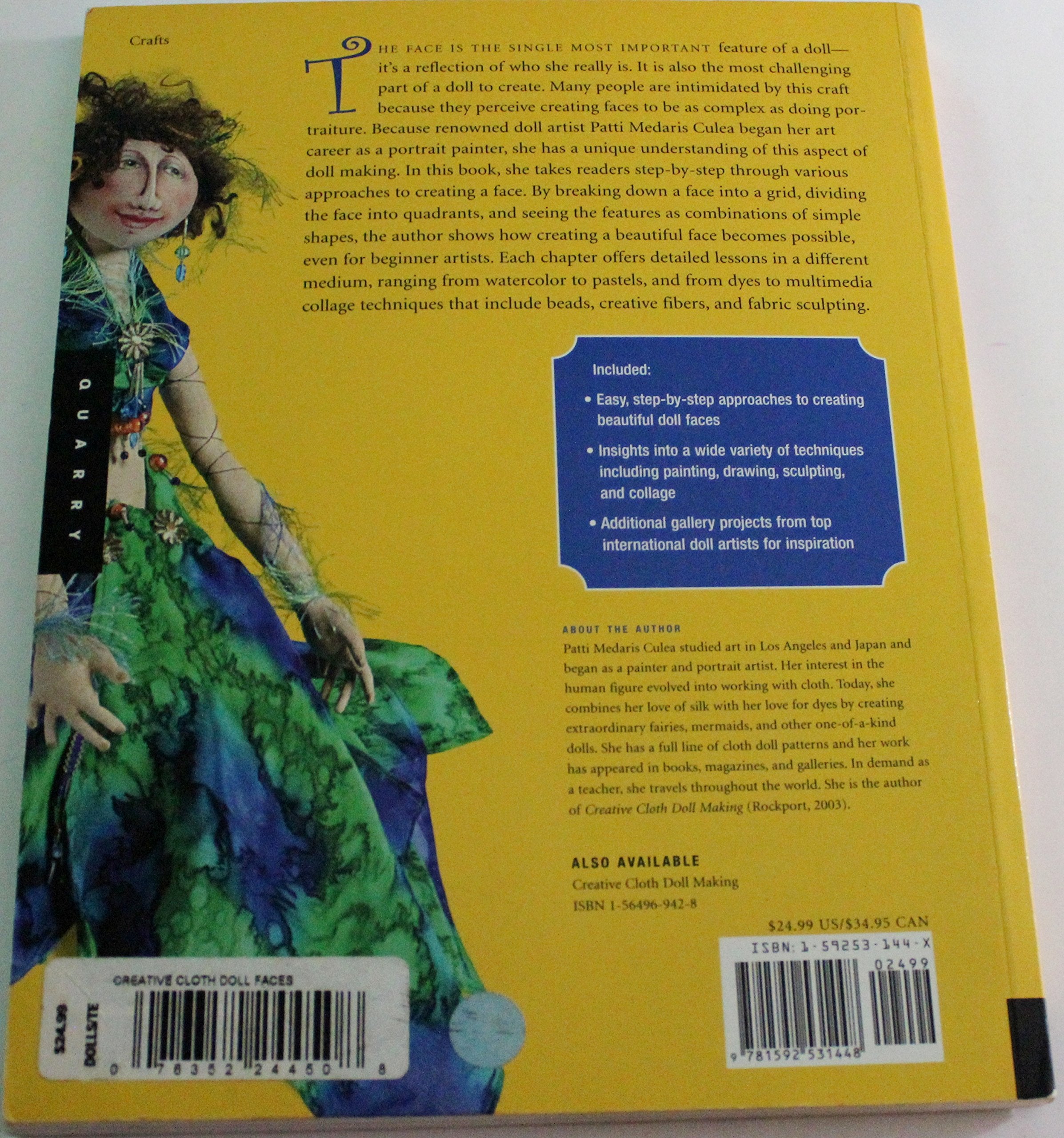
The face is the most important feature of a doll it is also the most challenging. So it is surprising that there is so little instruction available on creating doll faces. This book fills that void.Author Patti Medaris Culea began her career in art as a portrait painter and she puts that experience to work when creating her doll faces. In this book, she shows readers a simple technique for easily creating faces using her stepbystep approach. She gives her tips for how to divide the face into quadrants, graft features together, and much more.Every aspect of doll making is covered from the basics to detailed techniques for making the various faces to instructions for putting a pattern together. Readers will learn how to use watercolor pencils, acrylics, and fabric paints to color a face, how to create a face using collage techniques as well as stamping and beading, and tips for working with stretchy fabrics to create indented eyes, separate eyelids, and sculpted lips.
⚠️ WARNING (California Proposition 65):
This product may contain chemicals known to the State of California to cause cancer, birth defects, or other reproductive harm.
For more information, please visit www.P65Warnings.ca.gov.
- Q: What is the page count of this book? A: This book has one hundred twenty-eight pages. It provides detailed instructions and techniques for creating doll faces.
- Q: What is the binding type of this book? A: The book is paperback bound. This makes it lightweight and easy to handle for crafting purposes.
- Q: What are the dimensions of this book? A: The dimensions are eight point five inches in length, zero point five one inches in width, and ten point seven five inches in height. These sizes make it a manageable reference guide.
- Q: Who is the author of this book? A: The author is Patti Medaris Culea. She brings her expertise as a portrait painter to doll making techniques.
- Q: Is this book suitable for beginners? A: Yes, this book is suitable for beginners. It provides step-by-step instructions and basic techniques for creating doll faces.
- Q: How do I use this book for doll making? A: You can use this book by following the step-by-step techniques outlined in each chapter. It guides you through creating various features on doll faces.
- Q: What materials do I need to use this book effectively? A: You will need watercolor pencils, acrylics, fabric paints, and various fabrics. These materials are essential for coloring and creating doll faces.
- Q: Can I use this book for advanced doll making techniques? A: Yes, this book includes detailed techniques suitable for advanced doll makers. It covers both basic and intricate methods for face creation.
- Q: How should I store this book? A: Store this book in a cool, dry place, away from direct sunlight. This will help preserve its condition and longevity.
- Q: Is there any special care needed for this book? A: No special care is needed for this book. However, keeping it away from moisture can help maintain its quality.
- Q: What if my book arrives damaged? A: If your book arrives damaged, you should contact customer support for a return or replacement. Ensure to keep all original packaging for the return process.
- Q: Does this book provide tips for using different fabrics? A: Yes, the book offers tips for working with stretchy fabrics. It includes techniques for creating features like indented eyes and sculpted lips.
- Q: Are there any specific techniques covered in the book? A: Yes, the book covers various techniques, including collage, beading, and painting techniques. Each technique is explained in detail.
- Q: What is the main focus of this book? A: The main focus of the book is on creating doll faces. It fills a gap in available instructional resources on this topic.
- Q: Is this book suitable for children? A: The book does not have an age restriction but should be used with adult supervision for younger children. The techniques can be complex.