
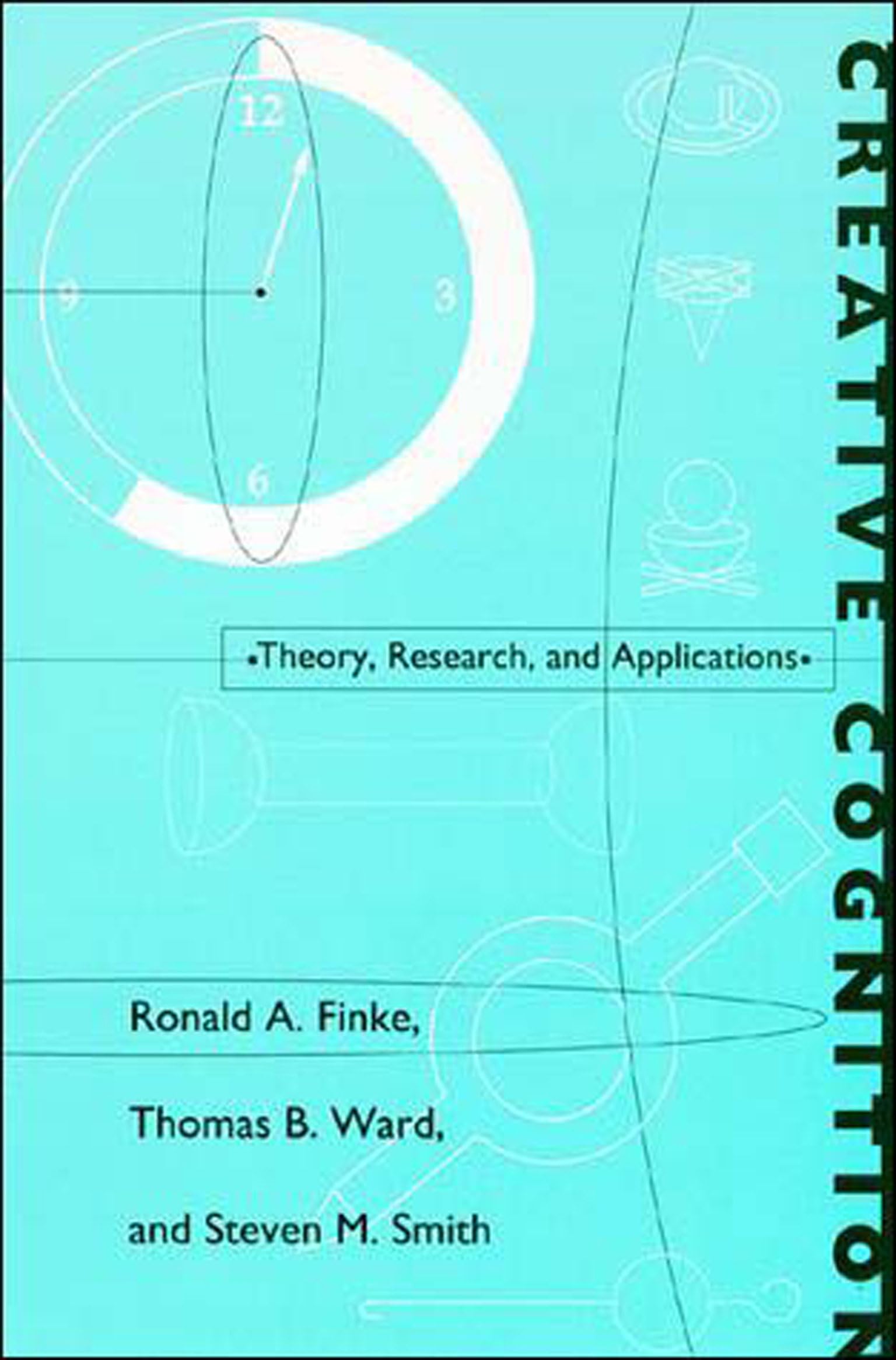
Title
Creative Cognition: Theory, Research, and Applications,Used
Sold by Ergodebooks, an authorized reseller.
Returns accepted within 30 days | support@ergodebooks.com
Shipping Information
- Free Standard Shipping — United States only
- Processing Time: 3–5 business days
- Estimated Delivery: 6–10 business days after dispatch
- Double-boxed, fully insured & discreetly packaged
- Tracking number sent via email once dispatched
Returns & Refund
Returns accepted within 30 days of delivery.
Damaged or Defective Item
Free return shipping + replacement or full refund
Wrong Item Received
Free return shipping + replacement or full refund
Change of Mind
Return shipping at customer's expense · 25% restocking fee applies
Payment Option

Creative Cognition combines original experiments with existing work in cognitive psychology to provide the first explicit account of the cognitive processes and structures that contribute to creative thinking and discovery.Creative Cognition combines original experiments with existing work in cognitive psychology to provide the first explicit account of the cognitive processes and structures that contribute to creative thinking and discovery.In separate chapters, the authors take up visualization, concept formation, categorization, memory retrieval, and problem solving. They describe novel experimental methods for studying creative cognitive processes under controlled laboratory conditions, along with techniques that can be used to generate many different types of inventions and concepts. Unlike traditional approaches, Creative Cognition considers creativity as a product of numerous cognitive processes, each of which helps to set the stage for insight and discovery. It identifies many of these processes as well as general principles of creative cognition that can be applied across a variety of different domains, with examples in artificial intelligence, engineering design, product development, architecture, education, and the visual arts.Following a summary of previous approaches to creativity, the authors present a theoretical model of the creative process. They review research involving an innovative imagery recombination technique, developed by Finke, that clearly demonstrates that creative inventions can be induced in the laboratory. They then describe experiments in category learning that support the provocative claim that the factors constraining category formation similarly constrain imagination and illustrate the role of various memory processes and other strategies in creative problem solving.
⚠️ WARNING (California Proposition 65):
This product may contain chemicals known to the State of California to cause cancer, birth defects, or other reproductive harm.
For more information, please visit www.P65Warnings.ca.gov.
- Q: What is the main focus of 'Creative Cognition: Theory, Research, and Applications'? A: The book focuses on the cognitive processes and structures that contribute to creative thinking and discovery, combining original experiments with existing research in cognitive psychology.
- Q: Who are the authors of this book? A: The book is authored by Ronald A. Finke and his colleagues.
- Q: What are some key topics covered in the book? A: Key topics include visualization, concept formation, categorization, memory retrieval, and problem solving, each explored through experimental methods.
- Q: Is this book suitable for beginners in the field of creativity research? A: Yes, it provides a comprehensive introduction to creative cognition and its application across various domains, making it suitable for both beginners and experts.
- Q: What is the publication date of this book? A: The book was published on January 5, 1996.
- Q: What type of binding does this book have? A: The book is available in paperback binding.
- Q: How many pages does 'Creative Cognition' contain? A: This book contains 256 pages.
- Q: Does the book include practical methods for fostering creativity? A: Yes, it describes novel experimental methods and techniques that can be used to generate various types of inventions and concepts.
- Q: Can this book be helpful for professionals in fields like education or engineering? A: Absolutely, the principles of creative cognition discussed in the book can be applied across diverse domains, including education, engineering design, and the visual arts.
- Q: What is the condition of the book when purchased? A: The book is sold as 'New'.