
Title
Credit Risk Valuation,Used
Sold by Ergodebooks, an authorized reseller.
Returns accepted within 30 days | support@ergodebooks.com
Shipping Information
- Free Standard Shipping — United States only
- Processing Time: 3–5 business days
- Estimated Delivery: 6–10 business days after dispatch
- Double-boxed, fully insured & discreetly packaged
- Tracking number sent via email once dispatched
Returns & Refund
Returns accepted within 30 days of delivery.
Damaged or Defective Item
Free return shipping + replacement or full refund
Wrong Item Received
Free return shipping + replacement or full refund
Change of Mind
Return shipping at customer's expense · 25% restocking fee applies
Payment Option

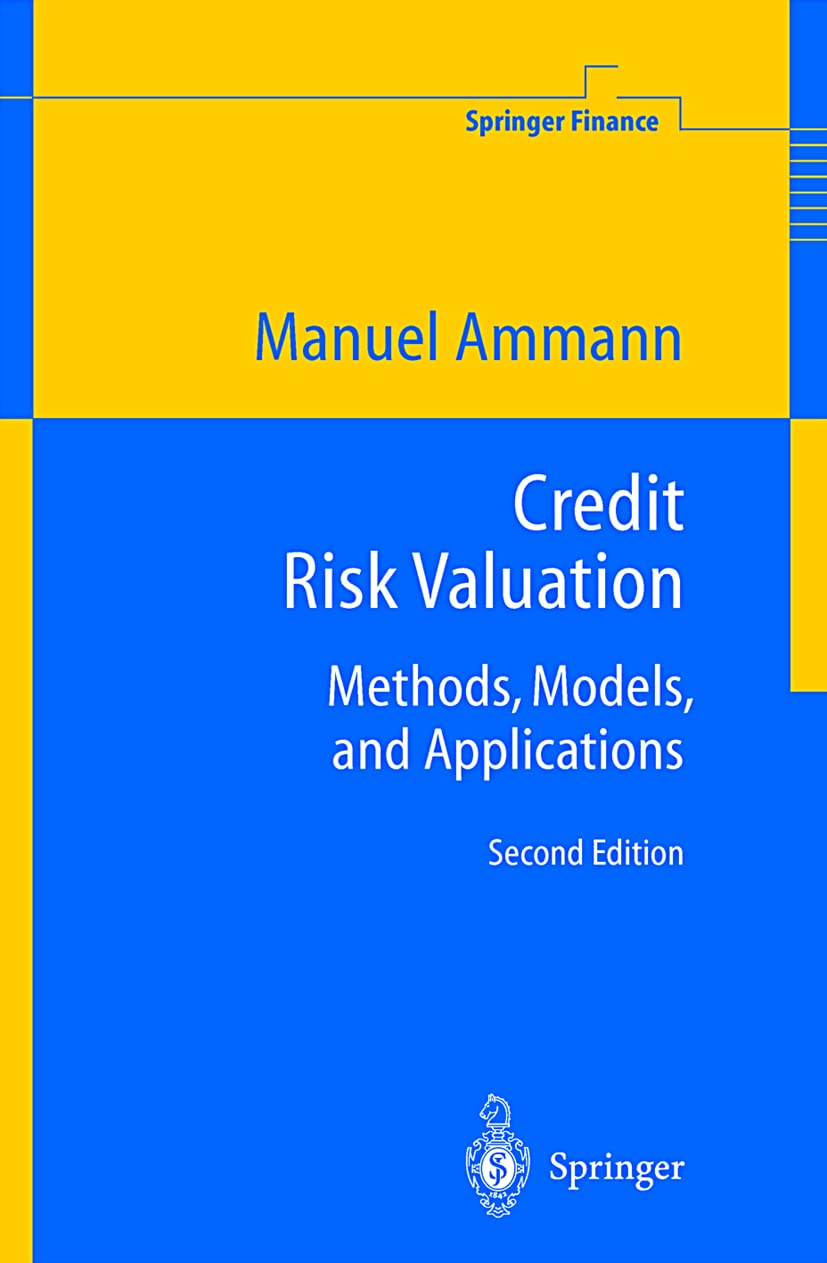
Credit risk is an important consideration in most financial transactions. As for any other risk, the risk taker requires compensation for the undiversifiable part of the risk taken. In bond markets, for example, riskier issues have to promise a higher yield to attract investors. But how much higher a yield? Using methods from contingent claims analysis, credit risk valuation models attempt to put a price on credit risk. This monograph gives an overview of the current methods for the valu ation of credit risk and considers several applications of credit risk models in the context of derivative pricing. In particular, credit risk models are in corporated into the pricing of derivative contracts that are subject to credit risk. Credit risk can affect prices of derivatives in a variety of ways. First, financial derivatives can be subject to counterparty default risk. Second, a derivative can be written on a security which is subject to credit risk, such as a corporate bond. Third, the credit risk itself can be the underlying vari able of a derivative instrument. In this case, the instrument is called a credit derivative. Fourth, credit derivatives may themselves be exposed to counter party risk. This text addresses all of those valuation problems but focuses on counterparty risk. The book is divided into six chapters and an appendix. Chapter 1 gives a brief introduction into credit risk and motivates the use of credit risk models in contingent claims pricing.
⚠️ WARNING (California Proposition 65):
This product may contain chemicals known to the State of California to cause cancer, birth defects, or other reproductive harm.
For more information, please visit www.P65Warnings.ca.gov.