If you have any questions, you are always welcome to contact us. We'll get back to you as soon as possible, withing 24 hours on weekdays.
Customer service
All questions about your order, return and delivery must be sent to our customer service team by e-mail at yourstore@yourdomain.com
Sale & Press
If you are interested in selling our products, need more information about our brand or wish to make a collaboration, please contact us at press@yourdomain.com
Help
If you have any questions, you are always welcome to contact us. We'll get back to you as soon as possible, withing 24 hours on weekdays.
Customer service
All questions about your order, return and delivery must be sent to our customer service team by e-mail at yourstore@yourdomain.com
Sale & Press
If you are interested in selling our products, need more information about our brand or wish to make a collaboration, please contact us at press@yourdomain.com
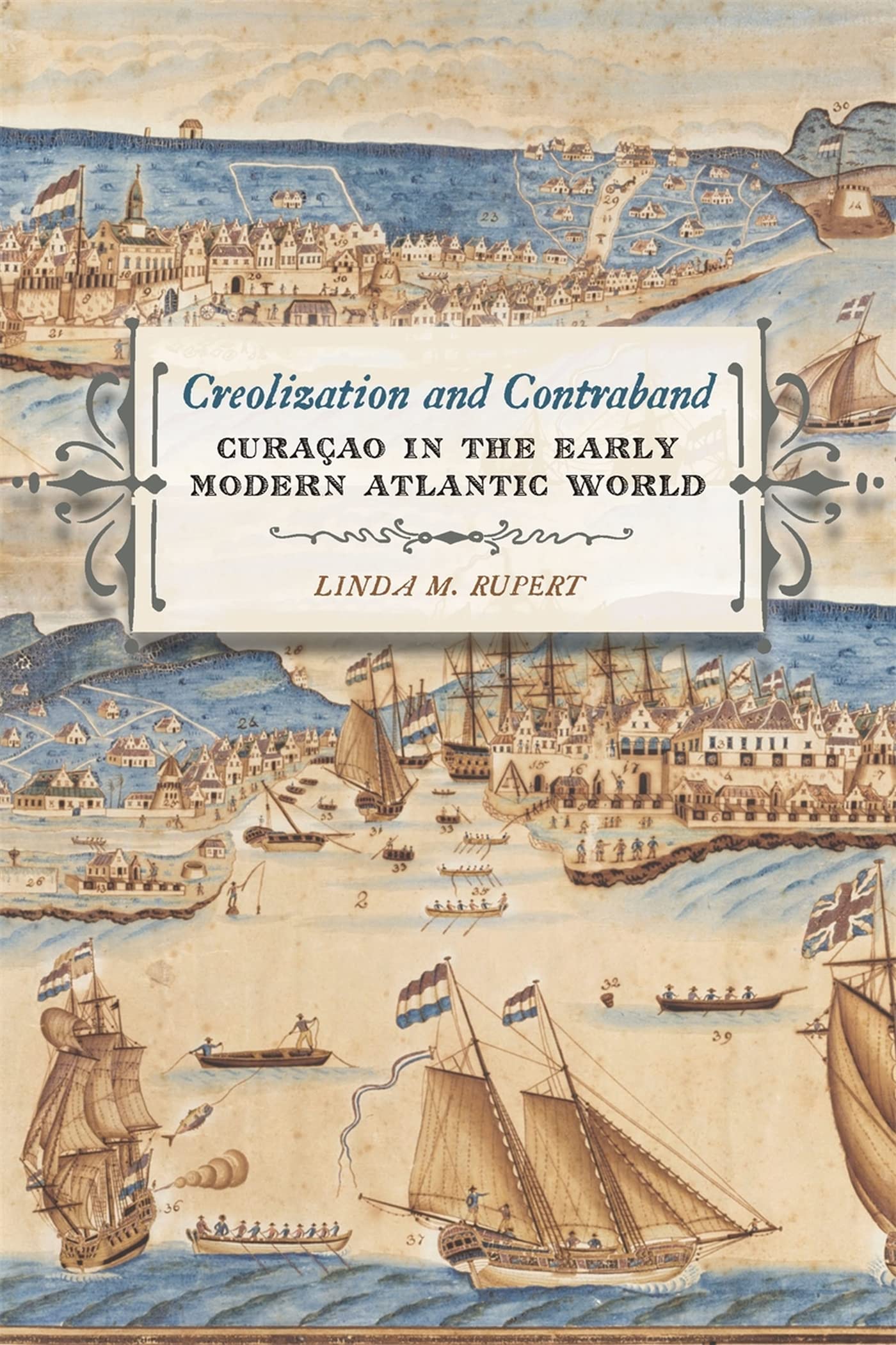
When Curaao came under Dutch control in 1634, the small island off South Americas northern coast was isolated and sleepy. The introduction of increased trade (both legal and illegal) led to a dramatic transformation, and Curaao emerged as a major hub within Caribbean and wider Atlantic networks. It would also become the commercial and administrative seat of the Dutch West India Company in the Americas.The islands main city, Willemstad, had a nonDutch majority composed largely of free blacks, urban slaves, and Sephardic Jews, who communicated across ethnic divisions in a new creole language called Papiamentu. For Linda M. Rupert, the emergence of this creole language was one of the two defining phenomena that gave shape to early modern Curaao. The other was smuggling. Both developments, she argues, were informal adaptations to life in a place that was at once polyglot and regimented. They were the sort of improvisations that occurred wherever expanding European empires thrust different peoples together.Creolization and Contraband uses the history of Curaao to develop the first booklength analysis of the relationship between illicit interimperial trade and processes of social, cultural, and linguistic exchange in the early modern world. Rupert argues that by breaking through multiple barriers, smuggling opened particularly rich opportunities for crosscultural and interethnic interaction. Far from marginal, these extraofficial exchanges were the very building blocks of colonial society.
⚠️ WARNING (California Proposition 65):
This product may contain chemicals known to the State of California to cause cancer,
birth defects, or other reproductive harm.
For MAP (Minimum Advertised Price) violations and Intellectual Property (IP) or Trademark concerns, please contact:
support@ergodebooks.com
⚠️ California Proposition 65 Warning: Some products sold on this website may expose you to chemicals known to the State of California to cause cancer, birth defects, or other reproductive harm. For more information, visit www.P65Warnings.ca.gov.