
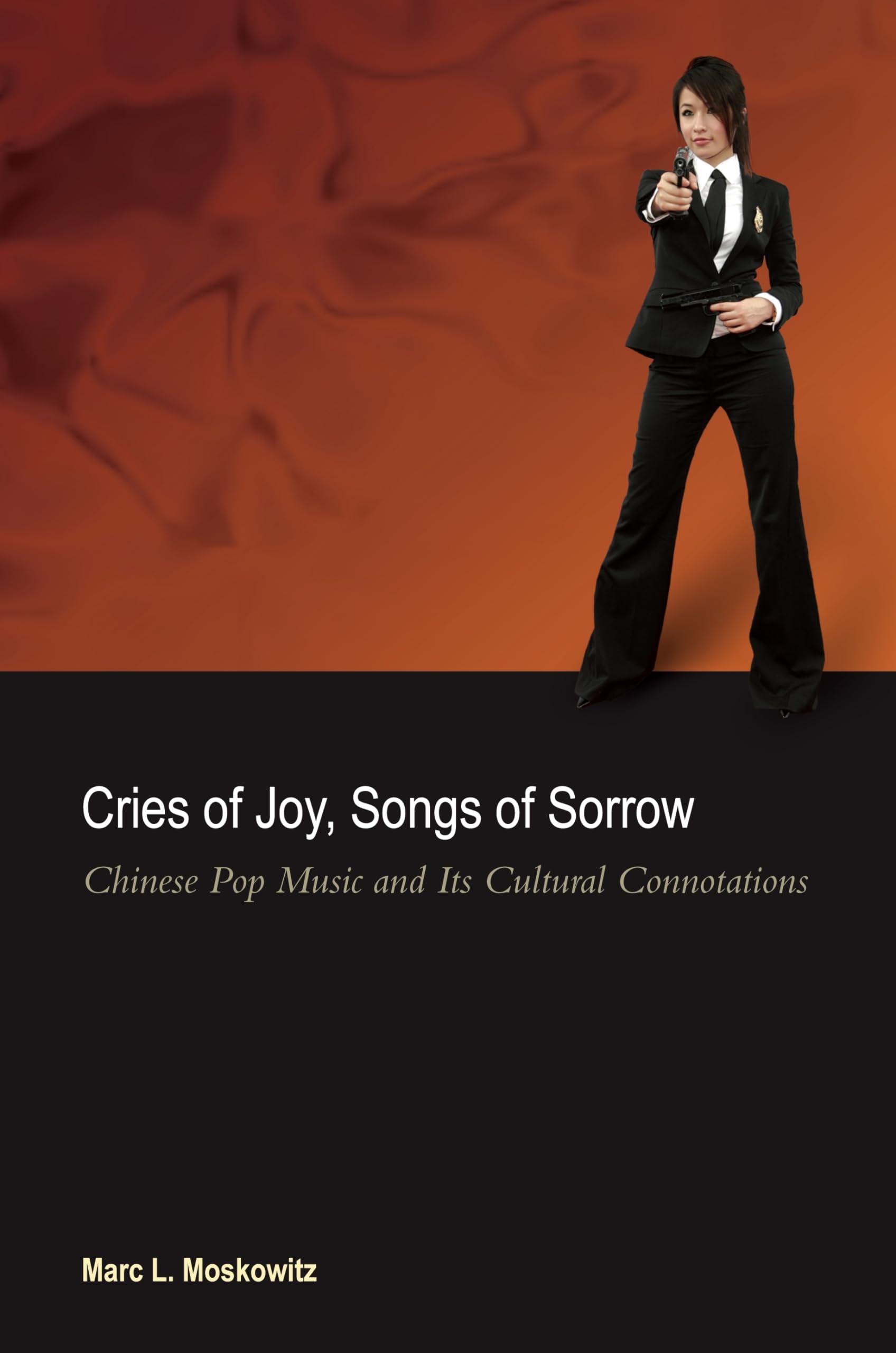
Title
Cries Of Joy, Songs Of Sorrow: Chinese Pop Music And Its Cultural Connotations,New
Sold by Ergodebooks, an authorized reseller.
Returns accepted within 30 days | support@ergodebooks.com
Shipping Information
- Free Standard Shipping — United States only
- Processing Time: 3–5 business days
- Estimated Delivery: 6–10 business days after dispatch
- Double-boxed, fully insured & discreetly packaged
- Tracking number sent via email once dispatched
Returns & Refund
Returns accepted within 30 days of delivery.
Damaged or Defective Item
Free return shipping + replacement or full refund
Wrong Item Received
Free return shipping + replacement or full refund
Change of Mind
Return shipping at customer's expense · 25% restocking fee applies
Payment Option

Since The Mid1990S, Taiwans Unique Brand Of Mandopop (Mandarin Chineselanguage Pop Music) Has Dictated The Musical Tastes Of The Mainland And The Rest Of Chinesespeaking Asia. Cries Of Joy, Songs Of Sorrow Explores Mandopops Surprisingly Complex Cultural Implications In Taiwan And The Prc, Where It Has Established New Gender Roles, Created A Vocabulary To Express Individualism, And Introduced Transnational Culture To A Country That Had Closed Its Doors To The World For Twenty Years.In His Early Chapters, Marc L. Moskowitz Provides The Historical Background Necessary To Understand The Contemporary Mandopop Scene, Beginning With The Birth Of Chinese Popular Music In The East Asian Jazz Mecca Of 1920S Shanghai. A Brief Overview Of Alternative Musical Genres In The Prc Such As Beijing Rock And Revolutionary Opera Is Included. The Section Concludes With A Look At The Manner In Which Taiwans Musical Ethos Has Influenced The Mainlands Music Industry And How Mandopop Has Brought Western Music And Cultural Values To The Prc. This Leads To A Discussion Of Taiwan Pops Exceptional Hybridity, Beginning With Foreign Influences During The Colonial Period Under The Dutch And Japanese And Continuing With The Countrys Political, Cultural, And Economic Alliance With The U.S. Moskowitz Addresses The Resulting Wealth Of Transnational Musical Influences From The Rest Of East Asia And The U.S. And Taiwan Pops Appeal To Audiences In Both The Prc And Taiwan. In Doing So, He Explores How Mandopops 'Songs Of Sorrow,' With Their Ubiquitous Themes Of Loneliness And Isolation, Engage A Range Of Emotional Expression That Resonates Strongly In The Prc.Later Chapters Examine The Construction Of Male And Female Identities In Mandopop And Look At The Widespread Condemnation Of The Genre By Critics. Drawing On Analyses And Data From Earlier Chapters (Including Interviews With Dozens Of Performers, Song Writers, And Lay People In Taipei And Shanghai), Moskowitz Attempts To Answer The Question: Why, If The Music Is As Bad As Some Assert, Is It So Central To The Lives Of The Largest Population In The World? To Answer, He Highlights Mandopops Important Contribution As A Poetic Lament That Simultaneously Embraces And Protests Modern Life.Cries Of Joy, Songs Of Sorrow Is A Highly Readable Introduction To An Important But Understudied East Asian Phenomenon. It Will Find A Ready Audience Among Scholars And Students Of Chinese And Taiwanese Popular Culture As Well As Musicologists Studying Transnational Music Flows And Nonwestern Popular Music.
⚠️ WARNING (California Proposition 65):
This product may contain chemicals known to the State of California to cause cancer, birth defects, or other reproductive harm.
For more information, please visit www.P65Warnings.ca.gov.
- Q: How many pages does the book have? A: The book has one hundred eighty-four pages. This length makes it a concise yet informative read on the cultural implications of Chinese pop music.
- Q: What is the binding type of this book? A: The book is available in paperback binding. This makes it lightweight and easy to handle for casual reading.
- Q: What are the book's dimensions? A: The book measures five point nine one inches in length, zero point five one inches in width, and eight point nine inches in height. These dimensions make it portable for on-the-go reading.
- Q: Who is the author of 'Cries of Joy, Songs of Sorrow'? A: The author is Marc L. Moskowitz. He provides a scholarly perspective on the evolution of Mandopop and its cultural significance.
- Q: What genre does this book belong to? A: The book falls under the popular culture genre. It specifically focuses on the cultural dimensions of Chinese pop music.
- Q: Is this book suitable for beginners in music studies? A: Yes, this book is suitable for beginners. It serves as a highly readable introduction to Mandopop and its cultural implications.
- Q: Can this book be used in academic settings? A: Yes, it is appropriate for academic settings. Scholars and students of Chinese and Taiwanese popular culture will find it valuable.
- Q: What themes does the book explore? A: The book explores themes of gender roles, individualism, and transnational culture in the context of Mandopop. These themes are essential for understanding its cultural impact.
- Q: Does the book include interviews with artists? A: Yes, the book includes interviews with performers and songwriters. These insights enhance the understanding of Mandopop's place in modern life.
- Q: How should I store this paperback book? A: Store the book in a cool, dry place. Keeping it away from direct sunlight will help preserve its condition over time.
- Q: Is this book in good condition? A: Yes, this is a used book in good condition. It has been well-maintained and is ready for reading.
- Q: What should I do if the book arrives damaged? A: If the book arrives damaged, contact the seller immediately for a return or exchange. Most sellers have policies in place for such situations.
- Q: What makes this book a unique read? A: This book uniquely combines cultural analysis with historical context. It delves into the complexities of Mandopop, which is often overlooked in popular music studies.
- Q: Is there a focus on the evolution of Mandopop in the book? A: Yes, the book provides a historical background on the evolution of Mandopop. It traces its roots from the early twentieth century to the contemporary scene.
- Q: Are there comparisons made between Taiwan and mainland China music? A: Yes, the book compares musical influences between Taiwan and mainland China. It discusses how Taiwan's music has shaped the mainland's industry.
- Q: What audience is this book intended for? A: The book is intended for a broad audience, including scholars, students, and general readers interested in East Asian music culture.