
Title
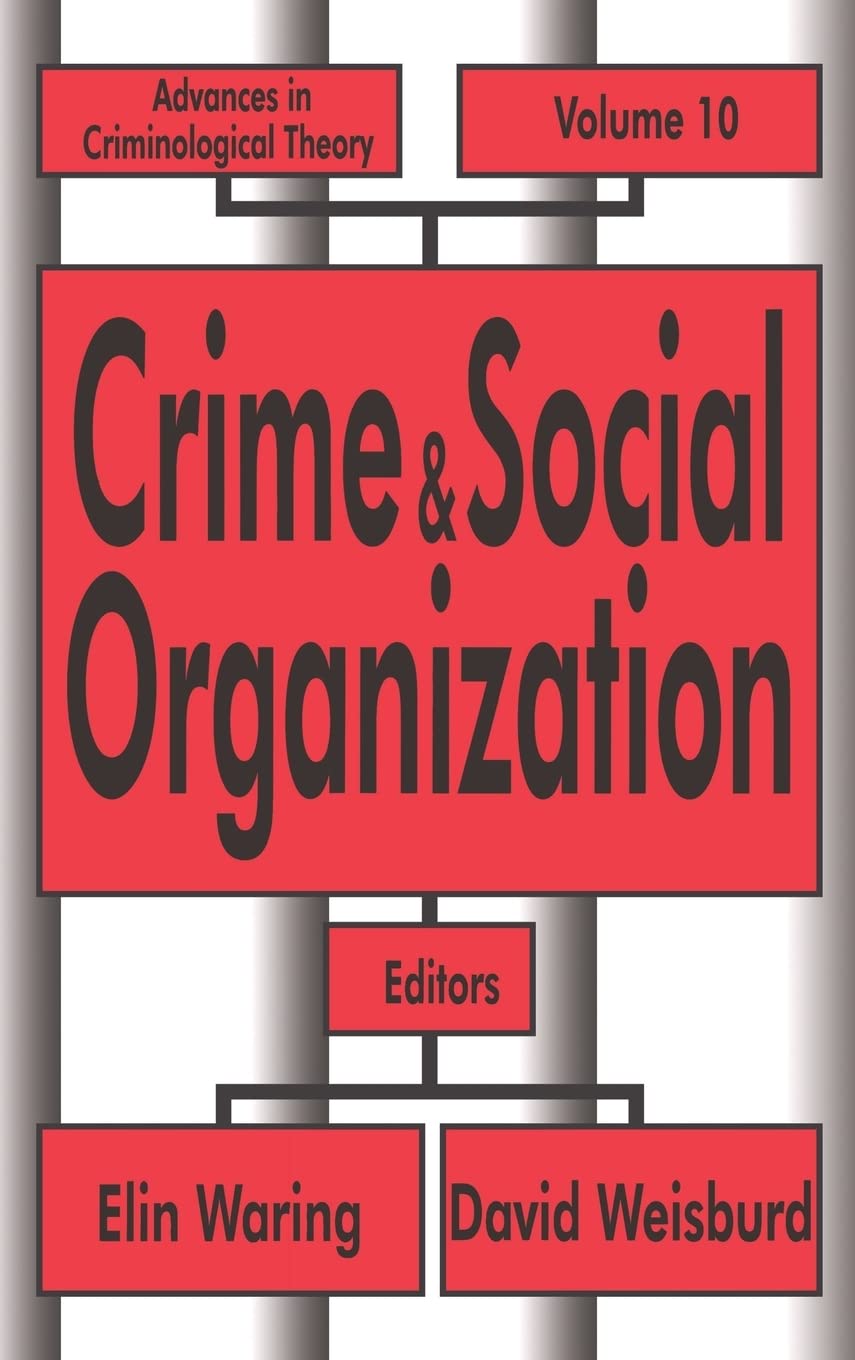
Crime and Social Organization: Advances in Criminological Theory,Used
Sold by Ergodebooks, an authorized reseller.
Returns accepted within 30 days | support@ergodebooks.com
Shipping Information
- Free Standard Shipping — United States only
- Processing Time: 3–5 business days
- Estimated Delivery: 6–10 business days after dispatch
- Double-boxed, fully insured & discreetly packaged
- Tracking number sent via email once dispatched
Returns & Refund
Returns accepted within 30 days of delivery.
Damaged or Defective Item
Free return shipping + replacement or full refund
Wrong Item Received
Free return shipping + replacement or full refund
Change of Mind
Return shipping at customer's expense · 25% restocking fee applies
Payment Option

This tenth volume in the Advances in Criminological Theory series is dedicated to the work of Albert J. Reiss, Jr. It focuses on the relationship between crime and social organization that is so central to his work. This focus rejects a view of crime solely as the action of atomistic individuals and sees the criminal justice system as inseparable from its social, political and organizational context. This perspective has had a resurgence in recent years, and this volume brings together some of the most important scholars who have contributed to these developments. Articles examine the social organization of crime itself, the context of crime, and the response to crime. The concept of cooffending, originally developed by Reiss, is explored both as a way of improving understanding of juvenile offending and as a framework for understanding patterns of criminal organization across crime types and the relationship of criminal to licit organization. Other articles recast social disorganization theory in light of recent theoretical and empirical developments. They argue for a version of control theory that incorporates internal, contextual, and statefocused dimensions. Organizational actors, both as offenders and as governmental agencies responding to crime, are explored. Building from Reiss's groundbreaking work on policing, a group of articles on policing examine organizational change through reorganization, the adoption of strategies such as community policing and the increased use of empirical evidence, complicated by routines, organizational culture and political constraints. Taken together, these works develop new connections between dimensions of social organization and renew the social organization perspective on crime and criminal justice. Contributors include: Diane Vaughan, Joan McCord, Kevin P. Conway, Elin Waring, Felton Earls, Beat Mohler, Peter Manning, Stephen Mastrofski, Lawrence Sherman, David Weisburd, Robert Sampson, David F. Greenberg, Margaret Kelley, Robin Tamarelli, and Jeremy Travis.
⚠️ WARNING (California Proposition 65):
This product may contain chemicals known to the State of California to cause cancer, birth defects, or other reproductive harm.
For more information, please visit www.P65Warnings.ca.gov.