
Title
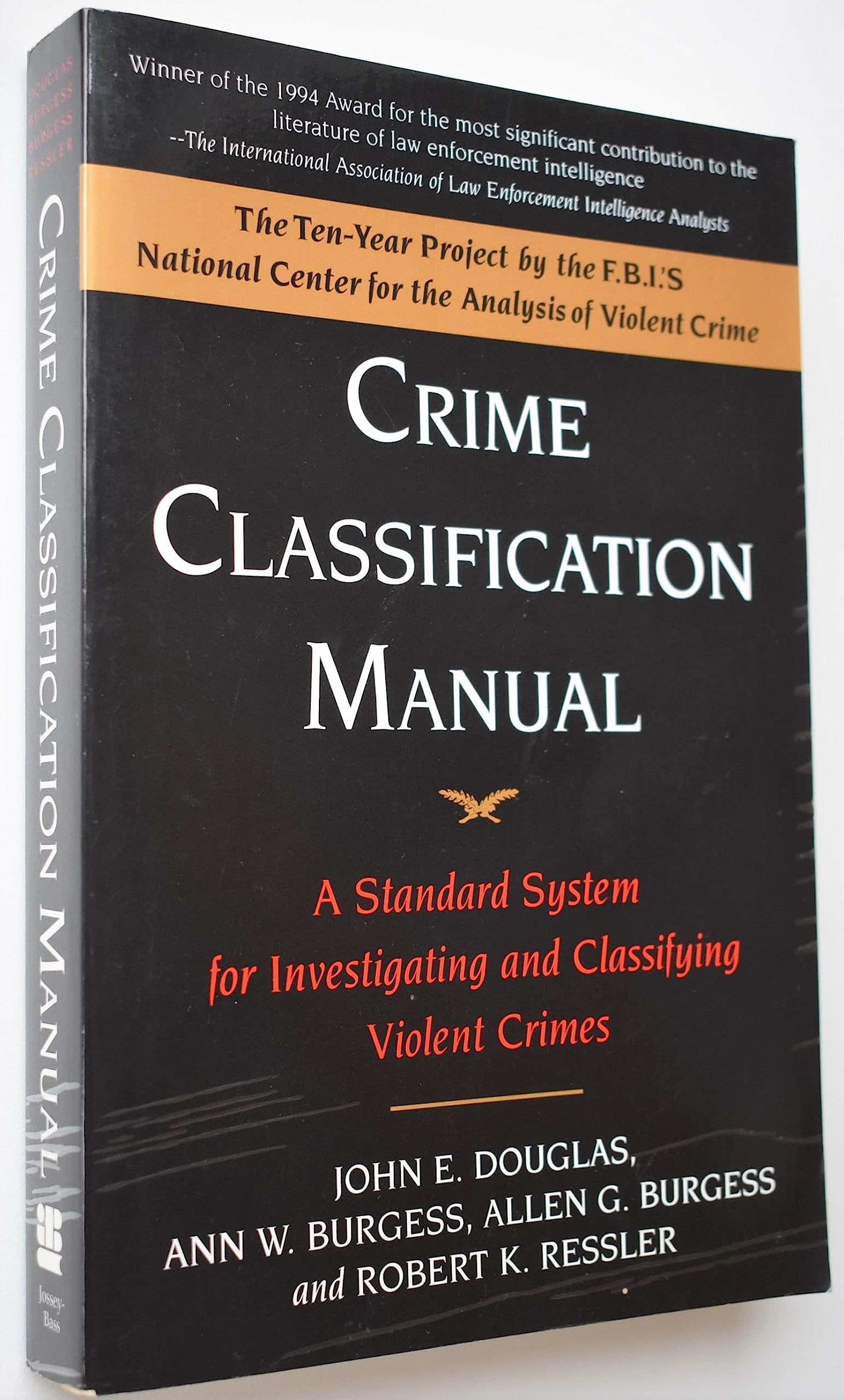
Crime Classification Manual: A Standard System For Investigating And Classifying Violent Crimes,Used
Sold by Ergodebooks, an authorized reseller.
Returns accepted within 30 days | support@ergodebooks.com
Shipping Information
- Free Standard Shipping — United States only
- Processing Time: 3–5 business days
- Estimated Delivery: 6–10 business days after dispatch
- Double-boxed, fully insured & discreetly packaged
- Tracking number sent via email once dispatched
Returns & Refund
Returns accepted within 30 days of delivery.
Damaged or Defective Item
Free return shipping + replacement or full refund
Wrong Item Received
Free return shipping + replacement or full refund
Change of Mind
Return shipping at customer's expense · 25% restocking fee applies
Payment Option

Leads To An Increased Understanding Of The Nature Of Crimes And The Individuals Who Commit Themthis Landmark Book Standardizes For The First Time The Language And Terminology Used Throughout The Criminal Justice System. It Classifies The Critical Characteristics Of The Perpetrators And Victims Of The Three Major Violent Crimesmurder, Arson, And Sexual Assaultbased Upon The Motivation Of The Offander.Based On The Primary Intent Of The Criminal, The Crime Classification Manual Leads To An Increased Understanding Of The Nature Of Crime And Of The Individuals Who Commit Such Crimes. This Is An Indispensable Reference For Anyone Whose Work Brings Them Into Contact With Either The Offander Or Victim Of Violent Crime.The Crime Classification Manual: Standardizes Terminology Within The Criminal Justice Field Facilitates Communication Within The Criminal Justice Field And Between Criminal Justice And Mental Health Develops A Data Base For Investigative Researcha Decade In Development, This Work Forms The Basis Of Contemporary Investigative Profiling, The Highly Acclaimed Strategy In Which Crimes Are Solved By Generating A Profile Of The Suspect. This Bestselling Manual Provides Law Enforcement And Mental Health Professionals Access To The Same Information Used By The Fbi To Coordinate Their Investigations.Also Available Is The Pocket Guide To The Crime Classification Manual, Which Presents In Handy Outline Form The Data In The Main Volume And Serves As A Quick Inthefield Reference Tool.
⚠️ WARNING (California Proposition 65):
This product may contain chemicals known to the State of California to cause cancer, birth defects, or other reproductive harm.
For more information, please visit www.P65Warnings.ca.gov.
- Q: How many pages does the Crime Classification Manual have? A: The Crime Classification Manual has four hundred pages. This extensive length allows for comprehensive coverage of violent crime classification.
- Q: What is the binding type of the Crime Classification Manual? A: The binding type is paperback. This makes it lightweight and portable for easy reference.
- Q: What are the dimensions of the Crime Classification Manual? A: The book measures six point fourteen inches in length, one point zero six inches in width, and nine point forty-nine inches in height. These dimensions make it convenient for both storage and handling.
- Q: Who is the author of the Crime Classification Manual? A: The author is John Douglas. He is well-known for his expertise in criminal profiling and forensic psychology.
- Q: What category does the Crime Classification Manual fall under? A: It falls under the category of Forensic Psychology. This genre focuses on the intersection of psychology and the criminal justice system.
- Q: How do I use the Crime Classification Manual effectively? A: You can use it as a reference for understanding and classifying violent crimes. It's particularly useful for law enforcement and mental health professionals.
- Q: Is the Crime Classification Manual suitable for beginners in criminal justice? A: Yes, it is suitable for beginners. The manual standardizes terminology, making it accessible for those new to the field.
- Q: Can I use the Crime Classification Manual for investigative research? A: Yes, the manual facilitates data collection for investigative research. It provides a standardized framework for profiling criminals.
- Q: What should I do if the Crime Classification Manual arrives damaged? A: If it arrives damaged, you can typically return it to the seller for a replacement or refund. Be sure to check the return policy for specifics.
- Q: What is the return policy for the Crime Classification Manual? A: The return policy varies by seller, but many offer returns within thirty days. Always verify with the retailer from whom you purchased it.
- Q: How do I care for the Crime Classification Manual? A: To care for it, keep it in a dry, cool place. Avoid exposure to direct sunlight to prevent fading.
- Q: Is the Crime Classification Manual safe for young readers? A: No, it may not be suitable for young readers. The content deals with violent crimes and may not be appropriate for children.
- Q: What makes the Crime Classification Manual a best-seller? A: Its comprehensive approach to classifying violent crimes and its use by professionals in law enforcement contribute to its best-seller status.
- Q: Does the Crime Classification Manual include case studies? A: Yes, it includes case studies for applied understanding of criminal profiling. This enhances the learning experience for readers.
- Q: Is there a quick reference guide available for the Crime Classification Manual? A: Yes, there is a Pocket Guide to the Crime Classification Manual. It serves as a handy outline for quick reference.