
Title
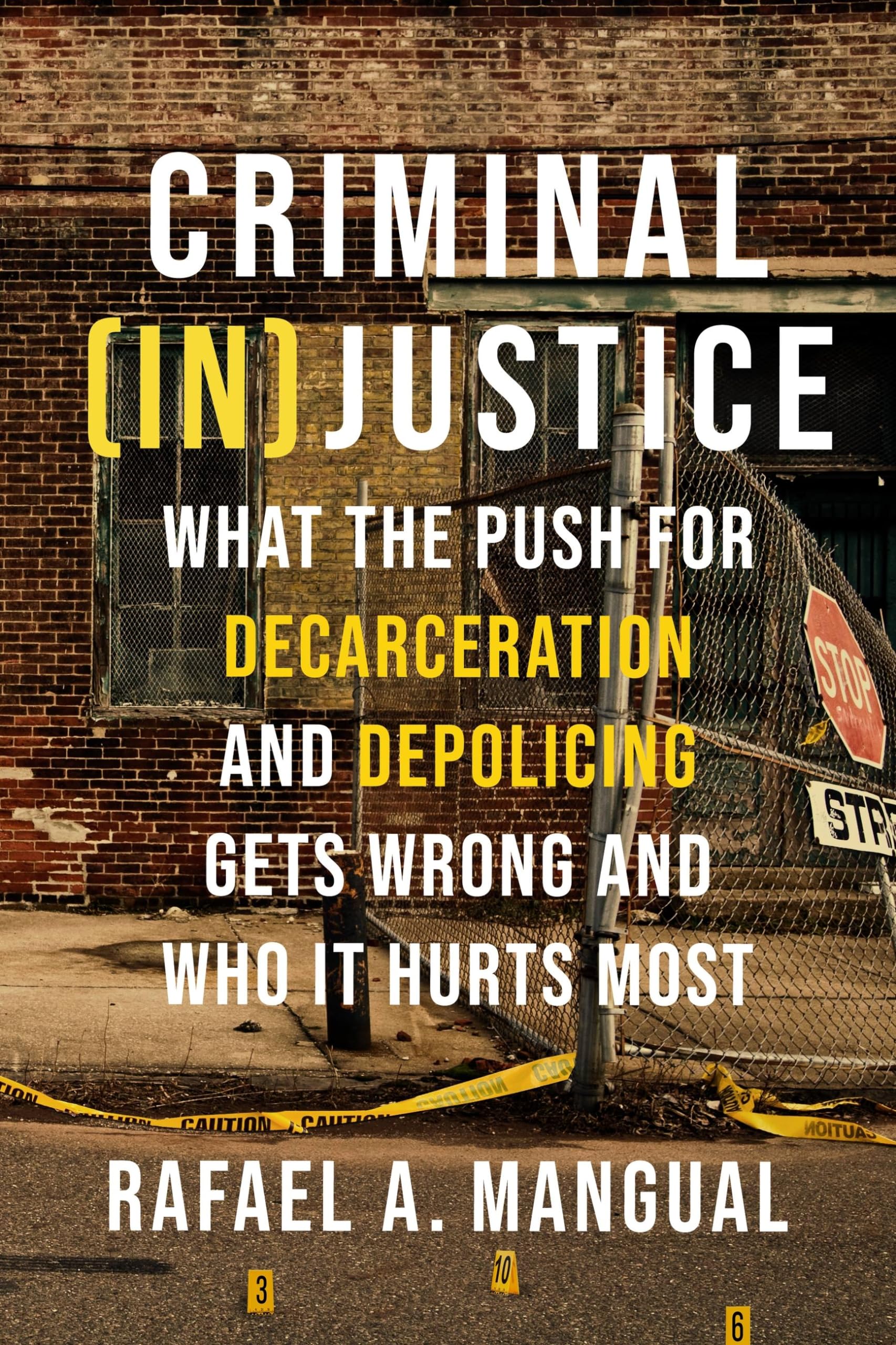
Criminal (In)Justice: What the Push for Decarceration and Depolicing Gets Wrong and Who It Hurts Most,Used
Sold by Ergodebooks, an authorized reseller.
Returns accepted within 30 days | support@ergodebooks.com
Shipping Information
- Free Standard Shipping — United States only
- Processing Time: 3–5 business days
- Estimated Delivery: 6–10 business days after dispatch
- Double-boxed, fully insured & discreetly packaged
- Tracking number sent via email once dispatched
Returns & Refund
Returns accepted within 30 days of delivery.
Damaged or Defective Item
Free return shipping + replacement or full refund
Wrong Item Received
Free return shipping + replacement or full refund
Change of Mind
Return shipping at customer's expense · 25% restocking fee applies
Payment Option

In his impassionedyetmeasured book, Rafael A. Mangual offers an incisive critique of America's increasingly radical criminal justice reform movement, and makes a convincing case against the pursuit of 'justice' through massdecarceration and depolicing.After a summer of violent protests in 2020sparked by the deaths of George Floyd, Breonna Taylor, and Rayshard Brooksa dangerously false narrative gained mainstream acceptance: Criminal justice in the United States is overly punitive and racially oppressive. But, the harshest and loudest condemnations of incarceration, policing, and prosecution are often shallow and at odds with the available data. And the significant harms caused by this false narrative are borne by those who can least afford them: black and brown people who are disproportionately the victims of serious crimes.In Criminal (In)Justice, Rafael A. Mangual offers a more balanced understanding of American criminal justice, and cautions against discarding traditional crime control measures. A powerful combination of research, datadriven policy journalism, and the author's lived experiences, this book explains what many reform advocates get wrong, and illustrates how the misguided commitment to leniency places America's most vulnerable communities at risk.The stakes of this moment are incredibly high. Ongoing debates over criminal justice reform have the potential to transform our society for a generationfor better or for worse. Grappling with the dataand the sometimes harsh realities they reflectis the surest way to minimize the alltoocommon injustices plaguing neighborhoods that can least afford them.
⚠️ WARNING (California Proposition 65):
This product may contain chemicals known to the State of California to cause cancer, birth defects, or other reproductive harm.
For more information, please visit www.P65Warnings.ca.gov.
- Q: What is the main focus of 'Criminal (In)Justice' by Rafael A. Mangual? A: The book critiques the radical criminal justice reform movement in America, arguing against the ideas of mass decarceration and depolicing, and discussing the implications of these movements on vulnerable communities.
- Q: Who is the author of 'Criminal (In)Justice'? A: The author of 'Criminal (In)Justice' is Rafael A. Mangual, who provides insights based on research and lived experiences.
- Q: When was 'Criminal (In)Justice' published? A: The book was published on July 26, 2022.
- Q: What type of binding does this book have? A: The book is available in hardcover binding.
- Q: How many pages are in 'Criminal (In)Justice'? A: The book contains 256 pages.
- Q: What category does 'Criminal (In)Justice' fall under? A: The book falls under the category of Law Enforcement.
- Q: Is 'Criminal (In)Justice' a new book? A: Yes, the item condition is listed as 'New'.
- Q: What are the key themes discussed in 'Criminal (In)Justice'? A: Key themes include the critique of criminal justice reform, the potential harms of leniency in crime control, and the impact on marginalized communities.
- Q: What is the author's perspective on traditional crime control measures? A: Rafael A. Mangual cautions against discarding traditional crime control measures, arguing they play a crucial role in protecting vulnerable communities.
- Q: Does 'Criminal (In)Justice' provide data to support its claims? A: Yes, the book combines research and data-driven policy journalism to support its critiques and arguments.