
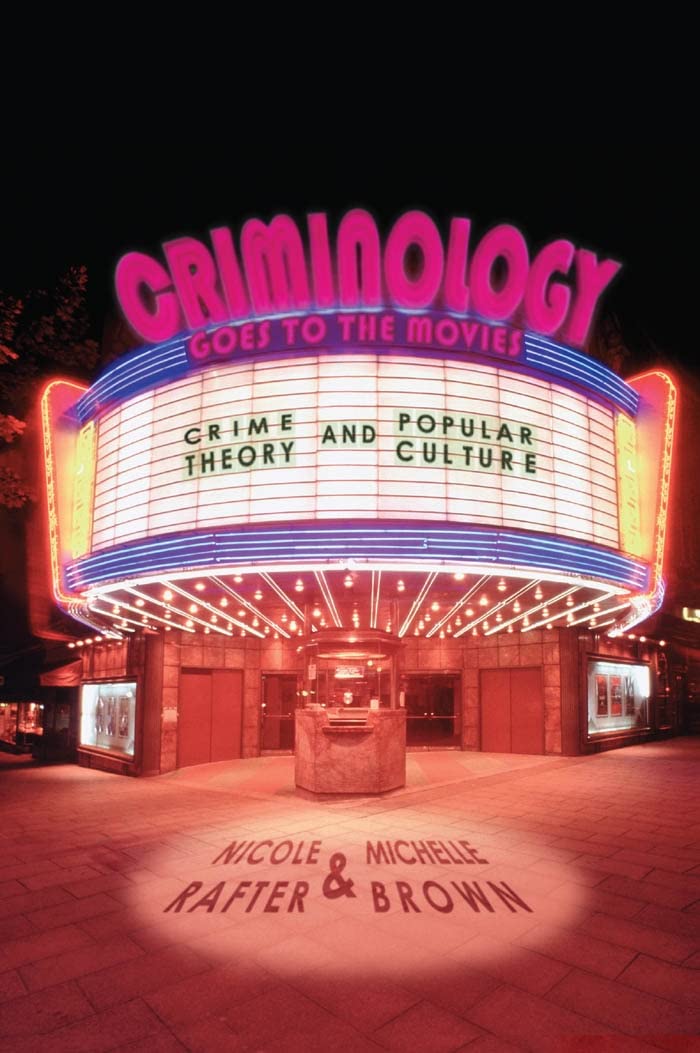
Title
New York University Press Criminology Goes to the Movies: Crime Theory & Popular Culture Book
Sold by Ergodebooks, an authorized reseller.
Returns accepted within 30 days | support@ergodebooks.com
Shipping Information
- Free Standard Shipping — United States only
- Processing Time: 3–5 business days
- Estimated Delivery: 6–10 business days after dispatch
- Double-boxed, fully insured & discreetly packaged
- Tracking number sent via email once dispatched
Returns & Refund
Returns accepted within 30 days of delivery.
Damaged or Defective Item
Free return shipping + replacement or full refund
Wrong Item Received
Free return shipping + replacement or full refund
Change of Mind
Return shipping at customer's expense · 25% restocking fee applies
Payment Option

Discover the intersection of criminology and cinema with "Criminology Goes to the Movies," a thought-provoking exploration of how films shape and reflect our understanding of crime. This book offers a unique perspective for students and enthusiasts alike, making it an essential addition to any criminology curriculum.
Authored by Nicole Rafter and Michelle Brown, this innovative work delves into a diverse range of films, from classics like Psycho and Double Indemnity to contemporary titles such as Traffic and Thelma & Louise. Rafter and Brown illustrate that criminological theory transcends academic walls, emerging in popular culture through the lens of film. The book encourages readers to engage critically with cinema, using it as a tool for understanding crime and societal perceptions of criminality. "Criminology Goes to the Movies" is the first comprehensive study to apply a systematic criminological perspective to crime films, providing readers with fresh insights and analytical tools for interpreting cinematic narratives.
Key Features:- Comprehensive analysis of crime films through a criminological lens.
- Explores both classic and contemporary films for diverse insights.
- Encourages critical engagement with popular culture and its implications.
- Utilizes criminological concepts to uncover hidden meanings in film.
- Enhances the learning experience for students of criminology.
- Promotes understanding of how crime theories manifest in mass media.
- Engaging writing style that makes complex theories accessible.
This book is ideal for students, educators, and anyone interested in the relationship between crime and film. "Criminology Goes to the Movies" not only enriches your understanding of criminology but also enhances your appreciation of cinema as a medium for cultural commentary on crime. Dive into this illuminating exploration and gain valuable insights that bridge the gap between criminological theory and popular media.
⚠️ WARNING (California Proposition 65):
This product may contain chemicals known to the State of California to cause cancer, birth defects, or other reproductive harm.
For more information, please visit www.P65Warnings.ca.gov.
- Q: How many pages does this book have? A: This book has two hundred thirty-six pages. It provides an in-depth exploration of criminology through the lens of popular film.
- Q: What are the dimensions of this book? A: The dimensions of this book are six inches in length, zero point six inches in width, and nine point zero two inches in height. This makes it a convenient size for reading and handling.
- Q: What is the binding type of this book? A: This book is paperback bound. Paperback bindings are flexible and lightweight, making it easy to carry and read.
- Q: Who is the author of this book? A: The author of this book is Nicole Rafter, along with co-author Michelle Brown. They both bring significant expertise in criminology and film studies.
- Q: What genre does this book belong to? A: This book belongs to the Performing Arts genre. It intersects criminology with film analysis, providing a unique perspective on crime theory.
- Q: Is this book suitable for beginners in criminology? A: Yes, this book is suitable for beginners. It encourages readers to engage with popular culture while exploring foundational criminological theories.
- Q: How can I apply the concepts from this book? A: You can apply the concepts from this book by analyzing films and media through a criminological lens. It encourages practical engagement with crime theories in everyday contexts.
- Q: What age group is this book appropriate for? A: This book is appropriate for college-level students and adults interested in criminology. It discusses theories of crime and film that may not suit younger audiences.
- Q: Can I use this book for academic research? A: Yes, you can use this book for academic research. It offers a comprehensive analysis of criminological theory as represented in popular films.
- Q: How should I store this book to keep it in good condition? A: To keep this book in good condition, store it upright in a cool, dry place away from direct sunlight. This prevents warping and fading of the cover.
- Q: Is this book safe for children? A: No, this book is not specifically safe for children. It discusses crime and adult themes that may not be suitable for younger readers.
- Q: What if the book arrives damaged? A: If the book arrives damaged, you should contact customer support for assistance. Most retailers offer return or exchange policies for damaged items.
- Q: Does this book contain any graphic content? A: Yes, this book discusses crime theory and may reference graphic content related to films. Reader discretion is advised.
- Q: Is this book a good choice for film studies students? A: Yes, this book is an excellent choice for film studies students. It uniquely combines criminological theory with cinematic analysis.
- Q: Can I find similar books to this one? A: Yes, you can find similar books that explore criminology and film. Look for titles that analyze crime in popular culture and media.
- Q: What publishing company released this book? A: This book was published by New York University Press. They are known for their academic publications in various fields.