
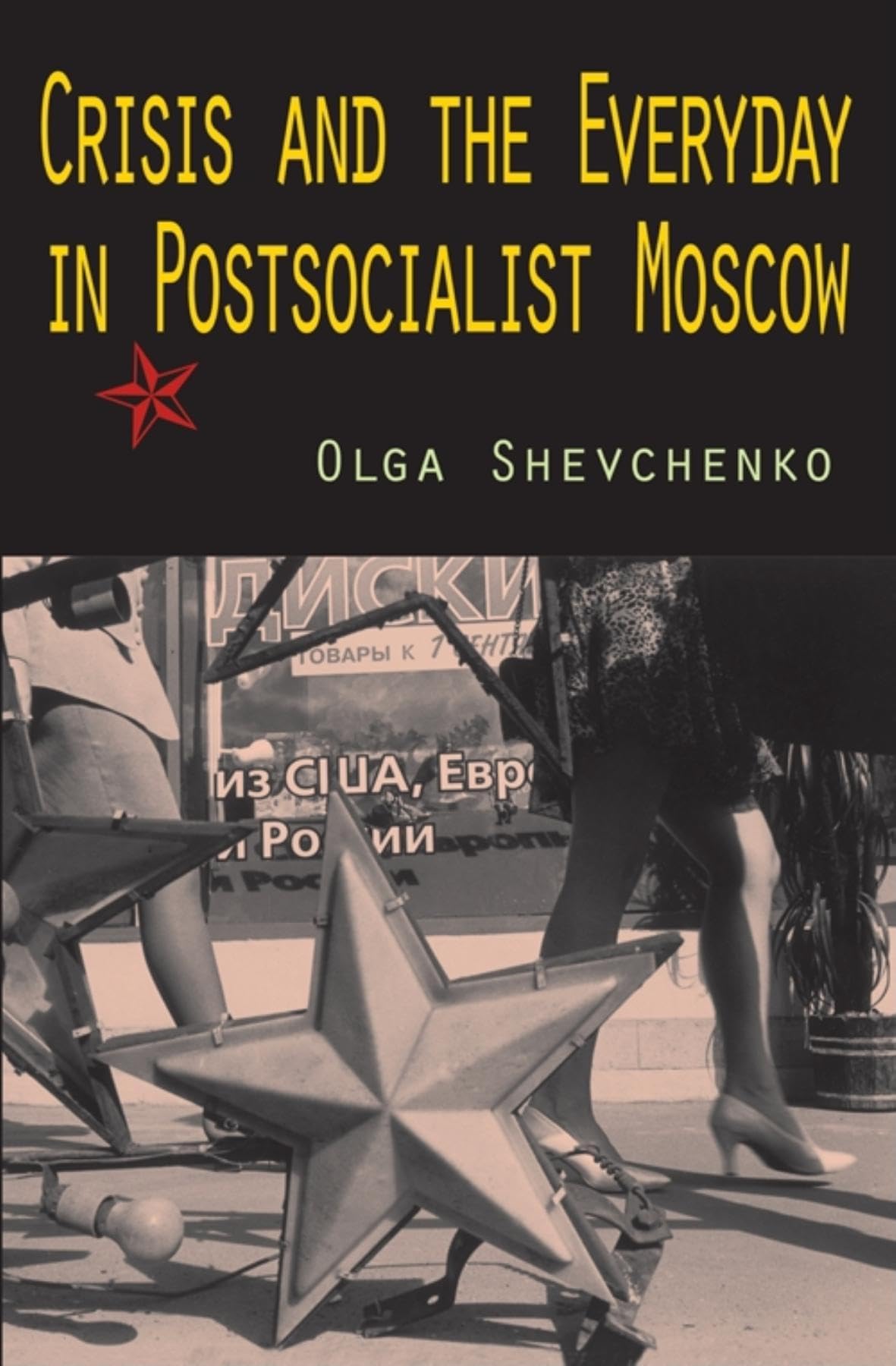
Title
Crisis And The Everyday In Postsocialist Moscow
Sold by Ergodebooks, an authorized reseller.
Returns accepted within 30 days | support@ergodebooks.com
Shipping Information
- Free Standard Shipping — United States only
- Processing Time: 3–5 business days
- Estimated Delivery: 6–10 business days after dispatch
- Double-boxed, fully insured & discreetly packaged
- Tracking number sent via email once dispatched
Returns & Refund
Returns accepted within 30 days of delivery.
Damaged or Defective Item
Free return shipping + replacement or full refund
Wrong Item Received
Free return shipping + replacement or full refund
Change of Mind
Return shipping at customer's expense · 25% restocking fee applies
Payment Option

In This Ethnography Of Postsocialist Moscow In The Late 1990S, Olga Shevchenko Draws On Interviews With A Crosssection Of Muscovites To Describe How People Made Sense Of The Acute Uncertainties Of Everyday Life, And The New Identities And Competencies That Emerged In Response To These Challenges. Ranging From Consumption To Daily Rhetoric, And From Urban Geography To Health Care, This Study Illuminates The Relationship Between Crisis And Normality And Adds A New Dimension To The Debates About Postsocialist Culture And Politics.
⚠️ WARNING (California Proposition 65):
This product may contain chemicals known to the State of California to cause cancer, birth defects, or other reproductive harm.
For more information, please visit www.P65Warnings.ca.gov.
- Q: What is the page count of the book? A: This book has two hundred forty-one pages. It provides an in-depth exploration of postsocialist Moscow through ethnographic study.
- Q: What are the dimensions of the book? A: The book measures nine point three inches in length, six point two six inches in width, and zero point seven one inches in height.
- Q: What type of binding does this book have? A: This book is paperback bound. This type of binding is flexible and lightweight, making it easy to read and carry.
- Q: Who is the author of this book? A: The author of this book is Olga Shevchenko. She conducted extensive research and interviews for this ethnography.
- Q: What is the genre of this book? A: This book falls under the genre of ethnography. It examines cultural and social dynamics in postsocialist Moscow.
- Q: Is this book suitable for academic study? A: Yes, this book is suitable for academic study. It provides valuable insights into postsocialist culture and politics.
- Q: How can I apply the insights from this book? A: You can apply the insights from this book by exploring the cultural dynamics of postsocialist societies. It may enhance your understanding of modern urban issues.
- Q: Is this book appropriate for all age groups? A: Yes, this book is appropriate for most age groups. However, readers should have a mature understanding of cultural and political concepts.
- Q: How should I store this book to keep it in good condition? A: Store this book in a cool, dry place away from direct sunlight. This will help preserve the quality of the pages and binding.
- Q: Can I clean the book if it gets dirty? A: Yes, you can gently wipe the book's cover with a soft, dry cloth. Avoid using water or cleaning solutions that may damage the binding.
- Q: What if the book arrives damaged? A: If the book arrives damaged, you should contact customer service for a replacement. Make sure to provide details and photos of the damage.
- Q: Is there a warranty on this book? A: No, there is no warranty on this book. However, most retailers offer return policies for damaged or unsatisfactory products.
- Q: How does this book compare to others in the same genre? A: This book offers unique insights into postsocialist Moscow, setting it apart from other ethnographies that may focus on different regions or themes.
- Q: Is this book recommended for beginners in ethnography? A: Yes, this book is recommended for beginners. It presents complex ideas in an accessible manner, making it a good starting point.
- Q: What themes are explored in this book? A: The book explores themes of crisis, identity, and everyday life in postsocialist Moscow. It provides a nuanced understanding of societal changes.
- Q: Can I use this book for a research paper? A: Yes, this book is a valuable resource for research papers. It includes rich ethnographic details that can support academic arguments.