
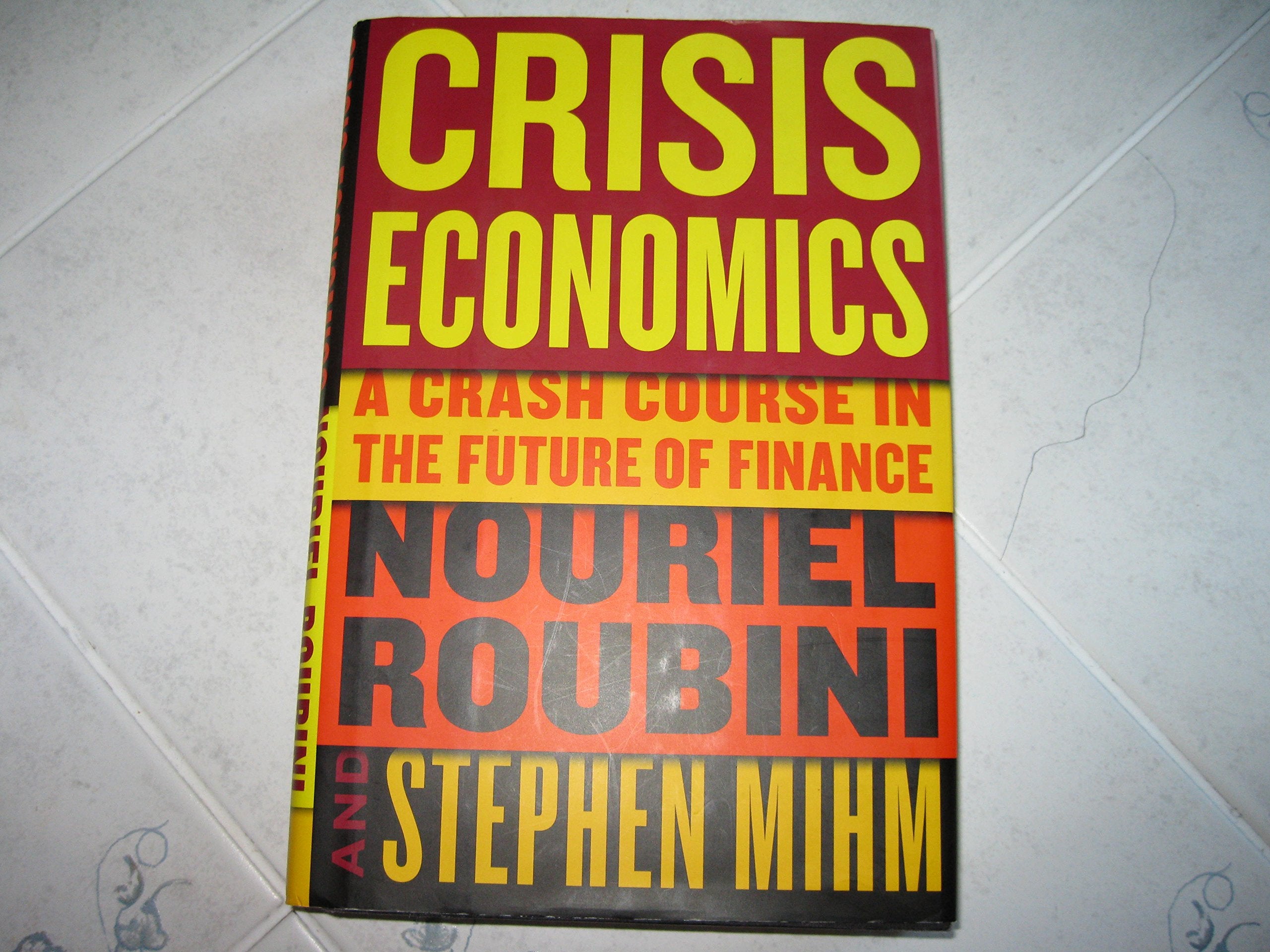
Title
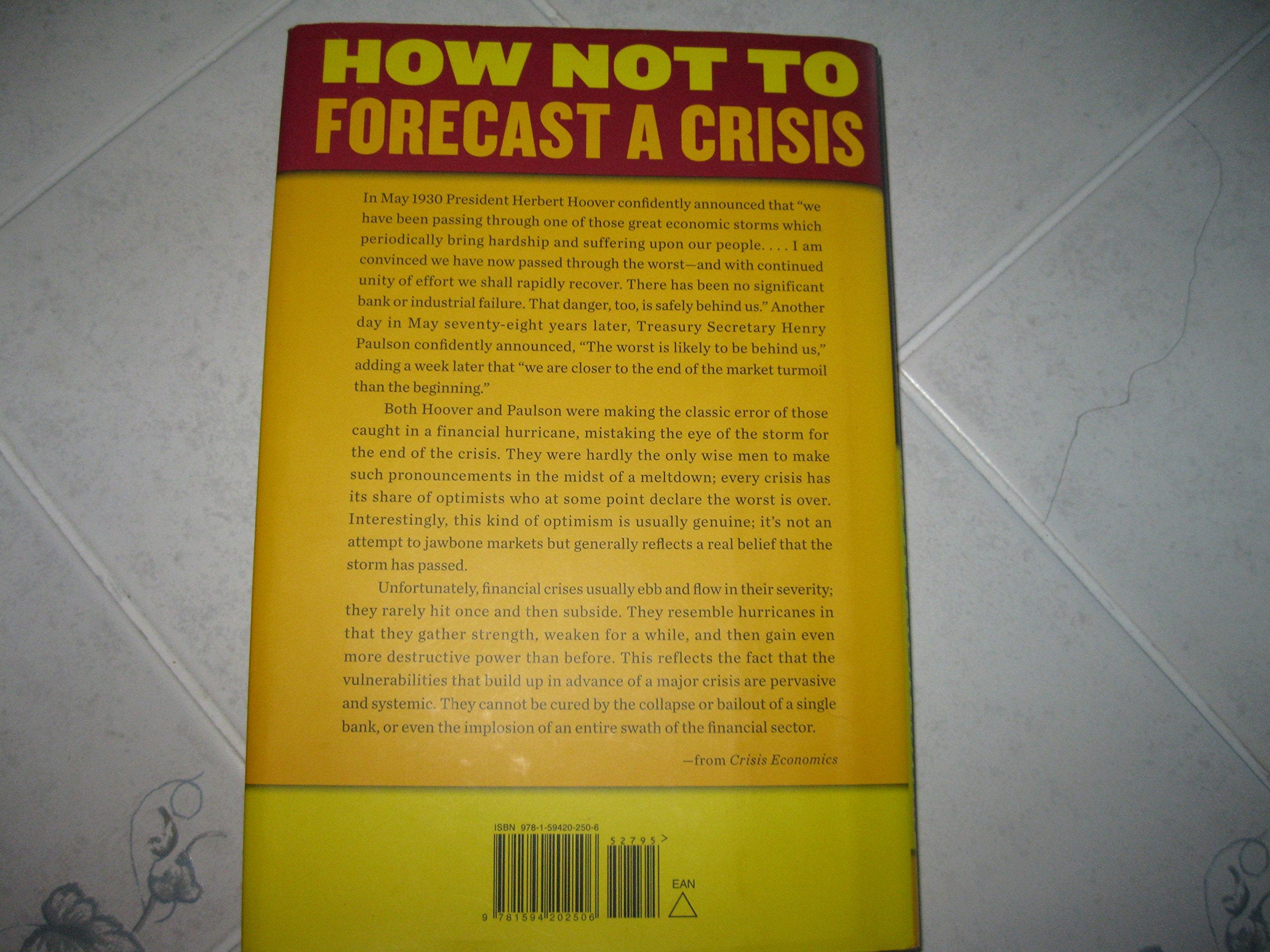
Crisis Economics: A Crash Course in the Future of Finance,New
Sold by Ergodebooks, an authorized reseller.
Returns accepted within 30 days | support@ergodebooks.com
Shipping Information
- Free Standard Shipping — United States only
- Processing Time: 3–5 business days
- Estimated Delivery: 6–10 business days after dispatch
- Double-boxed, fully insured & discreetly packaged
- Tracking number sent via email once dispatched
Returns & Refund
Returns accepted within 30 days of delivery.
Damaged or Defective Item
Free return shipping + replacement or full refund
Wrong Item Received
Free return shipping + replacement or full refund
Change of Mind
Return shipping at customer's expense · 25% restocking fee applies
Payment Option

This myth shattering book reveals the methods Nouriel Roubini used to foretell the current crisis before other economists saw it coming and shows how those methods can help us make sense of the present and prepare for the future.Renowned economist Nouriel Roubini electrified his profession and the larger financial community by predicting the current crisis well in advance of anyone else. Unlike most in his profession who treat economic disasters as freakish onceinalifetime events without clear cause, Roubini, after decades of careful research around the world, realized that they were both probable and predictable. Armed with an unconventional blend of historical analysis and global economics, Roubini has forced politicians, policy makers, investors, and market watchers to face a longneglected truth: financial systems are inherently fragile and prone to collapse.Drawing on the parallels from many countries and centuries, Nouriel Roubini and Stephen Mihm, a professor of economic history and a New York Times Magazine writer, show that financial cataclysms are as old and as ubiquitous as capitalism itself. The last two decades alone have witnessed comparable crises in countries as diverse as Mexico, Thailand, Brazil, Pakistan, and Argentina. All of these crisesnot to mention the more sweeping cataclysms such as the Great Depressionhave much in common with the current downturn. Bringing lessons of earlier episodes to bear on our present predicament, Roubini and Mihm show how we can recognize and grapple with the inherent instability of the global financial system, understand its pressure points, learn from previous episodes of 'irrational exuberance,' pinpoint the course of global contagion, and plan for our immediate future. Perhaps most important, the authorsconsidering theories, statistics, and mathematical models with the skepticism that recent history warrantsexplain how the world's economy can get out of the mess we're in, and stay out.In Roubini's shadow, economists and investors are increasingly realizing that they can no longer afford to consider crises the black swans of financial history. A vital and timeless book, Crisis Economics proves calamities to be not only predictable but also preventable and, with the right medicine, curable.
⚠️ WARNING (California Proposition 65):
This product may contain chemicals known to the State of California to cause cancer, birth defects, or other reproductive harm.
For more information, please visit www.P65Warnings.ca.gov.