
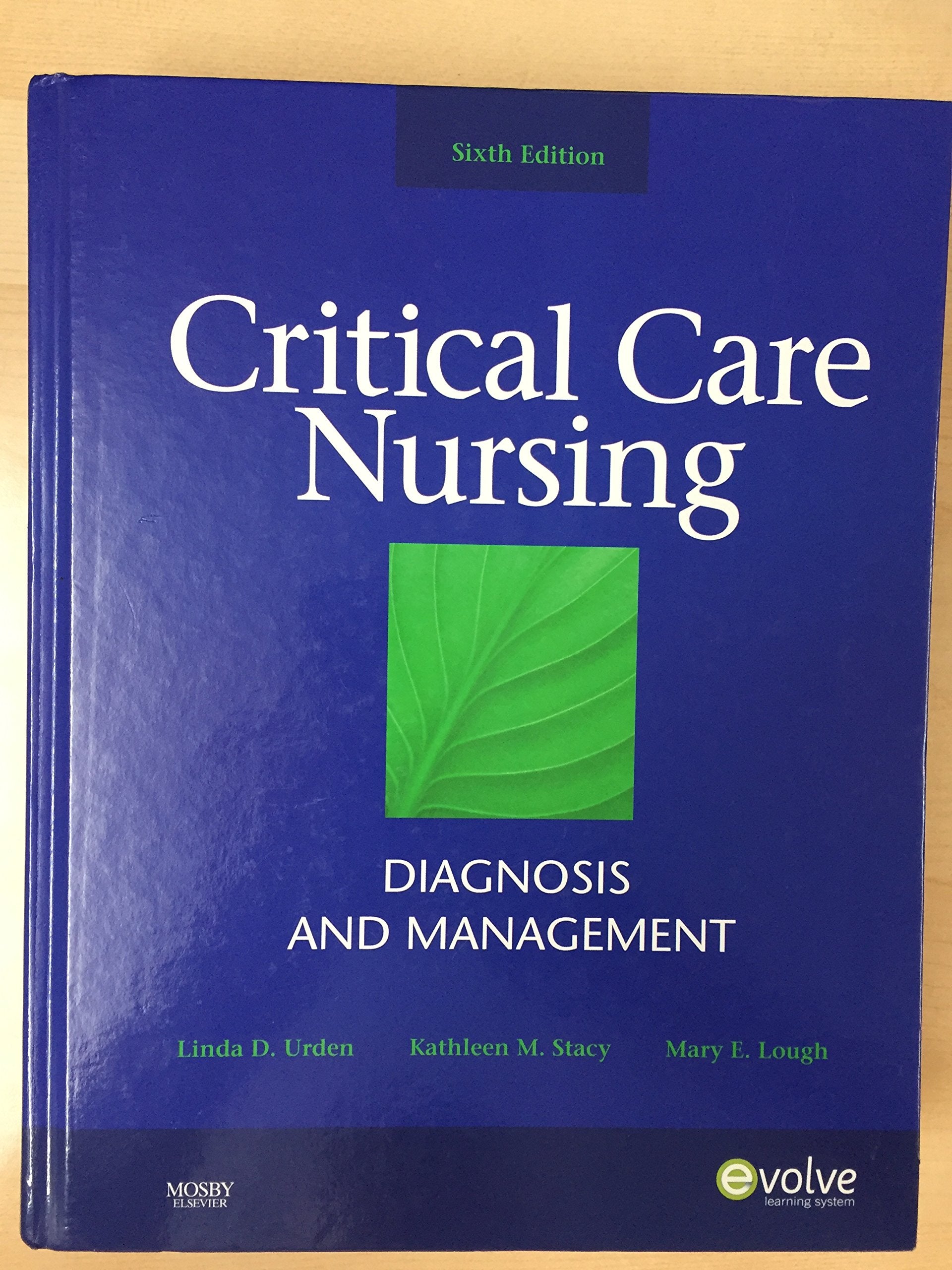
Title
Critical Care Nursing: Diagnosis And Management (Thelans Critical Care Nursing Diagnosis),New
Sold by Ergodebooks, an authorized reseller.
Returns accepted within 30 days | support@ergodebooks.com
Shipping Information
- Free Standard Shipping — United States only
- Processing Time: 3–5 business days
- Estimated Delivery: 6–10 business days after dispatch
- Double-boxed, fully insured & discreetly packaged
- Tracking number sent via email once dispatched
Returns & Refund
Returns accepted within 30 days of delivery.
Damaged or Defective Item
Free return shipping + replacement or full refund
Wrong Item Received
Free return shipping + replacement or full refund
Change of Mind
Return shipping at customer's expense · 25% restocking fee applies
Payment Option

Adaptable To Any Nursing Framework, This Classic Resource Provides Clear, Comprehensive Coverage Of Every Aspect Of Critical Care Nursing Practice. Its Organized In Nine Units Around Alterations In Body Systems, With A Focus On Evidencebased Practice, Collaborative Management, And Patient Safety. The Depth And Scope Of This Textbook Make It A Longlasting Value That You Will Rely On Throughout Nursing School And Well Into Clinical Practice. Evidencebased Practice: Collaborative And Evidencebased Practice: Nursing Boxes Offer The Latest Evidencebased Management Guidelines For Both Collaborative And Nursing Care And Highlight The Importance Of Basing Practice On Strong Evidence.Collaborative Management Boxes Examine The Interdependence Of Nursing And Medical Practice And Demonstrate The Importance Of Teamwork In The Management Of Critical Care Patients.Pharmacologic Management Tables In Each Therapeutic Management Chapter Provide A Quick Summary Of Drug Names, Recommended Dosages, Drug Actions, And Special Considerations For The Drugs Most Often Used In Critical Care.Nursing Diagnoses Boxes In Every Disorders Chapter List Common Diagnoses In Priority Order For Each Body System, Encouraging Critical Thinking And Effective Decisionmaking.Patient Safety Alerts Highlight Potential Safety Issues Related To Chapter Content As Identified By The Joint Commission.Unique! Data Collection Boxes In Assessment Chapters Outline All The Information Required For A Complete Patient Assessment.Patient Education Boxes Offer Quick Access To The Concepts That Must Be Taught To The Patient And The Family Before Discharge From The Icu.Nursing Interventions Classification (Nic) Boxes List The Important Nursing Actions For A Variety Of Nursing Interventions That Are Part Of The Therapeutic Management Of A Critically Ill Patient. A New Chapter On Genetics Gives You A Solid Understanding Of This Essential Aspect Of Modern Healthcare.Unique! Concept Maps In Each Disorder Chapter Help You Understand Common Health Conditions, Including Acute Coronary Syndrome, Acute Renal Failure, Ischemic Stroke, And Shock.Case Studies Address Important Critical Care Nursing Topics And Give You The Opportunity To Apply Key Concepts To Realworld Scenarios.
⚠️ WARNING (California Proposition 65):
This product may contain chemicals known to the State of California to cause cancer, birth defects, or other reproductive harm.
For more information, please visit www.P65Warnings.ca.gov.
- Q: How many pages does this textbook have? A: This textbook has one thousand two hundred thirty-two pages. It provides extensive coverage of critical care nursing practices.
- Q: What is the binding type of this book? A: The binding type is hardcover. This ensures durability for frequent use in clinical settings.
- Q: What are the dimensions of the book? A: The book measures eight point seventy-five inches in length, one point seventy-five inches in width, and eleven inches in height. These dimensions make it easy to handle and store.
- Q: Who is the author of this nursing textbook? A: The author is Linda D. Urden. She is recognized for her contributions to critical care nursing education.
- Q: What is the main focus of the textbook? A: The main focus is on critical care nursing diagnosis and management. It emphasizes evidence-based practices and patient safety.
- Q: Is this textbook suitable for nursing students? A: Yes, it is suitable for nursing students. The content covers essential topics that are applicable throughout nursing education and practice.
- Q: How can I effectively use this textbook for studying? A: You can use this textbook by reading through the units and utilizing the collaborative management and evidence-based practice sections. These resources are designed to enhance your understanding of critical care.
- Q: Does this book include case studies? A: Yes, it includes case studies. These real-world scenarios help you apply key concepts to critical care nursing.
- Q: Is there a chapter on genetics in this textbook? A: Yes, there is a chapter dedicated to genetics. It provides insights into its relevance in modern healthcare.
- Q: How do I keep this textbook in good condition? A: To keep the textbook in good condition, store it in a cool, dry place and avoid exposing it to direct sunlight. Regular cleaning of the cover will also help maintain its appearance.
- Q: Are there safety alerts in the textbook? A: Yes, the textbook includes Patient Safety Alerts. These alerts highlight potential safety issues related to critical care nursing practices.
- Q: What type of management guidelines are provided? A: The textbook provides collaborative and evidence-based management guidelines. These guidelines are designed to improve patient outcomes in critical care settings.
- Q: Does this book cover pharmacologic management? A: Yes, it includes pharmacologic management tables. These tables summarize drug names, dosages, and special considerations for critical care medications.
- Q: Can this textbook help with nursing diagnoses? A: Yes, it lists common nursing diagnoses in priority order. This feature encourages critical thinking and effective decision-making.
- Q: Is this resource updated with the latest evidence-based practices? A: Yes, the textbook is updated with the latest evidence-based practices. It emphasizes the importance of basing nursing care on strong evidence.