
Title
Critical Literacy And Urban Youth (Language, Culture, And Teaching Series),Used
Sold by Ergodebooks, an authorized reseller.
Returns accepted within 30 days | support@ergodebooks.com
Shipping Information
- Free Standard Shipping — United States only
- Processing Time: 3–5 business days
- Estimated Delivery: 6–10 business days after dispatch
- Double-boxed, fully insured & discreetly packaged
- Tracking number sent via email once dispatched
Returns & Refund
Returns accepted within 30 days of delivery.
Damaged or Defective Item
Free return shipping + replacement or full refund
Wrong Item Received
Free return shipping + replacement or full refund
Change of Mind
Return shipping at customer's expense · 25% restocking fee applies
Payment Option

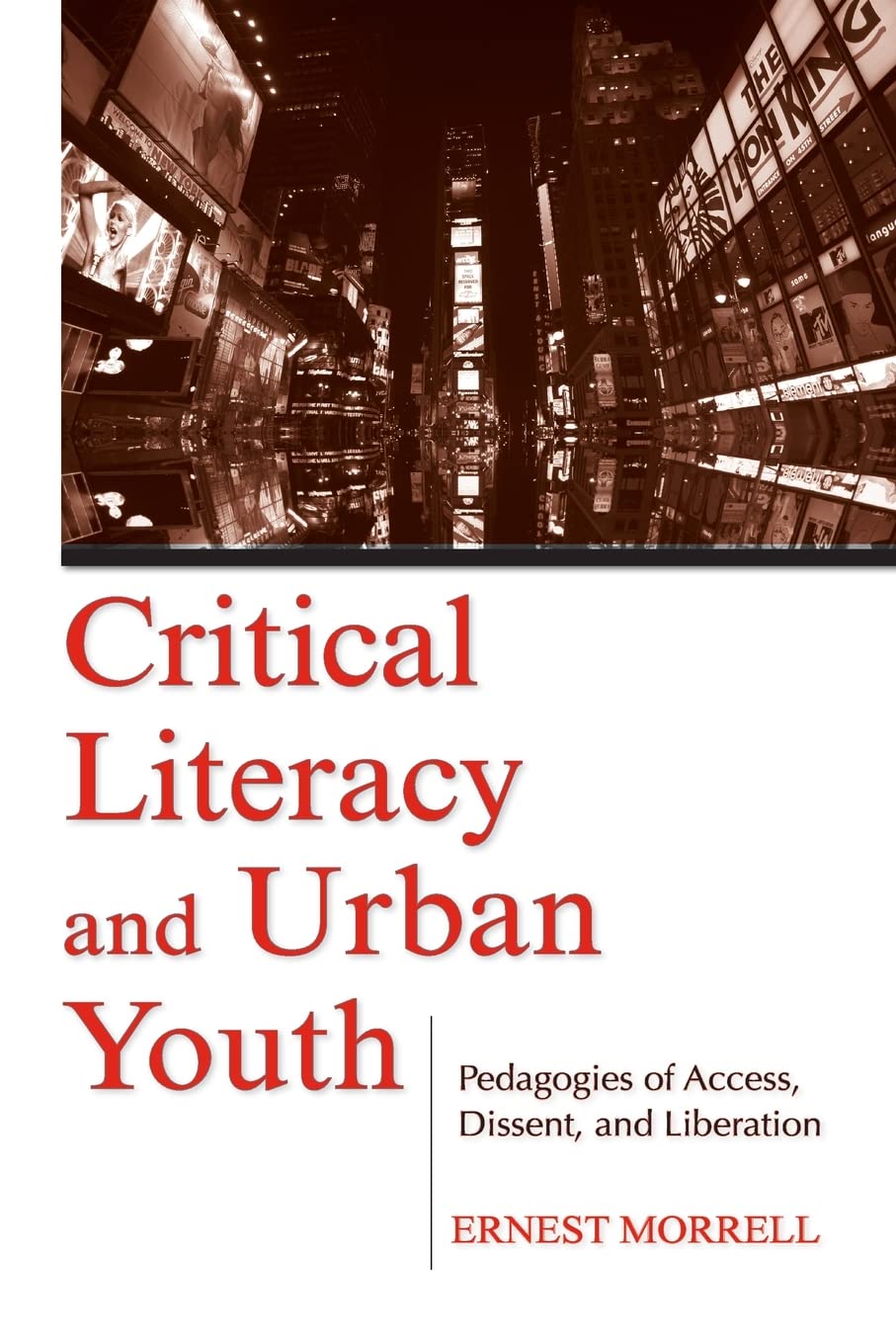
Critical Literacy and Urban Youth offers an interrogation of critical theory developed from the authors work with young people in classrooms, neighborhoods, and institutions of power. Through cases, an articulated process, and a theory of literacy education and social change, Morrell extends the conversation among literacy educators about what constitutes critical literacy while also examining implications for practice in secondary and postsecondary American educational contexts. This book is distinguished by its weaving together of theory and practice.Morrell begins by arguing for a broader definition of the 'critical' in critical literacy one that encapsulates the entire Western philosophical tradition as well as several important 'Othered' traditions ranging from postcolonialism to the AfricanAmerican tradition. Next, he looks at four cases of critical literacy pedagogy with urban youth: teaching popular culture in a high school English classroom; conducting communitybased critical research; engaging in cyberactivism; and doing critical media literacy education. Lastly, he returns to theory, first considering two areas of critical literacy pedagogy that are still relatively unexplored: the importance of critical reading and writing in constituting and reconstituting the self, and critical writing that is not just about coming to a critical understanding of the world but that plays an explicit and selfreferential role in changing the world. Morrell concludes by outlining a grounded theory of critical literacy pedagogy and considering its implications for literacy research, teacher education, classroom practice, and advocacy work for social change.
⚠️ WARNING (California Proposition 65):
This product may contain chemicals known to the State of California to cause cancer, birth defects, or other reproductive harm.
For more information, please visit www.P65Warnings.ca.gov.