
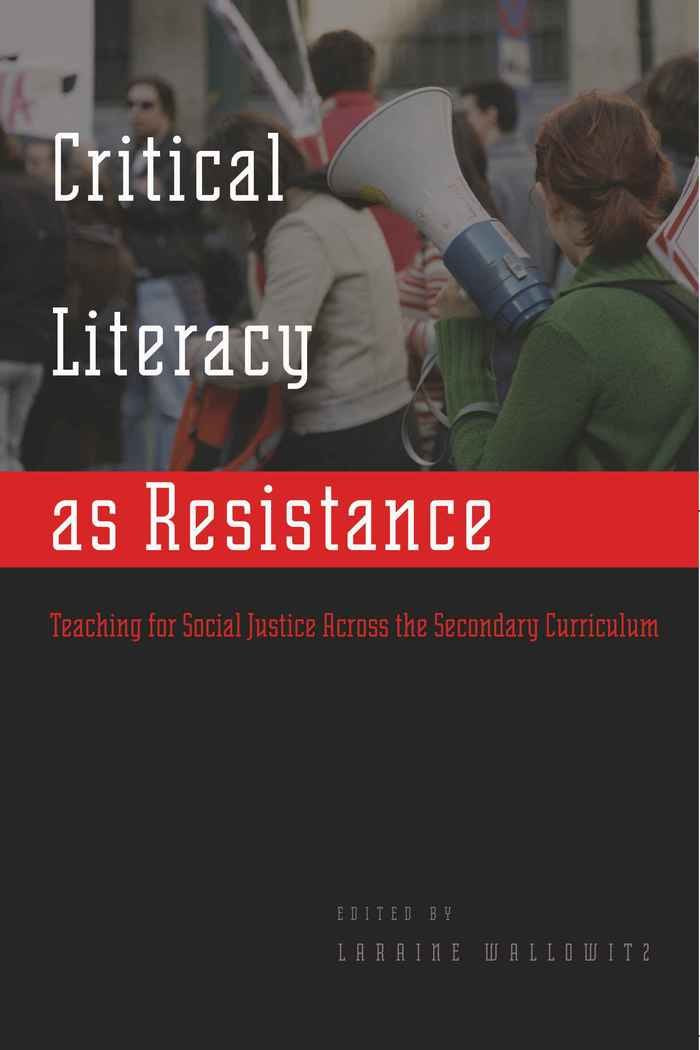
Title
Critical Literacy as Resistance: Teaching for Social Justice Across the Secondary Curriculum (Counterpoints),New
Sold by Ergodebooks, an authorized reseller.
Returns accepted within 30 days | support@ergodebooks.com
Shipping Information
- Free Standard Shipping — United States only
- Processing Time: 3–5 business days
- Estimated Delivery: 6–10 business days after dispatch
- Double-boxed, fully insured & discreetly packaged
- Tracking number sent via email once dispatched
Returns & Refund
Returns accepted within 30 days of delivery.
Damaged or Defective Item
Free return shipping + replacement or full refund
Wrong Item Received
Free return shipping + replacement or full refund
Change of Mind
Return shipping at customer's expense · 25% restocking fee applies
Payment Option

Critical Literacy as Resistance is a collaborate effort among secondary and university educators from across the United States that addresses questions such as: What does a critical literacy classroom look like? What various texts are used? What strategies do teachers use to encourage students and teacher candidates to recognize how texts construct power and privilege? How do educators inspire activism in and out of the classroom?This book documents the experiences of scholars and teachers who have successfully bridged theory and practice by applying critical literacy into their respective content areas. The authors spell out the difference between critical thinking and critical literacy, then show how to write and implement curriculum that incorporates diverse texts and multiple literacies in all content areas (including world language), and includes the voices of students as they confront issues of race, class, gender, and power. The principles and practices laid out here will help teachers use literacy to liberate and empower students both in and outside the classroom by respecting and studying the literacies students bring to school, while simultaneously teaching (and challenging) the literacies of those in power. This is a book for pre and inservice teachers in all content areas, staff developers, secondary literacy specialists, university professors, and anyone interested in social justice.
⚠️ WARNING (California Proposition 65):
This product may contain chemicals known to the State of California to cause cancer, birth defects, or other reproductive harm.
For more information, please visit www.P65Warnings.ca.gov.
- Q: What is the main focus of 'Critical Literacy as Resistance'? A: This book focuses on the concept of critical literacy in education, exploring how teachers can foster social justice in the classroom through diverse texts and strategies.
- Q: Who are the authors of this book? A: The book is a collaborative effort among secondary and university educators, with Laraine Wallowitz being one of the primary authors.
- Q: What types of educators will benefit from this book? A: The book is designed for pre-service and in-service teachers across all content areas, as well as staff developers and university professors interested in critical literacy and social justice.
- Q: What topics does the book cover related to critical literacy? A: It covers various topics including the definition of critical literacy, curriculum implementation, the role of diverse texts, and how to engage students in issues of race, class, gender, and power.
- Q: What is the condition of the book being sold? A: The book is listed as a 'Used Book in Good Condition'.
- Q: How many pages does this book have? A: The book has a total of 234 pages.
- Q: What is the binding type of this book? A: The book is available in paperback binding.
- Q: When was 'Critical Literacy as Resistance' published? A: The book was published on October 15, 2008.
- Q: What is the target audience of this book? A: The target audience includes educators, literacy specialists, and anyone interested in integrating critical literacy into their teaching practice.
- Q: How does this book help teachers empower students? A: It provides practical strategies for teachers to respect and incorporate the diverse literacies students bring to the classroom while challenging existing power dynamics.