If you have any questions, you are always welcome to contact us. We'll get back to you as soon as possible, withing 24 hours on weekdays.
Customer service
All questions about your order, return and delivery must be sent to our customer service team by e-mail at yourstore@yourdomain.com
Sale & Press
If you are interested in selling our products, need more information about our brand or wish to make a collaboration, please contact us at press@yourdomain.com
Help
If you have any questions, you are always welcome to contact us. We'll get back to you as soon as possible, withing 24 hours on weekdays.
Customer service
All questions about your order, return and delivery must be sent to our customer service team by e-mail at yourstore@yourdomain.com
Sale & Press
If you are interested in selling our products, need more information about our brand or wish to make a collaboration, please contact us at press@yourdomain.com
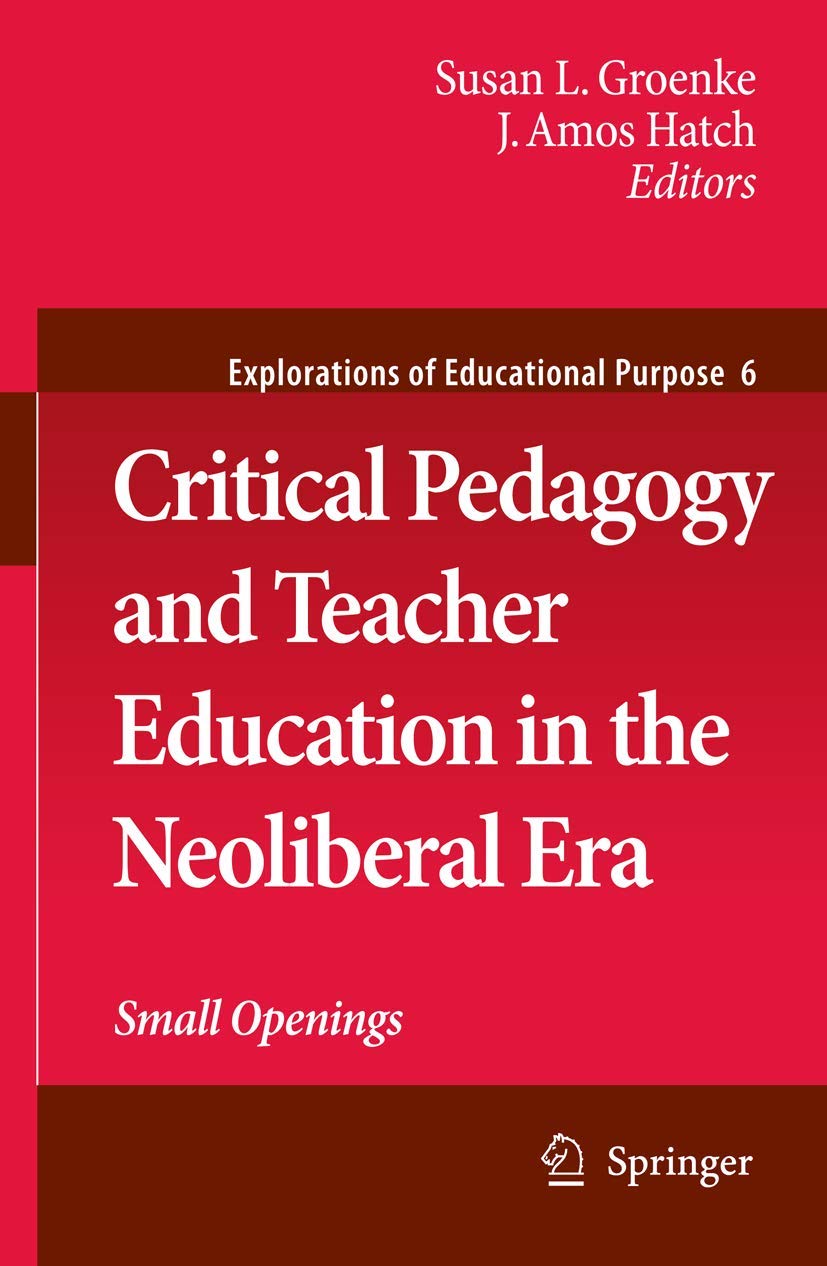
Susan L. Groenke and J. Amos Hatch It does not feel safe to be critical in universitybased teacher education programs right now, especially if you are junior faculty. In the neoliberal era, critical teacher education research gets less and less funding, and professors can be denied tenure or lose their jobs for speaking out against the status quo. Also, we know that the pedagogies critical teacher educators espouse can get beginning K12 teachers fired or shuffled around, especially if their students test scores are low. This, paired with the resistance many of the future teachers who come through our programspredominantly White, middleclass, and happy with the current state of affairsshow toward critical pedagogy, makes it seem a whole lot easier, less risky, even smart not to do critical pedagogy at all. Why bother? We believe this book shows we have lots of reasons to bother with critical pe gogy in teacher education, as current educational policies and the neoliberal discourses that vie for the identities of our own local contexts increasingly do not have education for the public good in mind. This book shows teacher educators taking risks, seeking out what political theorist James Scott has called the small openings for resistance in the contexts that mark teacher education in the early twentyfirst century.
⚠️ WARNING (California Proposition 65):
This product may contain chemicals known to the State of California to cause cancer,
birth defects, or other reproductive harm.
For MAP (Minimum Advertised Price) violations and Intellectual Property (IP) or Trademark concerns, please contact:
support@ergodebooks.com
⚠️ California Proposition 65 Warning: Some products sold on this website may expose you to chemicals known to the State of California to cause cancer, birth defects, or other reproductive harm. For more information, visit www.P65Warnings.ca.gov.