
Title
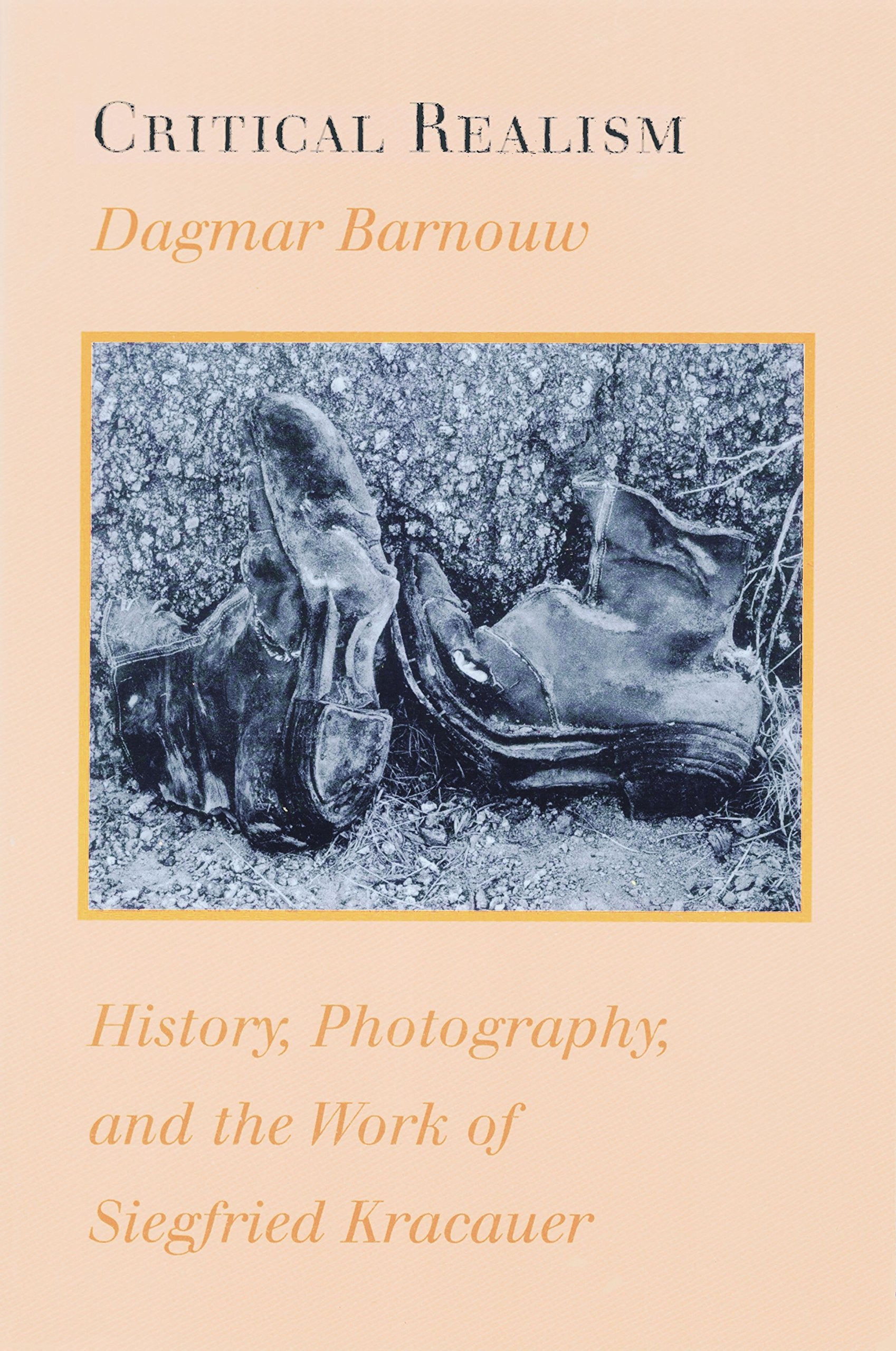
Critical Realism: History, Photography, and the Work of Siegfried Kracauer (Parallax: Revisions of Culture and Society),Used
Sold by Ergodebooks, an authorized reseller.
Returns accepted within 30 days | support@ergodebooks.com
Shipping Information
- Free Standard Shipping — United States only
- Processing Time: 3–5 business days
- Estimated Delivery: 6–10 business days after dispatch
- Double-boxed, fully insured & discreetly packaged
- Tracking number sent via email once dispatched
Returns & Refund
Returns accepted within 30 days of delivery.
Damaged or Defective Item
Free return shipping + replacement or full refund
Wrong Item Received
Free return shipping + replacement or full refund
Change of Mind
Return shipping at customer's expense · 25% restocking fee applies
Payment Option

A respected journalist and film critic for Frankfurter Zeitung during the Weimar period, Siegfried Kracauer worked with a more comprehensive concept of cultural modernity than did his friends Bloch, Adorno, and Benjamin. Sensitive to the postwar experience of rapid technological advances and profound cultural transformation, he emphasized the contemporary significance of the documentary imagination. Though he acknowledged that reality is a construction, its modern pluralism suggested to him modalities of objectivity rather than despair of it.In Critical Realism Dagmar Barnouw explores the connections that Kracauer stated in his last book, History, between the representational modes of photography and historiography, both of them characteristically composite and unstable. Drawing on recent developments in the history and theory of photography andhistoriography, she argues the contemporaneity of Kracauer's thought to late twentieth century cultural modernity.'This historical account of the development of one of the most complex discussions of representation in its social and cultural context will be of great interest to a wide range of readers. The debates about visual representationwhether in film or in the photographwere and are greatly influenced by Kracauer. Barnouw's situation of these debates is sophisticated and clever. The high point of the book is her discussion of the epistemological problem of the observer. She lucidly and succinctly presents Kracauer's own views on the topic and then moves into a broader and truly brilliant discussion of this question of literary and visual modernism.'Sander L. Gilman, University of Chicago.
⚠️ WARNING (California Proposition 65):
This product may contain chemicals known to the State of California to cause cancer, birth defects, or other reproductive harm.
For more information, please visit www.P65Warnings.ca.gov.