
Title
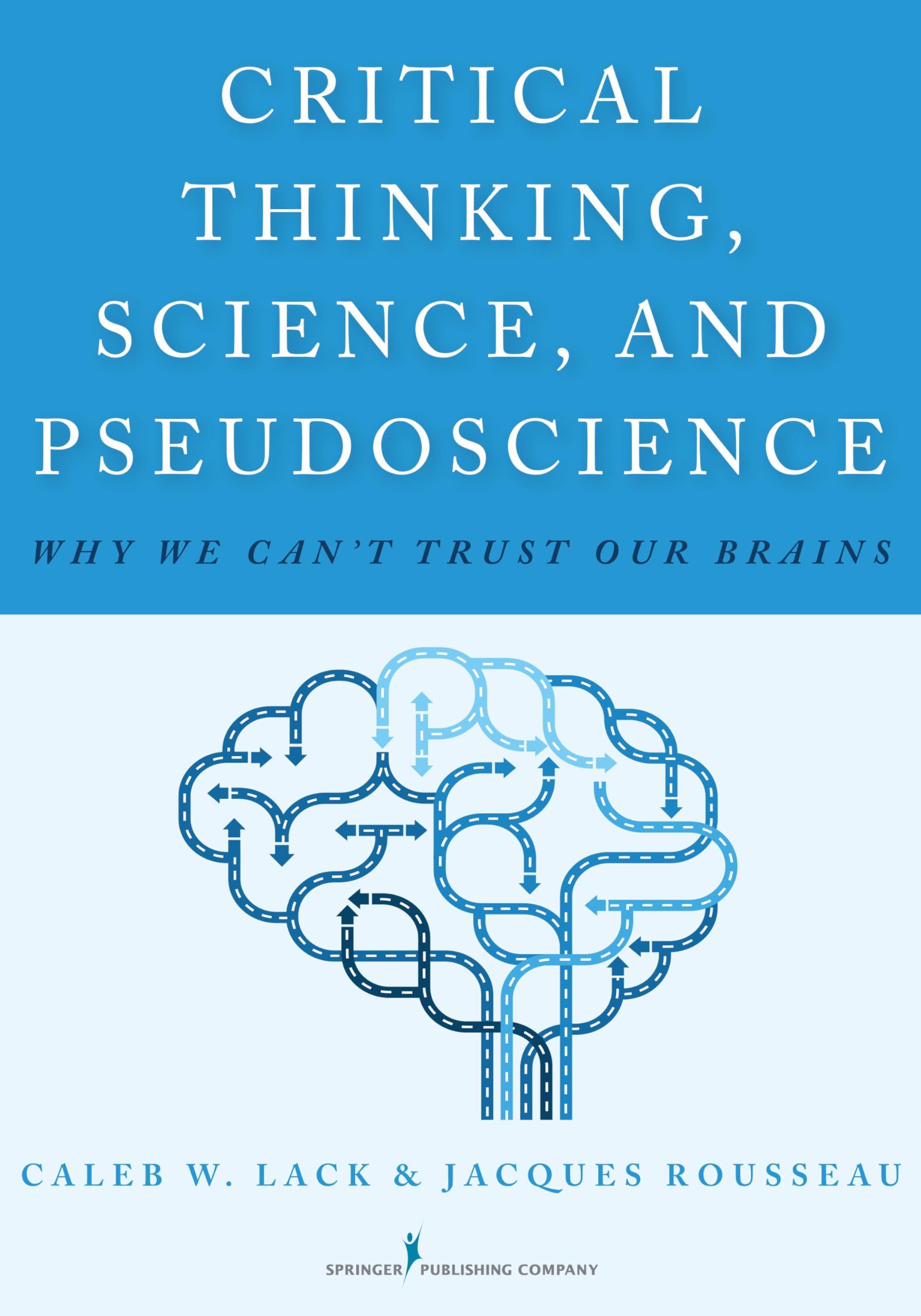
Critical Thinking, Science, and Pseudoscience: Why We Can't Trust Our Brains,Used
Sold by Ergodebooks, an authorized reseller.
Returns accepted within 30 days | support@ergodebooks.com
Shipping Information
- Free Standard Shipping — United States only
- Processing Time: 3–5 business days
- Estimated Delivery: 6–10 business days after dispatch
- Double-boxed, fully insured & discreetly packaged
- Tracking number sent via email once dispatched
Returns & Refund
Returns accepted within 30 days of delivery.
Damaged or Defective Item
Free return shipping + replacement or full refund
Wrong Item Received
Free return shipping + replacement or full refund
Change of Mind
Return shipping at customer's expense · 25% restocking fee applies
Payment Option

This unique text for undergraduate courses teaches students to apply critical thinking skills across all academic disciplines by examining popularpseudoscientific claims through a multidisciplinary lens. Rather than merely focusing on critical thinking, the text incorporates the perspectives ofpsychology, biology, physics, medicine, and other disciplines to reinforce different categories of rational explanation. Accessible and engaging, itdescribes what critical thinking is, why it is important, and how to learn and apply skills that promote it. The text also examines why critical thinkingcan be difficult to engage in and explores the psychological and social reasons why people are drawn to and find credence in extraordinary claims.From alien abductions and psychic phenomena to strange creatures and unsupported alternative medical treatments, the text uses examples from a wide rangeof pseudoscientific fields and brings evidence from diverse disciplines to critically examine erroneous claims. Particularly timely is the textsexamination of how, using the narrative of todays culture wars, religion and culture impact science. The authors focus on how the human brain, rife withnatural biases, does not process information in a rational fashion, and the social factors that prevent individuals from gaining an unbiased, criticalperspective on information. Authored by a psychologist and a philosopher who have extensive experience teaching and writing on critical thinking andskeptical inquiry, this work will help students to strengthen their skills in reasoning and debate, become intelligent consumers of research, and makewellinformed choices as citizens.KEY FEATURES: Addresses the foundations of critical thinking and how to apply it through the popular activity of examining pseudoscience Explains why humans are vulnerable to pseudoscientific claims and how critical thinking can overcome fallacies and biases Reinforces critical thinking through multidisciplinary analyses of pseudoscience Enlightens using an engaging, entertaining approach Features teaching resources including an Instructors Guide and PowerPoint slides
⚠️ WARNING (California Proposition 65):
This product may contain chemicals known to the State of California to cause cancer, birth defects, or other reproductive harm.
For more information, please visit www.P65Warnings.ca.gov.
- Q: What is the main focus of 'Critical Thinking, Science, and Pseudoscience'? A: The main focus of the book is to teach undergraduate students critical thinking skills by analyzing popular pseudoscientific claims through a multidisciplinary approach.
- Q: Who are the authors of this book? A: The book is authored by Caleb W. Lack, PhD, a psychologist, and a philosopher, both of whom have extensive experience in teaching critical thinking and skeptical inquiry.
- Q: What academic disciplines does the book incorporate? A: The book incorporates perspectives from psychology, biology, physics, medicine, and other disciplines to reinforce critical thinking and rational explanations.
- Q: How does the book address pseudoscience? A: It examines various pseudoscientific claims, providing examples from fields such as alien abductions and alternative medicine, while using evidence from diverse disciplines to critically analyze these claims.
- Q: What are some key features of the book? A: Key features include a focus on the foundations of critical thinking, explanations of human vulnerabilities to pseudoscientific claims, multidisciplinary analyses, and teaching resources like an Instructor's Guide and PowerPoint slides.
- Q: What is the intended audience for this book? A: The intended audience is undergraduate students taking courses related to critical thinking, science, and pseudoscience.
- Q: How many pages does the book contain? A: The book contains a total of 304 pages.
- Q: What is the binding type of this book? A: The book is available in paperback binding.
- Q: When was 'Critical Thinking, Science, and Pseudoscience' published? A: The book was published on March 8, 2016.
- Q: What edition of the book is currently available? A: The currently available edition is the First Edition.