
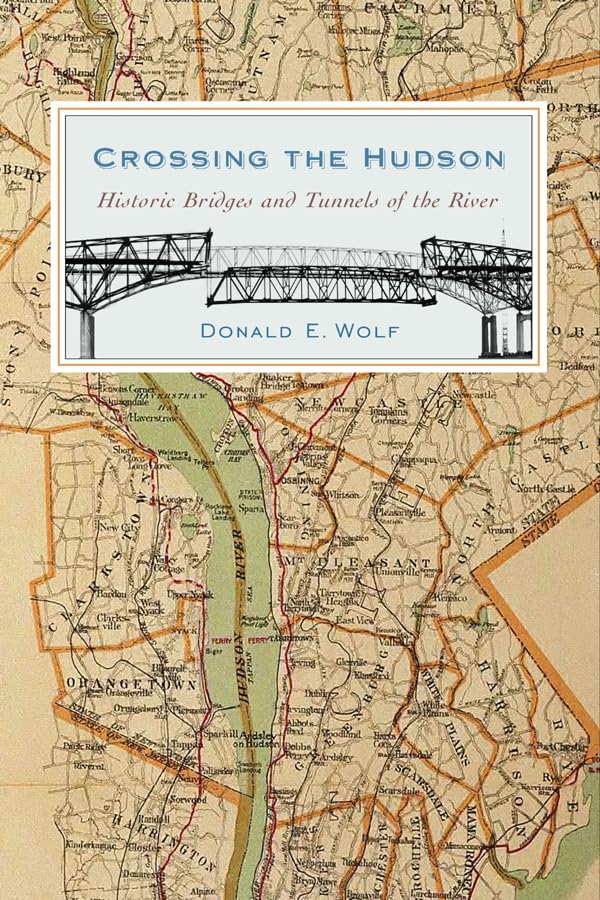
Title
Crossing the Hudson: Historic Bridges and Tunnels of the River (Rivergate Books (Hardcover)),Used
Sold by Ergodebooks, an authorized reseller.
Returns accepted within 30 days | support@ergodebooks.com
Shipping Information
- Free Standard Shipping — United States only
- Processing Time: 3–5 business days
- Estimated Delivery: 6–10 business days after dispatch
- Double-boxed, fully insured & discreetly packaged
- Tracking number sent via email once dispatched
Returns & Refund
Returns accepted within 30 days of delivery.
Damaged or Defective Item
Free return shipping + replacement or full refund
Wrong Item Received
Free return shipping + replacement or full refund
Change of Mind
Return shipping at customer's expense · 25% restocking fee applies
Payment Option

Fog, tide, ice, and human errorbefore the American Revolution those who ventured to cross the vast Hudson Valley waterway did so on ferryboats powered by humans, animals, and even fierce winds. Before that war, not a single Hudson River bridge or tunnel had been built. It wasn't until Americans looked to the land in the fight for independence that the importance of crossing the river efficiently became a subject of serious interest, especially militarily. Later, the needs of a new transportation system became criticalwhen steam railroads first rolled along there was no practical way to get them across the water without bridges.Crossing the Hudson continues this story soon after the end of the war, in 1805, when the first bridge was completed. Donald E. Wolf simultaneously tracks the founding of the towns and villages along the water's edge and the development of technologies such as steam and internal combustion that demanded new ways to cross the river. As a result, innovative engineering was created to provide for these resources.From hybrid, timber arch, and truss bridges on stone piers to longspan suspension and cantilevered bridges, railroad tunnels, and improvements in iron and steel technology, the construction feats that cross the Hudson represent technical elegance and physical beauty. Crossing the Hudson reveals their often multileveled storiesa history of where, why, when, and how these structures were built; the social, political, and commercial forces that influenced decisions to erect them; the personalities of the planners and builders; the unique connection between a builder and his bridge; and the design and construction techniques that turned mythical goals into structures of utility and beauty.
⚠️ WARNING (California Proposition 65):
This product may contain chemicals known to the State of California to cause cancer, birth defects, or other reproductive harm.
For more information, please visit www.P65Warnings.ca.gov.