
Title
Crusader: John Cobb'S Illfated Quest For Speed On Water
Sold by Ergodebooks, an authorized reseller.
Returns accepted within 30 days | support@ergodebooks.com
Shipping Information
- Free Standard Shipping — United States only
- Processing Time: 3–5 business days
- Estimated Delivery: 6–10 business days after dispatch
- Double-boxed, fully insured & discreetly packaged
- Tracking number sent via email once dispatched
Returns & Refund
Returns accepted within 30 days of delivery.
Damaged or Defective Item
Free return shipping + replacement or full refund
Wrong Item Received
Free return shipping + replacement or full refund
Change of Mind
Return shipping at customer's expense · 25% restocking fee applies
Payment Option

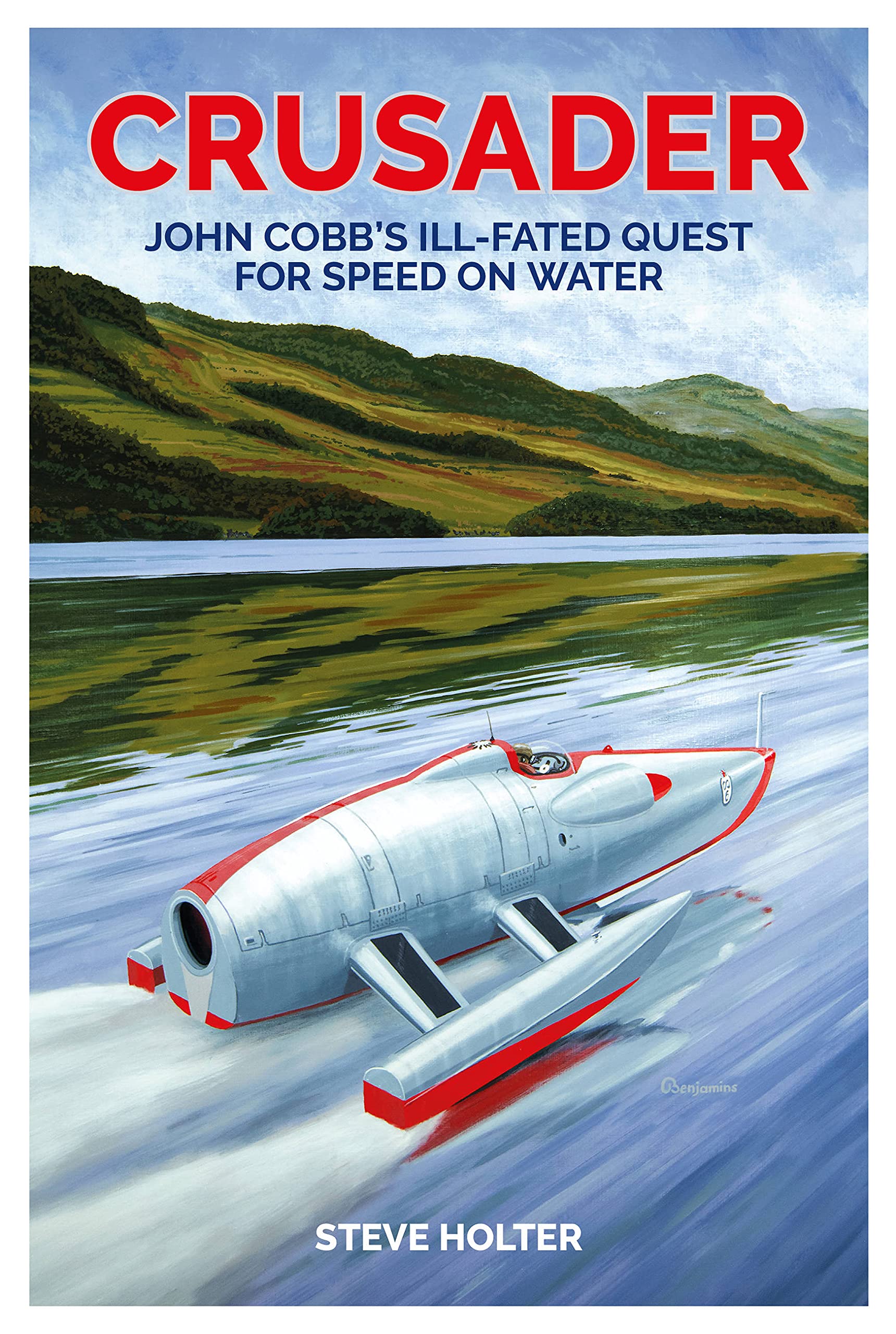
The tale of Crusader, the jetpowered boat of 1952, appears to be a simple one about the ambition of John Cobb and Reid Railton, two unassuming but deeply gifted men, to break the water speed record on Loch Ness only for their efforts to end in tragedy. In fact the story behind that fateful outcome Cobbs death on his first highspeed run is a complex web of clever design and inspirational endeavour mixed with personality clashes and errors of judgment. After many years of research, including access to a wealth of original documentation, Steve Holter unravels the entire saga of the illfated Crusader and presents a compelling detective story. John Cobb: the modest businessman with such a thirst for speed that he wanted to become the fastest man on water as well as on wheels after setting his land speed record of 396.196mph in 1947. Reid Railton: inspired designer and longtime friend behind Cobbs greatest speed accomplishments, notably with the NapierRailton (holder of the lap record at Brooklands) and the Railton Mobil Special (land speed record car). Indepth study of Railtons innovative threepoint hull design for Crusader, with two rear sponsons and a single planing shoe at the front plus a De Havilland Ghost jet engine delivering 5,000lb of thrust. Evolution of the design in parallel with testing of scale models, including a miniature jetpowered version evaluated near Portsmouth Harbour. Assessment and description of boatbuilder Vospers wooden construction, under Peter Du Canes direction. An exhaustive account of proceedings at Loch Ness, where Cobb finally attempted a highspeed run on 29 September 1952 and achieved 206.89mph, faster than anyone had previously gone on water. Analysis of the structural failure that destroyed Crusader and killed Cobb. Much of the story is told in the words of the key protagonists, drawing in particular on correspondence and written accounts from the key people involved, most notably John Cobb, Reid Railton and Peter Du Cane.
⚠️ WARNING (California Proposition 65):
This product may contain chemicals known to the State of California to cause cancer, birth defects, or other reproductive harm.
For more information, please visit www.P65Warnings.ca.gov.