If you have any questions, you are always welcome to contact us. We'll get back to you as soon as possible, withing 24 hours on weekdays.
Customer service
All questions about your order, return and delivery must be sent to our customer service team by e-mail at yourstore@yourdomain.com
Sale & Press
If you are interested in selling our products, need more information about our brand or wish to make a collaboration, please contact us at press@yourdomain.com
Help
If you have any questions, you are always welcome to contact us. We'll get back to you as soon as possible, withing 24 hours on weekdays.
Customer service
All questions about your order, return and delivery must be sent to our customer service team by e-mail at yourstore@yourdomain.com
Sale & Press
If you are interested in selling our products, need more information about our brand or wish to make a collaboration, please contact us at press@yourdomain.com
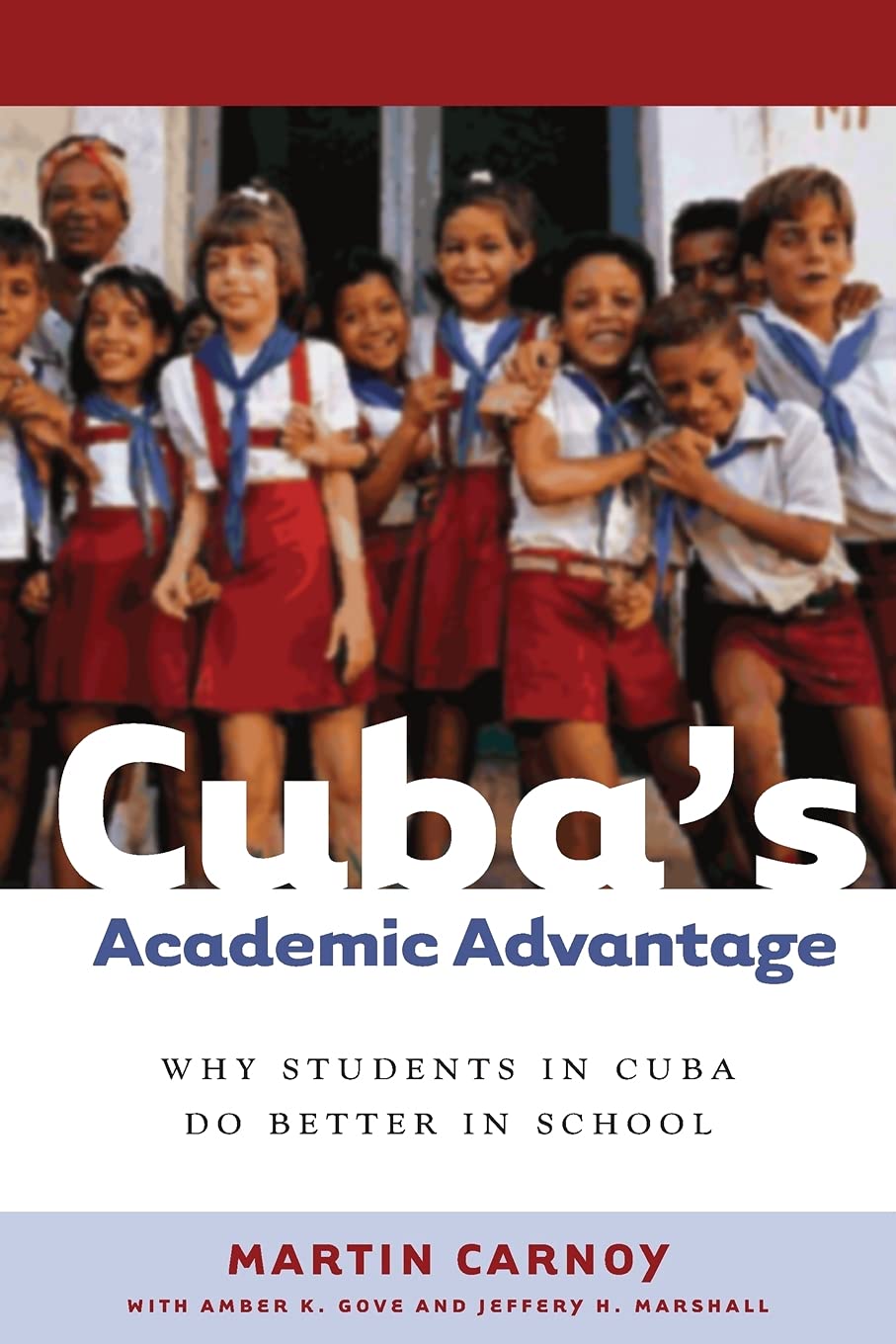
In This Book, Martin Carnoy Explores The Surprising Success Of The Cuban Educational System, Where The Average Elementary School Student Learns Much More Than Her Latin American Peers. In Developing The Case For Cuba'S Supportive Social Context And Centralized Management Of Education, Carnoy Asks Important Questions About Educational Systems In General. How Responsible Should Government Be For Creating Environments That Encourage Academic Achievement? How Much Autonomy Should Teachers And Schools Have Over Their Classrooms? Is There An Inherent Tradeoff Between Promoting Individual Choice And A Better System Of Schooling? Cuba'S Academic Advantage Challenges Many Prevailing Views About The Effectiveness Of Educational Markets, School And Teacher Autonomy, Decentralized Decisionmaking, And Government Responsibility For Children'S Social And Economic Welfare. Drawing On Interviews With Teachers, Principals, And Policymakers, As Well As Hours Of Videotaped Material Taken In More Than 30 Classrooms, This Book Brings New Evidence To Bear On Controversial Educational Issues Currently Under Debate In Many Countries.
⚠️ WARNING (California Proposition 65):
This product may contain chemicals known to the State of California to cause cancer,
birth defects, or other reproductive harm.
For MAP (Minimum Advertised Price) violations and Intellectual Property (IP) or Trademark concerns, please contact:
support@ergodebooks.com
⚠️ California Proposition 65 Warning: Some products sold on this website may expose you to chemicals known to the State of California to cause cancer, birth defects, or other reproductive harm. For more information, visit www.P65Warnings.ca.gov.