
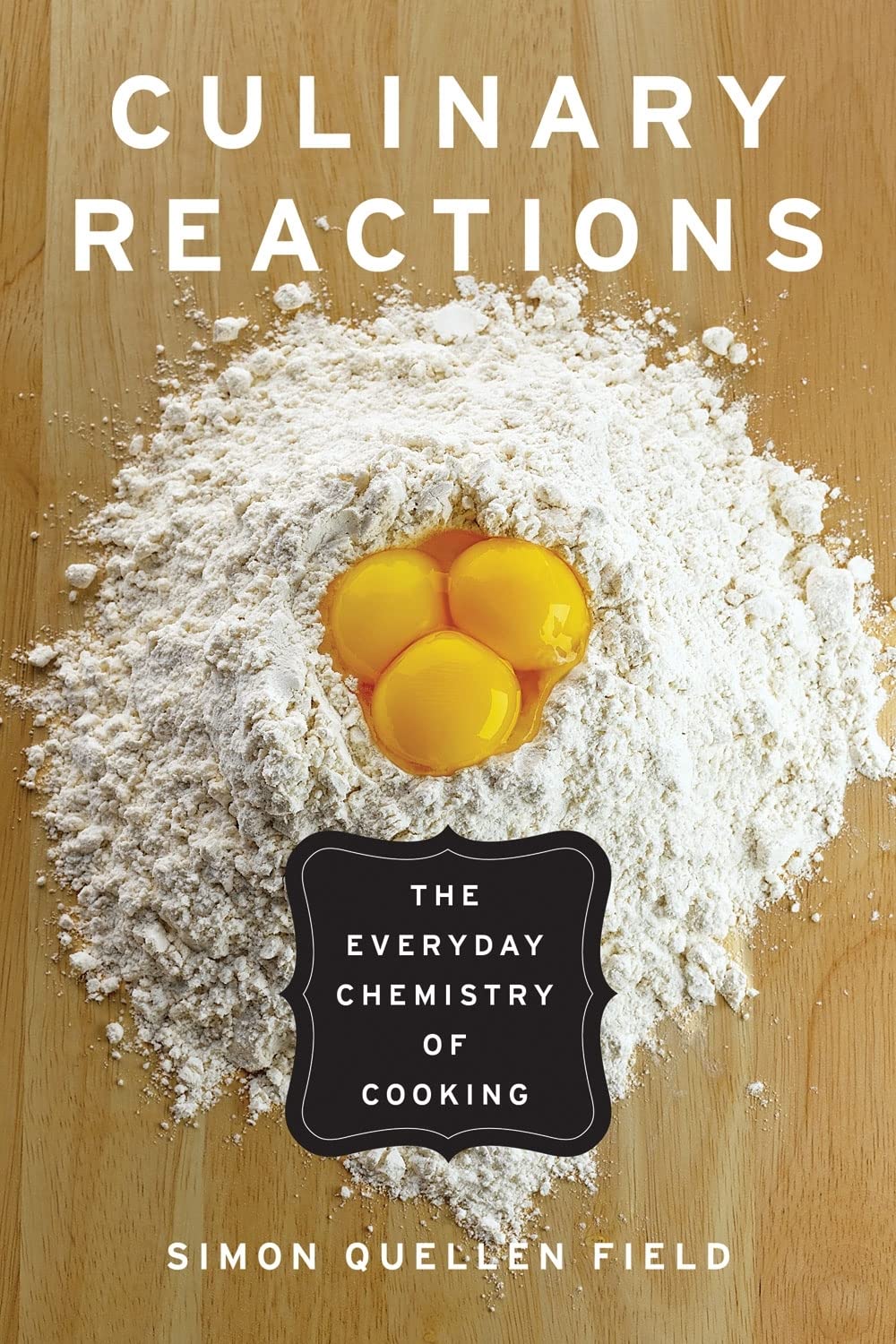
Title
Culinary Reactions: The Everyday Chemistry Of Cooking
Sold by Ergodebooks, an authorized reseller.
Returns accepted within 30 days | support@ergodebooks.com
Shipping Information
- Free Standard Shipping — United States only
- Processing Time: 3–5 business days
- Estimated Delivery: 6–10 business days after dispatch
- Double-boxed, fully insured & discreetly packaged
- Tracking number sent via email once dispatched
Returns & Refund
Returns accepted within 30 days of delivery.
Damaged or Defective Item
Free return shipping + replacement or full refund
Wrong Item Received
Free return shipping + replacement or full refund
Change of Mind
Return shipping at customer's expense · 25% restocking fee applies
Payment Option

When You'Re Cooking, You'Re A Chemist! Every Time You Follow Or Modify A Recipe, You Are Experimenting With Acids And Bases, Emulsions And Suspensions, Gels And Foams. In Your Kitchen You Denature Proteins, Crystallize Compounds, React Enzymes With Substrates, And Nurture Desired Microbial Life While Suppressing Harmful Bacteria And Fungi. And Unlike In A Laboratory, You Can Eat Your Experiments To Verify Your Hypotheses.In Culinary Reactions, Author Simon Quellen Field Turns Measuring Cups, Stovetop Burners, And Mixing Bowls Into Graduated Cylinders, Bunsen Burners, And Beakers. How Does Altering The Ratio Of Flour, Sugar, Yeast, Salt, Butter, And Water Affect How High Bread Rises? Why Is Whipped Cream Made With Nitrous Oxide Rather Than The More Common Carbon Dioxide? And Why Does Hollandaise Sauce Call For Clarified Butter? This Easytofollow Primer Even Includes Recipes To Demonstrate The Concepts Being Discussed, Including: Whipped Creamsicle Toppinga Foam; Cherry Dream Cheesea Protein Gle; Lemonade With Chameleon Eggsan Acid Indicator; And More!
⚠️ WARNING (California Proposition 65):
This product may contain chemicals known to the State of California to cause cancer, birth defects, or other reproductive harm.
For more information, please visit www.P65Warnings.ca.gov.
- Q: How many pages does this book have? A: This book has two hundred eighty-eight pages. It provides a comprehensive exploration of the chemistry involved in cooking.
- Q: What is the binding type of this book? A: This book is paperback. This makes it lightweight and easy to handle while cooking.
- Q: What are the dimensions of this book? A: The dimensions of this book are six inches in length, zero point seventy-one inches in width, and nine point zero two inches in height.
- Q: Who is the author of this book? A: The author of this book is Simon Quellen Field. He provides insights into the chemistry of everyday cooking.
- Q: What category does this book belong to? A: This book belongs to the Reference category. It serves as a guide for understanding culinary chemistry.
- Q: How do I use the recipes in this book? A: You can follow the recipes step-by-step to explore culinary chemistry. Each recipe demonstrates a specific scientific principle in cooking.
- Q: Is this book suitable for beginners? A: Yes, this book is suitable for beginners. It explains complex concepts in an easy-to-understand manner with practical examples.
- Q: What age group is this book appropriate for? A: This book is appropriate for all ages. It is designed to engage anyone interested in cooking and science.
- Q: Do I need prior cooking experience to understand this book? A: No, you do not need prior cooking experience. The book is written for anyone curious about the science behind cooking.
- Q: How should I store this book to keep it in good condition? A: You should store this book in a cool, dry place. Avoid exposing it to direct sunlight to prevent fading and damage.
- Q: Can this book be used as a gift? A: Yes, this book makes a great gift. It is perfect for food enthusiasts and anyone interested in the science of cooking.
- Q: Is this book easy to clean if it gets dirty? A: Yes, you can wipe the cover with a damp cloth to clean it. However, avoid getting the pages wet.
- Q: What if the book arrives damaged? A: If the book arrives damaged, you should contact customer service for a return or exchange. Ensure you have your order details ready.
- Q: Is this book suitable for someone studying culinary arts? A: Yes, this book is suitable for culinary arts students. It provides foundational knowledge about the chemistry involved in cooking.
- Q: Are there illustrations in this book? A: Yes, there are illustrations in this book. They help to clarify the scientific concepts discussed throughout.
- Q: Can I find other books by the same author? A: Yes, Simon Quellen Field has authored other books. You can explore more of his work for additional insights into culinary science.