If you have any questions, you are always welcome to contact us. We'll get back to you as soon as possible, withing 24 hours on weekdays.
Customer service
All questions about your order, return and delivery must be sent to our customer service team by e-mail at yourstore@yourdomain.com
Sale & Press
If you are interested in selling our products, need more information about our brand or wish to make a collaboration, please contact us at press@yourdomain.com
Help
If you have any questions, you are always welcome to contact us. We'll get back to you as soon as possible, withing 24 hours on weekdays.
Customer service
All questions about your order, return and delivery must be sent to our customer service team by e-mail at yourstore@yourdomain.com
Sale & Press
If you are interested in selling our products, need more information about our brand or wish to make a collaboration, please contact us at press@yourdomain.com
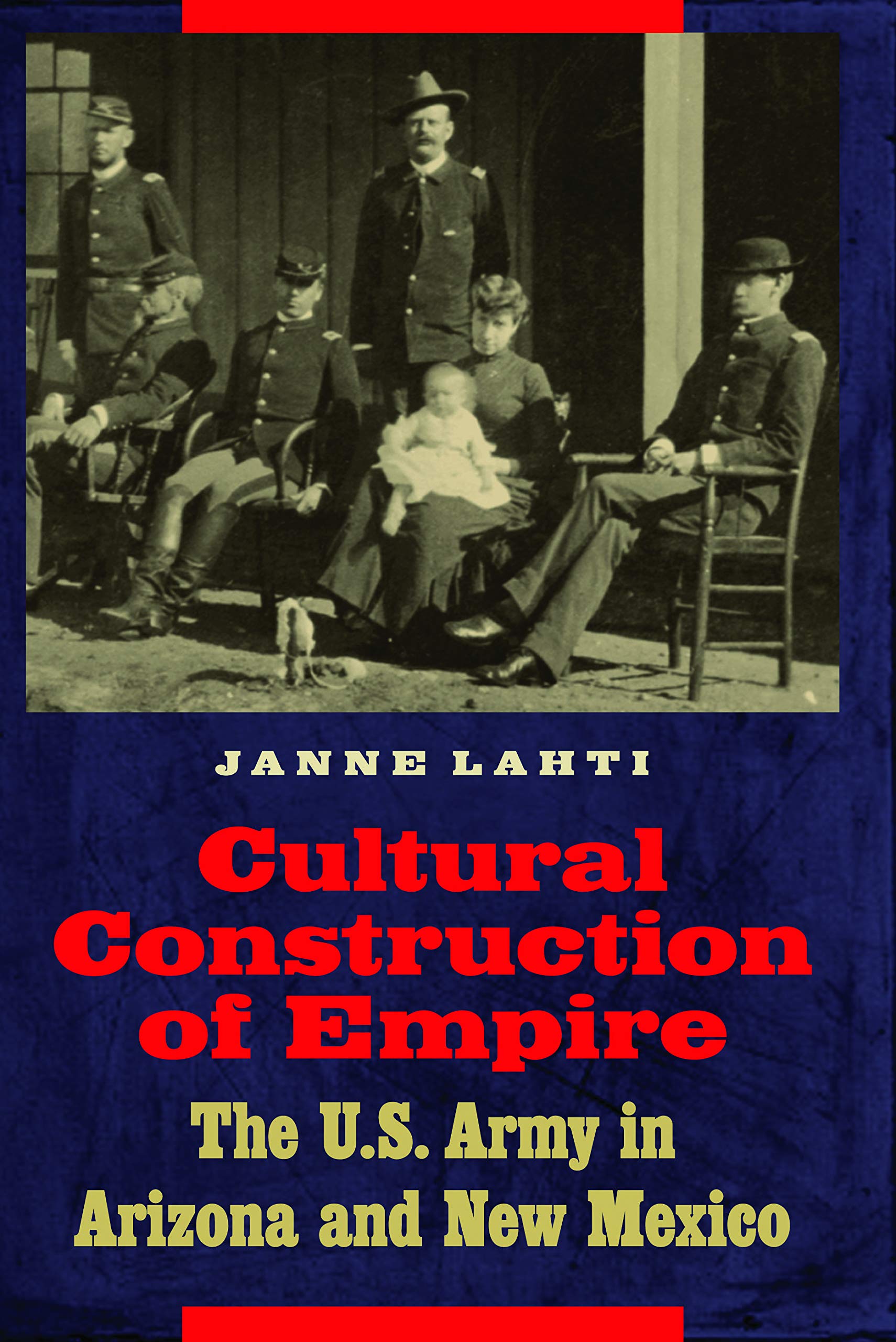
From 1866 through 1886, the U.S. Army occupied southern Arizona and New Mexico in an attempt to claim it for settlement by Americans. Through a postcolonial lens, Janne Lahti examines the army, its officers, their wives, and the enlisted men as agents of an American empire whose mission was to serve as a group of colonizers engaged in ideological as well as military, conquest.Cultural Construction of Empire explores the cultural and social representations of Native Americans, Hispanics, and frontiersmen constructed by the officers, enlisted men, and their dependents. By differentiating themselves from these less civilized groups, white military settlers engaged various cultural processes and practices to accrue and exercise power over colonized peoples and places for the sake of creating a more civilized environment for other settlers. Considering issues of class, place, and white ethnicity, Lahti shows that the armys construction of empire took place not on the battlefield alone but also in representations of and social interactions in and among colonial places, peoples, settlements, and events, and in the domestic realm and daily life inside the army villages.
⚠️ WARNING (California Proposition 65):
This product may contain chemicals known to the State of California to cause cancer,
birth defects, or other reproductive harm.
For MAP (Minimum Advertised Price) violations and Intellectual Property (IP) or Trademark concerns, please contact:
support@ergodebooks.com
⚠️ California Proposition 65 Warning: Some products sold on this website may expose you to chemicals known to the State of California to cause cancer, birth defects, or other reproductive harm. For more information, visit www.P65Warnings.ca.gov.