
Title
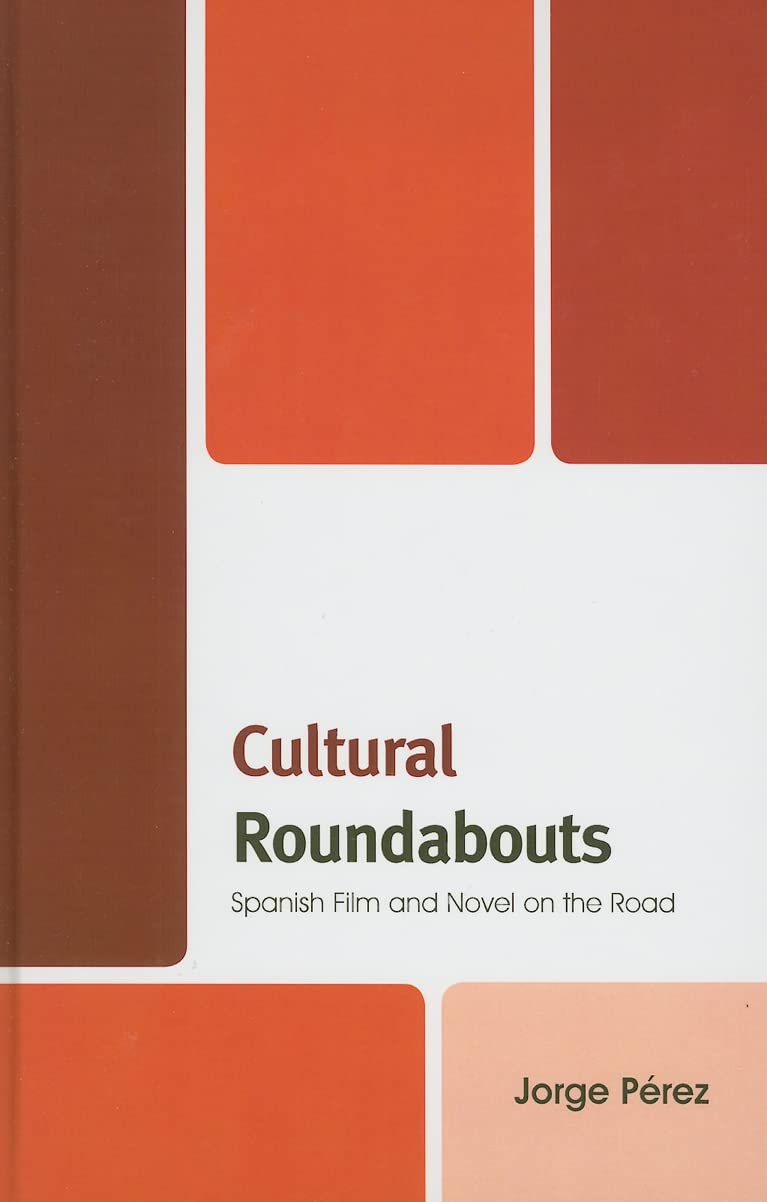
Cultural Roundabouts: Spanish Film and Novel on the Road,Used
Sold by Ergodebooks, an authorized reseller.
Returns accepted within 30 days | support@ergodebooks.com
Shipping Information
- Free Standard Shipping — United States only
- Processing Time: 3–5 business days
- Estimated Delivery: 6–10 business days after dispatch
- Double-boxed, fully insured & discreetly packaged
- Tracking number sent via email once dispatched
Returns & Refund
Returns accepted within 30 days of delivery.
Damaged or Defective Item
Free return shipping + replacement or full refund
Wrong Item Received
Free return shipping + replacement or full refund
Change of Mind
Return shipping at customer's expense · 25% restocking fee applies
Payment Option

Cultural Roundabouts: Spanish Film and Novel on the Road, by Jorge Prez, offers the first comprehensive inquiry about the road genre in Spain. Road narratives have recently received some scholarly attention within the field of Peninsular Studies through a few articles and book chapters, but no booklength study has been published so far. This book investigates how Spanish authors such as Ignacio Martnez de Pisn, Ray Loriga, Eugenio Fuentes, and Eugenia Rico, and filmmakers such as Juan Antonio Bardem, Cecilia Bartolom, Fernando Guilln Cuervo, and Mariano Barroso employ the road genre to address the reconfiguration of the social, economic, and cultural landscape of Spain since 1975. One of the premises of this book is that, in the context of Spanish culture, road movies and novels should be discussed concurrently, as they emerge as a response to the same sociohistorical circumstances, share many thematic and iconographic traits, and show reciprocal influences. The road genre, broadly defined as movies and novels in which the characters travel by driving a vehicle across, out of, or into the Spanish territory, offers the opportunity to examine a country in movement and, thus, to reflect on the topic of national mobility. This genre brings to the fore the modernization of Spain, as highlighted by the remodeled highway system, the development of the automobile industry, and the changes in the landscape.In this study, Prez argues that road stories offer lenses through which one can observe contemporary Spain and its transformations, but also the shortcomings of its development. It is not a oneway journey of a whole community progressing at the same speed and along the same path. As the trope of the roundabout suggests, contemporary Spain seems to function with a fluid social and cultural circulation that allows movement from and to multiple directions. Yet, as with a roundabout in which specific traffic norms and hierarchies navigate flow, these narratives signal
⚠️ WARNING (California Proposition 65):
This product may contain chemicals known to the State of California to cause cancer, birth defects, or other reproductive harm.
For more information, please visit www.P65Warnings.ca.gov.