
Title
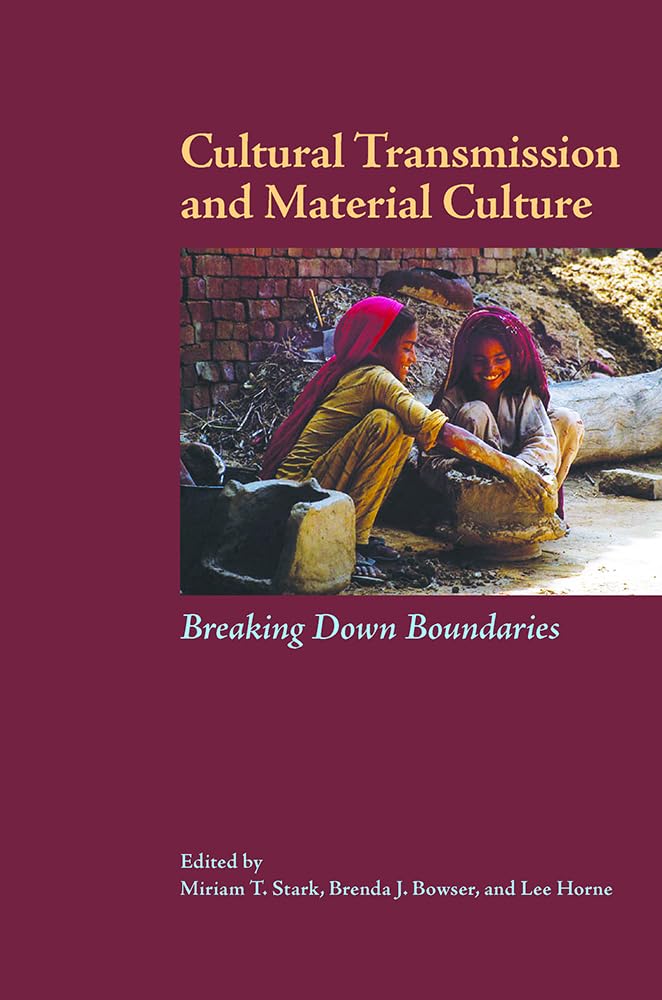
Cultural Transmission And Material Culture: Breaking Down Boundaries,Used
Sold by Ergodebooks, an authorized reseller.
Returns accepted within 30 days | support@ergodebooks.com
Shipping Information
- Free Standard Shipping — United States only
- Processing Time: 3–5 business days
- Estimated Delivery: 6–10 business days after dispatch
- Double-boxed, fully insured & discreetly packaged
- Tracking number sent via email once dispatched
Returns & Refund
Returns accepted within 30 days of delivery.
Damaged or Defective Item
Free return shipping + replacement or full refund
Wrong Item Received
Free return shipping + replacement or full refund
Change of Mind
Return shipping at customer's expense · 25% restocking fee applies
Payment Option

How and why people develop, maintain, and change cultural boundaries through time are central issues in the social and behavioral sciences in generaland anthropological archaeology in particular. What factors influence people to imitate or deviate from the behaviors of other group members? How are social group boundaries produced, perpetuated, and altered by the cumulative outcomeof these decisions? Answering these questions is fundamental to understanding cultural persistence and change. The chapters included in this stimulating, multifaceted book address these questions.Working in several subdisciplines, contributors report on research in the areas of cultural boundaries, cultural transmission, and the socially organized nature of learning. Boundaries are found not only within and between the societies in these studies but also within and between the communities of scholars who study them. To break down these boundaries, this volume includes scholars who use multiple theoretical perspectives, including practice theory and evolutionary traditions, which are sometimes complementary and occasionally clashing. Geographic coverage ranges from the indigenous Americas to Africa, the Near East, and South Asia, and the time frame extends from the prehistoric or precontact to colonial periods and up to the ethnographic present. Contributors include leading scholars from the United States, Canada, the United Kingdom, and Europe. Together, they employ archaeological, ethnographic, ethnoarchaeological,experimental, and simulation data to link microscale processes of cultural transmission to macroscale processes of social group boundary formation, continuity, and change.
⚠️ WARNING (California Proposition 65):
This product may contain chemicals known to the State of California to cause cancer, birth defects, or other reproductive harm.
For more information, please visit www.P65Warnings.ca.gov.