
Title
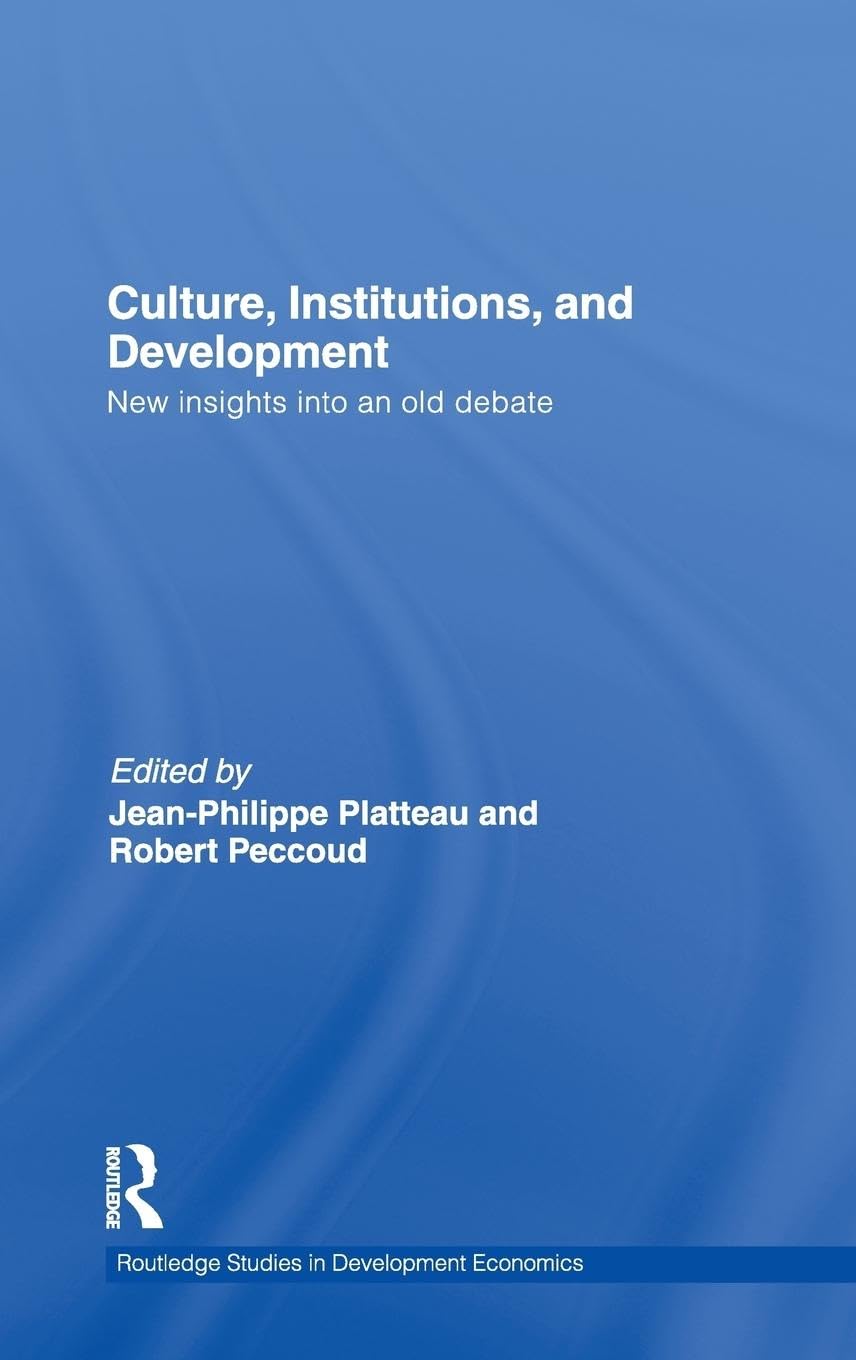
Culture, Institutions, And Development: New Insights Into An Old Debate (Routledge Studies In Development Economics)
Sold by Ergodebooks, an authorized reseller.
Returns accepted within 30 days | support@ergodebooks.com
Shipping Information
- Free Standard Shipping — United States only
- Processing Time: 3–5 business days
- Estimated Delivery: 6–10 business days after dispatch
- Double-boxed, fully insured & discreetly packaged
- Tracking number sent via email once dispatched
Returns & Refund
Returns accepted within 30 days of delivery.
Damaged or Defective Item
Free return shipping + replacement or full refund
Wrong Item Received
Free return shipping + replacement or full refund
Change of Mind
Return shipping at customer's expense · 25% restocking fee applies
Payment Option

Does culture matter? This question has taken on added significance since fundamentalist revivalism has recently gained ground in different parts of the world. The old controversy between Max Weber and Karl Marx, which centres around the extent to which cultural factors such as social norms and values affect economic growth is of critical importance, particularly because of its policy implications. Indeed, if culture is not an autonomous factor susceptible to influencing economic realities, it should not matter and public authorities can dispense with thinking about cultural interventions. On the other hand, if culture does have a real impact, the question arises as to whether it is conducive or detrimental to economic growth, political liberalization, and the emancipation of individuals among other things.Culture, Institutions, and Development addresses this debate at a concrete level by looking at five important issues: the role of tradition and its influence on development; the role of religion, with special reference to Middle Eastern countries; the role of family, kinship, and ethnic ties in the process of development; the relationship between culture and entrepreneurship; and the relationship between culture and poverty.This collection offers a nuanced view that neither denies nor exaggerates the role of cultural factors in explaining relative growth performances across countries. Instead, the contributors focus on the dynamic, twoway relationship between culture and development in a way that stresses policy stakes and the value of multidisciplinary collaboration between economists, historians and other social scientists. This book will be of interest to postgraduates and researchers in all the social sciences, as well as to professionals working in national development agencies, international organisations, and NonGovernmental Organisations.
⚠️ WARNING (California Proposition 65):
This product may contain chemicals known to the State of California to cause cancer, birth defects, or other reproductive harm.
For more information, please visit www.P65Warnings.ca.gov.