If you have any questions, you are always welcome to contact us. We'll get back to you as soon as possible, withing 24 hours on weekdays.
Customer service
All questions about your order, return and delivery must be sent to our customer service team by e-mail at yourstore@yourdomain.com
Sale & Press
If you are interested in selling our products, need more information about our brand or wish to make a collaboration, please contact us at press@yourdomain.com
Help
If you have any questions, you are always welcome to contact us. We'll get back to you as soon as possible, withing 24 hours on weekdays.
Customer service
All questions about your order, return and delivery must be sent to our customer service team by e-mail at yourstore@yourdomain.com
Sale & Press
If you are interested in selling our products, need more information about our brand or wish to make a collaboration, please contact us at press@yourdomain.com
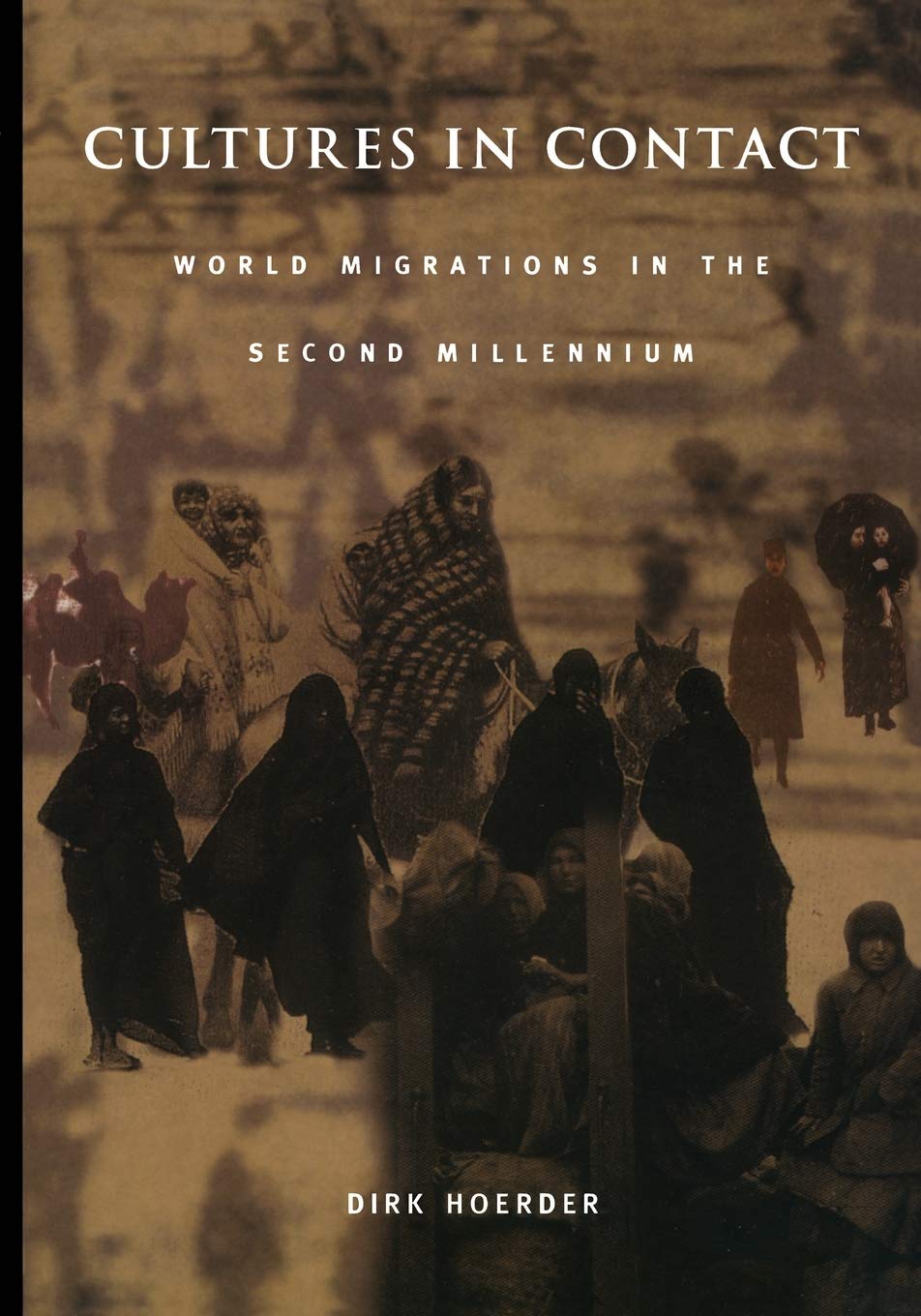
A landmark work on human migration around the globe, Cultures in Contact provides a history of the world told through the movements of its people. It is a broad, pioneering interpretation of the scope, patterns, and consequences of human migrations over the past ten centuries. In this magnum opus thirty years in the making, Dirk Hoerder reconceptualizes the history of migration and immigration, establishing that societal transformation cannot be understood without taking into account the impact of migrations and, indeed, that mobility is more characteristic of human behavior than is stasis.Signaling a major paradigm shift, Cultures in Contact creates an Englishlanguage map of human movement that is not Atlantic Oceanbased. Hoerder describes the origins, causes, and extent of migrations around the globe and analyzes the cultural interactions they have triggered. He pays particular attention to the consequences of immigration within the receiving countries. His work sweeps from the eleventh century forward through the end of the twentieth, when migration patterns shifted to include transpacific migration, return migrations from former colonies, refugee migrations, and distinct regional labor migrations in the developing world. Hoerder demonstrates that as we enter the third millennium, regional and intercontinental migration patterns no longer resemble those of previous centuries. They have been transformed by new communications systems and other forces of globalization and transnationalism.
⚠️ WARNING (California Proposition 65):
This product may contain chemicals known to the State of California to cause cancer,
birth defects, or other reproductive harm.
For MAP (Minimum Advertised Price) violations and Intellectual Property (IP) or Trademark concerns, please contact:
support@ergodebooks.com
⚠️ California Proposition 65 Warning: Some products sold on this website may expose you to chemicals known to the State of California to cause cancer, birth defects, or other reproductive harm. For more information, visit www.P65Warnings.ca.gov.