If you have any questions, you are always welcome to contact us. We'll get back to you as soon as possible, withing 24 hours on weekdays.
Customer service
All questions about your order, return and delivery must be sent to our customer service team by e-mail at yourstore@yourdomain.com
Sale & Press
If you are interested in selling our products, need more information about our brand or wish to make a collaboration, please contact us at press@yourdomain.com
Help
If you have any questions, you are always welcome to contact us. We'll get back to you as soon as possible, withing 24 hours on weekdays.
Customer service
All questions about your order, return and delivery must be sent to our customer service team by e-mail at yourstore@yourdomain.com
Sale & Press
If you are interested in selling our products, need more information about our brand or wish to make a collaboration, please contact us at press@yourdomain.com
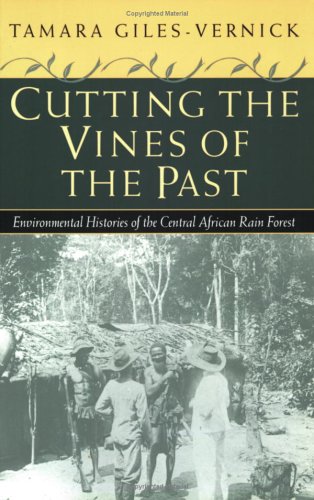
Cutting the Vines of the Past offers a novel argument: African ways of seeing and interpreting their environments and past are not only critical to how historians write environmental history; they also have important lessons for policymakers and conservationists. Tamara GilesVernick demonstrates how various outsiders intervening in African landuse practices have repeatedly met failure because of their inability or unwillingness to understand how Africans see their land and their pasts.GilesVernick takes as her focus doli, the environmental and historical perceptions and knowledge of the Mpiemu people in the Central African Republic. She argues that Mpiemu opposition to a modern environmental conservation projectthe DzangaNdoki National Park and the DzangaSangha Special Reservederives from the people's interpretations of their past experiences with environmental interventions imposed by concessionary companies, colonial officials, other Africans, Christian missionaries, and the postcolonial state. At the same time, Mpiemu people associate these contemporary conservationists with the bosses and Christian missionaries of the colonial past, viewing them as sources of jobs, consumer goods, and other support.GilesVernick's argument will interest conservationists and policymakers as well as environmental historians. By examining Africans' environmental and historical ways of seeing and knowing, and by revealing how these have changed, GilesVernick offers a fresh perspective on the writing of environmental history.
⚠️ WARNING (California Proposition 65):
This product may contain chemicals known to the State of California to cause cancer,
birth defects, or other reproductive harm.
For MAP (Minimum Advertised Price) violations and Intellectual Property (IP) or Trademark concerns, please contact:
support@ergodebooks.com
⚠️ California Proposition 65 Warning: Some products sold on this website may expose you to chemicals known to the State of California to cause cancer, birth defects, or other reproductive harm. For more information, visit www.P65Warnings.ca.gov.