
Title
Cyclical City: Five Stories Of Urban Transformation,New
Sold by Ergodebooks, an authorized reseller.
Returns accepted within 30 days | support@ergodebooks.com
Shipping Information
- Free Standard Shipping — United States only
- Processing Time: 3–5 business days
- Estimated Delivery: 6–10 business days after dispatch
- Double-boxed, fully insured & discreetly packaged
- Tracking number sent via email once dispatched
Returns & Refund
Returns accepted within 30 days of delivery.
Damaged or Defective Item
Free return shipping + replacement or full refund
Wrong Item Received
Free return shipping + replacement or full refund
Change of Mind
Return shipping at customer's expense · 25% restocking fee applies
Payment Option

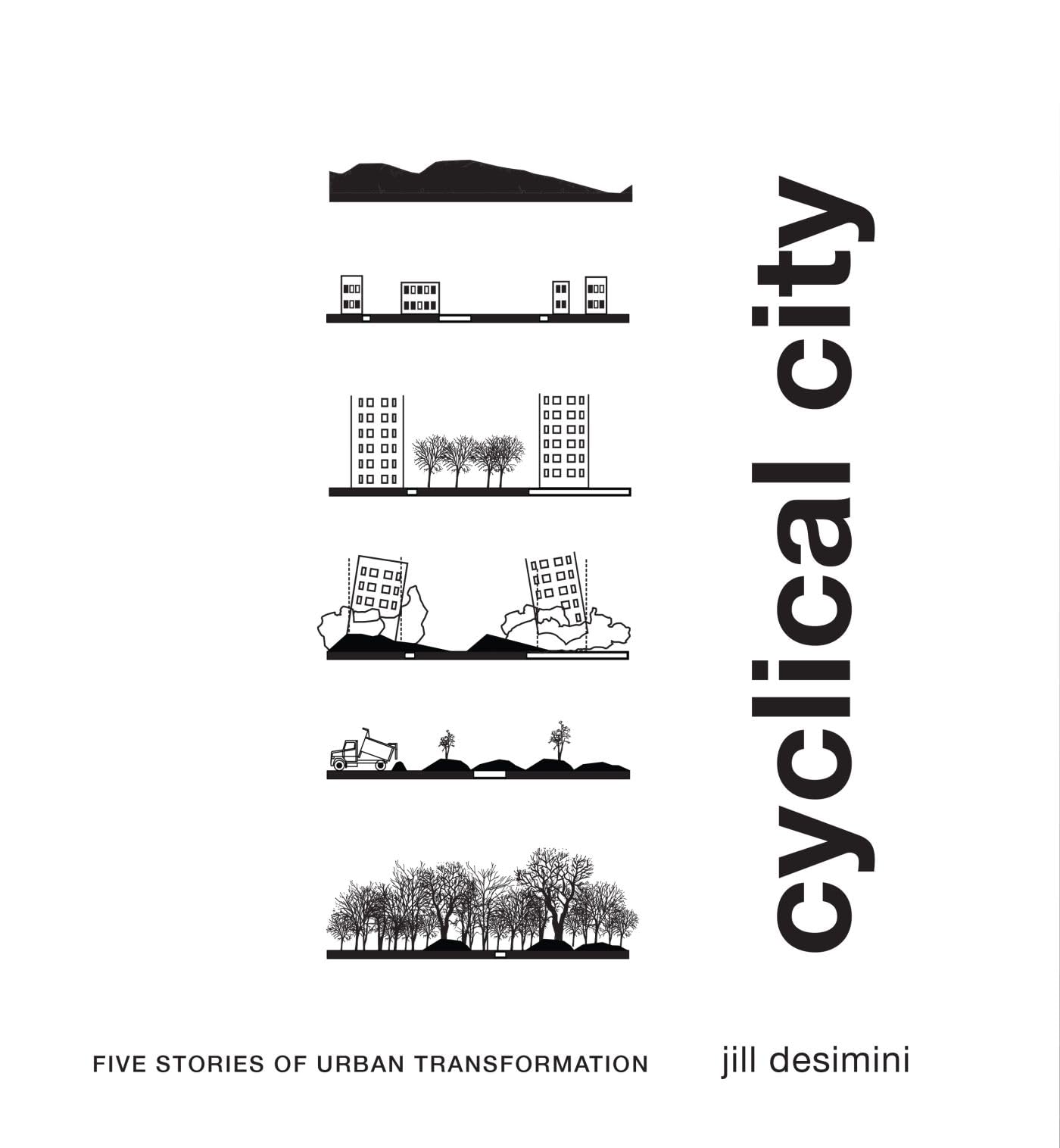
As Cities Evolve And Resources Shift With Time, Spaces Within Those Cities Are Often Left Fallow And Abandoned. Cyclical City Tells The Stories Behind These Sites, From Philadelphias Liberty Lands Park To Lisbons Green Plan, And It Looks At The Ways In Which These Narratives Can Be Leveraged Toward Future Engagement And Use. Jill Desimini Posits A Fundamental Role For Spatial Design Practice To Transform Abandoned Urban Landscapes Through Time. She Argues For Approaches That Promote The Specific Affordances Of The Land Itself (Hydrology, Vegetation, Topography, Geology, Infrastructural Capacity, Occupation Potential); The Importance Of Cyclical Change; And The Particularities Of The Cultural, Political, And Physical Context. These Themes Are Explored In Five Citiesphiladelphia, Berlin, Lisbon, Amsterdam, And Saint Louisand Across Centuries, From Periods Of Great Upheaval To Ones Of Relative Stability And Even Economic Growth. Desimini Considers What Landscapedriven Design Can Bring To Cities Losing People And Economic Resources, How Design Practice Can Be More Inclusive In A Context Of Market Failure, And The Ways In Which Abandoned Landscapes Can Become Our Commons.Preparation Of This Volume Has Been Supported By Furthermore: A Program Of The J. M. Kaplan Fund
⚠️ WARNING (California Proposition 65):
This product may contain chemicals known to the State of California to cause cancer, birth defects, or other reproductive harm.
For more information, please visit www.P65Warnings.ca.gov.
- Q: What is the page count of 'Cyclical City'? A: The book has two hundred ninety-four pages. This extensive page count covers the stories of urban transformation in various cities.
- Q: What is the binding type of 'Cyclical City'? A: The book is published in hardcover. This binding type ensures durability and a quality reading experience.
- Q: What are the dimensions of 'Cyclical City'? A: The dimensions are eight and a half inches by ten inches by one point twenty-six inches. These measurements make it a substantial and visually impactful book.
- Q: Who is the author of 'Cyclical City'? A: The author is Jill Desimini. She explores urban landscapes and their potential for transformation through design.
- Q: What genre does 'Cyclical City' belong to? A: The book falls under the Landscape genre. It discusses urban transformation and design strategies in various cities.
- Q: How do I use 'Cyclical City' as a resource? A: You can use it for academic research or as a reference for urban design projects. It provides insights into transforming abandoned urban spaces.
- Q: Is 'Cyclical City' suitable for students? A: Yes, it is suitable for students studying urban design or landscape architecture. The book offers valuable perspectives on urban transformation.
- Q: What topics are covered in 'Cyclical City'? A: The book covers urban transformation, design practices, and cultural contexts in cities. It explores specific case studies in multiple locations.
- Q: How can 'Cyclical City' help with urban design? A: It offers strategies for leveraging abandoned spaces through design. The author emphasizes the potential of landscape-driven approaches.
- Q: What is the focus of Jill Desimini's writing in 'Cyclical City'? A: Her focus is on the transformation of urban landscapes over time. She discusses the importance of cultural and physical context in design.
- Q: How should I store 'Cyclical City'? A: Store it upright on a bookshelf or in a safe location. This will help preserve its condition and prevent damage.
- Q: Is 'Cyclical City' an adult read? A: Yes, it is geared towards adults and professionals in urban studies. It contains complex themes suitable for a mature audience.
- Q: Can I find case studies in 'Cyclical City'? A: Yes, the book includes case studies from cities like Philadelphia, Berlin, and Lisbon. These provide real-world examples of urban transformation.
- Q: What themes does 'Cyclical City' explore? A: It explores themes of cyclical change, spatial design, and community engagement. The book emphasizes the importance of context in urban landscapes.
- Q: What support has 'Cyclical City' received during its preparation? A: The preparation was supported by Furthermore, a program of the J. M. Kaplan Fund. This backing emphasizes the book's significance in urban studies.